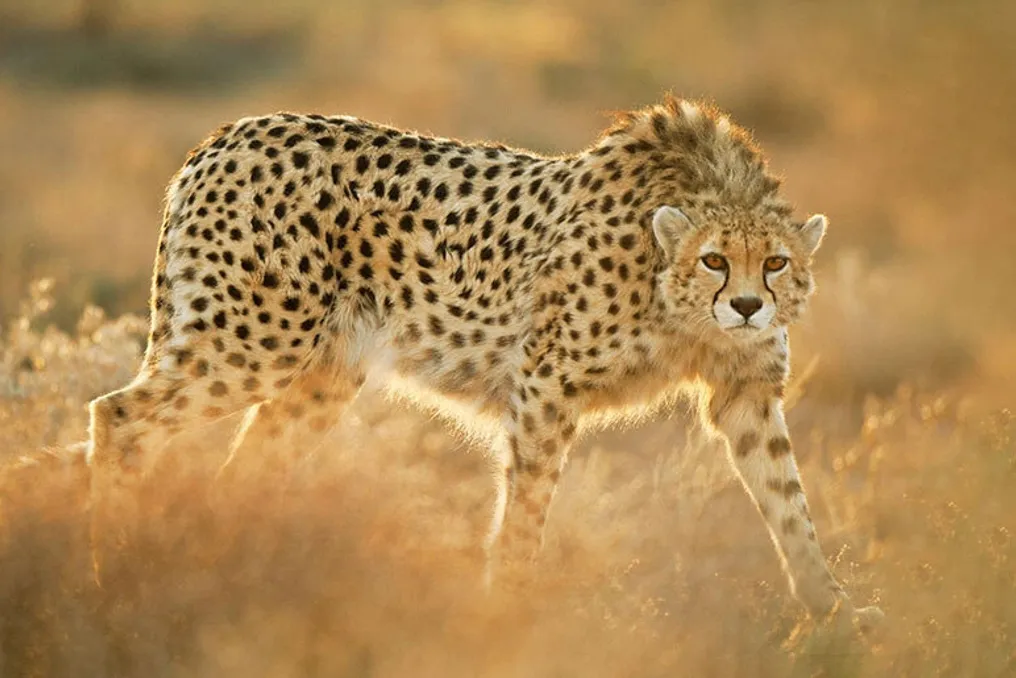
The Department of Environment has updated the national cheetah conservation program with the participation of experts, scientists, rangers, and non-governmental organizations. The main priorities identified were reducing threats caused by human activity and strengthening habitat protection.
Hamid Zorabi, Deputy Head of the Department of Environment for Natural Environments and Biodiversity, stated that measures to improve cheetah protection in the wild include controlling free-roaming livestock and camels, monitoring watering holes, preventing hunting, and enhancing field surveillance. He also noted that road safety measures are a key element of efforts to reduce cheetah mortality.
Furthermore, the conservation program includes strengthening the national database, expanding the use of camera traps, and promoting joint conservation initiatives involving local communities, as reported by IRIB. These statements were made on the occasion of 'National Cheetah Day,' which is celebrated annually on August 31st to raise awareness about the importance of conservation and increasing the population of Asian cheetahs in the country.
Commenting on the latest situation at the captive cheetah breeding center, Zorabi said that despite young females exhibiting appropriate mating behavior, no births were recorded in the facility during the last breeding season. He partially attributed this to the young age of the females.
He emphasized that the primary approach is conserving cheetahs in their natural habitat, adding that breeding efforts are conducted parallel to habitat protection and measures to mitigate threats endangering the species' survival.
The Asiatic cheetah, once inhabiting vast plains from West Asia to India, is now found only in Iran. Since 2001, about 85 cheetahs have died due to human-related causes, indicating that humans pose a greater threat to their survival than nature itself. This species, listed among the most critically endangered large cats globally, has made saving the Asiatic cheetah a shared responsibility.
According to the latest report from the Department of Environment (DOE), there are 26 Asiatic cheetahs in the country: 20 live in the wild, and six are in captivity. Shina Ansari, head of the DOE, believes that the disappearance of the world's rarest cat symbolizes the problems and responsibilities regarding Iran's nature. She added that cheetah conservation is not just an environmental issue but a symbol of the health of the country's ecosystem and a guardian of life balance.
The DOE is making every effort to conserve endangered animals, but achieving this goal is only possible with the participation and involvement of people, media, responsible institutions, and nature lovers. According to the latest report from the International Union for Conservation of Nature (IUCN), about 154 species of Iranian vertebrates are critically endangered. In May 2025, President Masoud Pezeshkian issued an order obligating the DOE to develop a strategic plan for the conservation of endangered species in the country. The DOE has already developed action plans for the conservation of 25 endangered species, and these plans are being implemented in the country. Additionally, a committee for the conservation of critically endangered species, including cheetahs, brown bears, and large drofa, is planned.
Currently, about 128 species of animals and vertebrates in the country are threatened with extinction, some of which are in poor condition, with amphibians being the most vulnerable in this area. The Persian zebra, Asiatic cheetah, brown bear, and yellow deer are endangered. A comprehensive and operational plan is needed to cover various environmental sectors, which must include goals, assumptions, operational measures, financial resources, and expected outcomes.