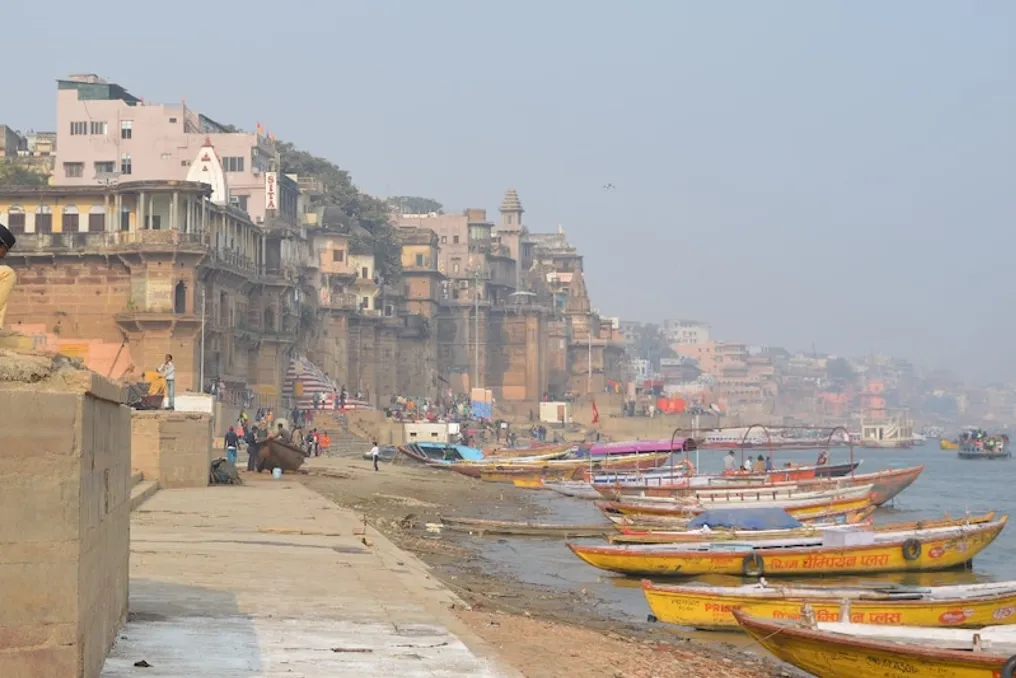
A special cleaning of the Ganga ghats is conducted annually in Varanasi after the rainy season and floods. Although the Municipal Corporation maintains cleanliness on the ghats daily, the question arises as to why such a large-scale cleanup is required once a year.
After the monsoon season, large amounts of silt, sediment, plastic, and garbage accumulate on the Ganga ghats when the water level recedes. During the flood, the water carries away much soil and silt, which dry out and turn into mud. Furthermore, the turbulent river brings plastic, religious items, and urban waste that gets stuck on the steps of the ghats.
If the silt remains on the steps for a long time, it dries out, making its removal difficult. This cleaning is necessary so that pilgrims visiting the ghats do not experience inconvenience.
The Varanasi Municipal Corporation (VNN) regularly holds tenders for the removal of silt accumulated on the ghats after flooding. After the level of monsoon and floodwaters drops, especially before major events such as Diwali and other festivals, the municipality assigns this work to private agencies and contractors through an open tender.
This large-scale silt removal campaign is carried out using heavy machinery and resources. Although daily routine cleaning and supervision remain the responsibility of the Municipal Corporation's own staff and target groups, the main cleaning is conducted based on the results of the tender.
For the famous ghats, such as Dashashwamedh and Manikarnika, to resume Ganga Aarti and religious rituals normally, cleanliness is essential. The municipality and volunteers jointly conduct special cleaning campaigns to avoid inconvenience for tourists and local pilgrims, as well as to prevent the spread of diseases.