Every crypto project founder faces a similar situation when working with a first marketing agency: they are provided with a breakdown of channels, a monthly budget, and expected results. However, after three months, the figures in the documents often do not match the real results on the blockchain.
The problem rarely lies in the size of the budget. More often, projects give agencies tasks based on assumptions about what should work, rather than data on what actually delivers results. This study is based on information gathered during campaigns conducted in the areas of KOL activation, AI-powered search optimization, and public relations (PR).
Here is a standard distribution for a mid-level project with a budget of $20,000 to $100,000 per month. Although the proportions may seem reasonable individually, what is critically important is not the structure itself, but how these expense items are implemented and what expectations the founders have regarding their return.
Thirty or forty percent of the average crypto marketing budget is directed towards creator distribution. This is the largest expense item in almost any Web3 budget, and simultaneously the area where most funds are lost.
Many founders launching their first campaign with crypto-KOL question the number and level of influencers. Mid-tier YouTube influencers at a price of $3,000–$8,000 per post might seem attractive on paper, and top-tier ones range from $10,000 to $50,000, suggesting guaranteed reach. However, none of these questions address the variable that truly influences the final outcome.
The real variable is synchronization. When ICODA ran an influencer campaign for Banana Gun—a cryptocurrency trading Telegram bot competing in one of the most saturated verticals of the crypto world—the task had a strict constraint: a Bybit ByVotes contest with a fixed public deadline. There was no possibility for a slow, phased launch. The campaign activated 69 KOLs across 5 regions within 72 hours, achieving a cumulative reach of over 4.27 million first-tier subscribers. The price of BANANA rose from $15.63 to $43.12, representing a 176% increase, with a sustained upward trend for six weeks after the window closed.
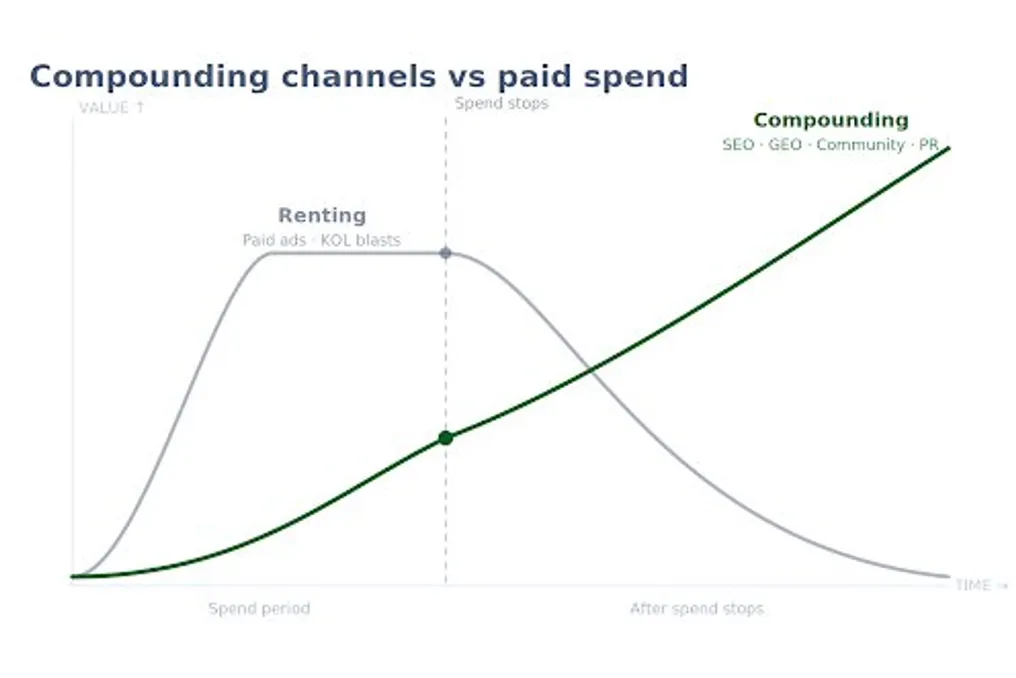
The mechanism of success was not the size of the crypto influencer marketing budget, but the compression. A phased KOL launch disperses the signal over weeks, and it gets lost in the general noise. A compressed, synchronized launch concentrates audience attention in a sufficiently short period for it to register as a real market signal.