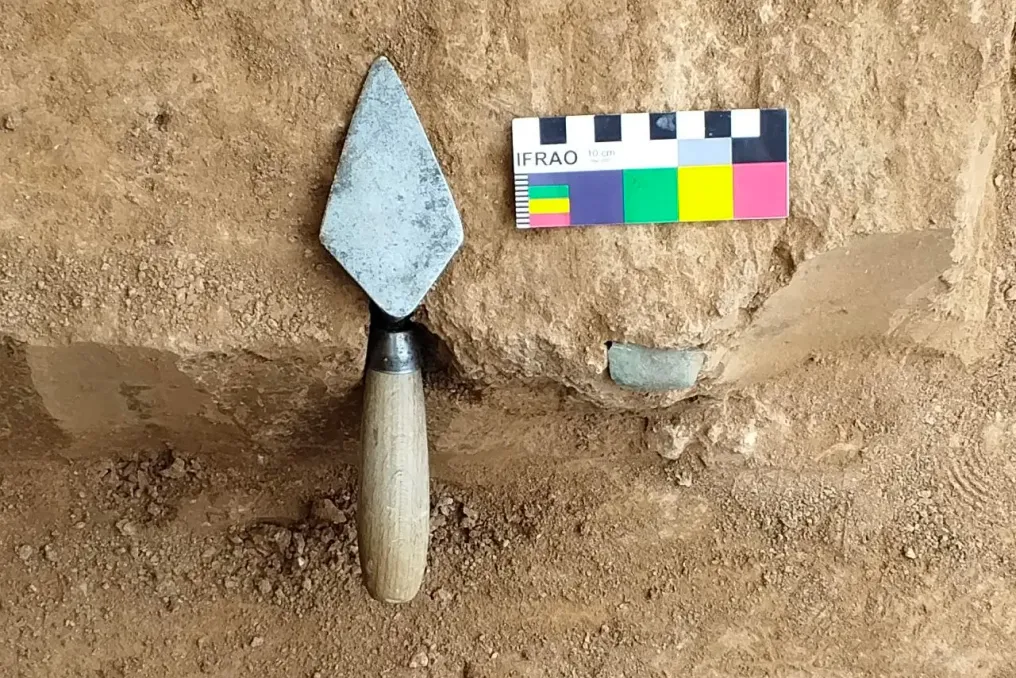
Russian and Uzbek archaeologists have discovered stone artifacts in the Tashkent region of Uzbekistan, which, according to preliminary geological and paleoclimatic assessments, may date from the period between 280,000 and 320,000 years ago. This was reported by the press service of the Academy of Sciences of Uzbekistan.
These findings were made during research at a paleontological site and could potentially be among the oldest known archaeological monuments in Uzbekistan if their age is finally confirmed.
The artifacts were found in the third layer of ancient fossilized soil. Scientists believe this layer formed approximately 320,000 – 280,000 years ago. Researchers emphasized the scientific significance of these discoveries for studying the early stages of the Paleolithic in modern-day Uzbekistan.
The excavations are being conducted jointly by specialists from the Institute of Archaeology and Ethnography of the Siberian Branch of the Russian Academy of Sciences, the Institute of Anthropology, and the Institute of History of the Academy of Sciences of Uzbekistan. Russian and Uzbek scientists have been studying this site for three years.
During this period, archaeologists have found other stone objects, but their age could not be determined previously. The latest finds were made in layers of ancient soil for which preliminary geological and paleoclimatic expertise has been conducted.
According to the Academy of Sciences of Uzbekistan, the presence of artifacts in layers from different periods indicates that human settlements in this area may have developed in stages. Scientists consider the new findings important for studying the initial stages of the Paleolithic in Uzbekistan. Furthermore, the materials may help in studying the migration routes of ancient people across Central Asia and their methods of adapting to climate change.
The exact age of the artifacts has not yet been established. Previously, the Agency for Cultural Heritage of Uzbekistan reported the discovery of remains of an ancient structure dating back to the 4th–5th centuries, on whose walls unique flower images were found.