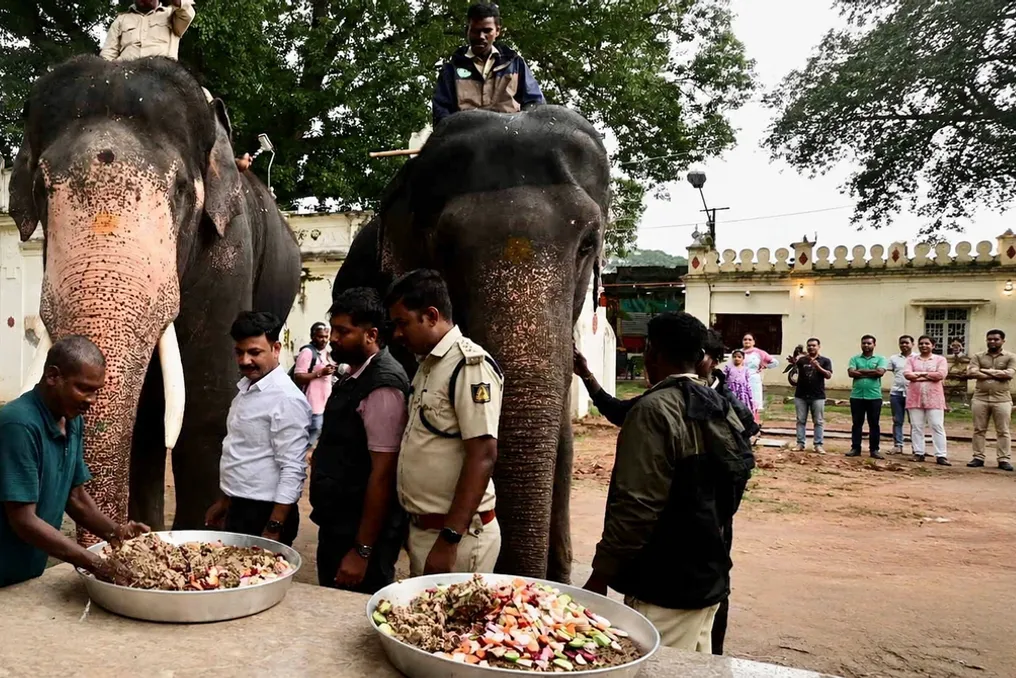
In the Mudumalai tiger reserve located in Tamil Nadu, the Teppakadu elephant camp begins the day with manual feeding for some of the forest's largest inhabitants.
Mahouts mix ragi, rice, palm sugar, coconut, salt, and mineral supplements to form large food balls. The choice of ingredients is determined by the need to provide the elephants with energy and nutrients before they venture into the forest.
Teppakadu is one of India's oldest elephant camps. It was established in 1910 on the banks of the Moyar River and has been closely associated with elephant care and forest management for over a century.
What is in the elephant's breakfast
The morning meal is part of the elephants' supplementary diet. In addition, the animals spend time in the forest feeding on grass, leaves, branches, and other available vegetation.
A study on elephant keeping in Tamil Nadu records the use of components such as rice, ragi, pigeon peas, palm sugar, coconut, sugarcane, salt, and mineral mixture at Teppakadu. This food complements what the animals consume while foraging.
Knowledge related to caring for these elephants has accumulated over many years through careful observation. Mahouts study the animals' daily routines, behavior, and individual needs, forming bonds that are the basis of daily care.
The camp also plays a role in conservation efforts. Some elephants are trained as 'kumkis,' which are used by forest department staff during rescue operations and attempts to manage situations involving wild elephants.
After breakfast, the elephants leave the camp and return to the forest to graze. After eating, they spend hours moving through familiar surroundings and feeding on what the local landscape provides. Although it is a simple morning routine, it reflects the relationship between the elephants, their mahouts, and the surrounding forest. In Teppakadu, generations of knowledge continue to influence the daily care of these animals.