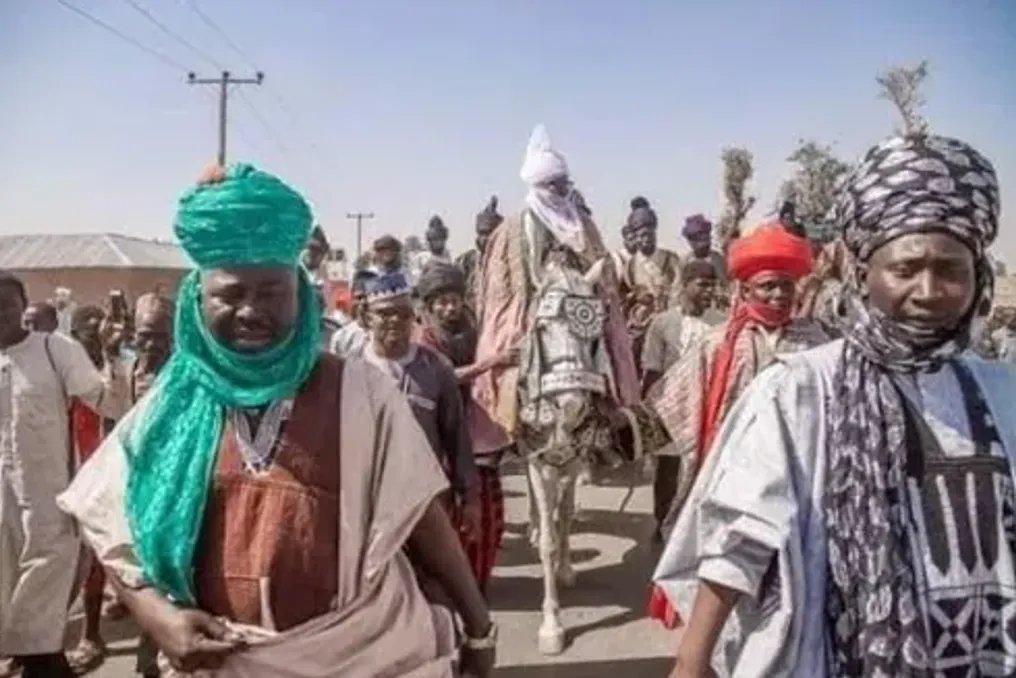
The celebration of World Hausa Day serves as a reminder of the critical need to preserve and promote local languages as drivers for community empowerment and strengthening cultural pride.
Every year on August 26th, this global holiday is observed to honor the language, which is rich in the cultural heritage, traditions, and history of the Hausa people. They are one of the largest ethnic and cultural groups in West Africa, primarily residing in Nigeria and Niger, with a population ranging from 50 to 80 million.
World Hausa Day, also known as Ranar Hausa, was established in 2015 by Nigerian journalist Abdulbaki Aliyu Jari. He initiated this event as a social media campaign aimed at encouraging the use of the Hausa language online.
Tens of millions of people speak Hausa as a first or second language, making it a vital bridge for trade and unity across Africa and even globally. Although celebrations take place widely across West Africa, in places like the historical center of Daura, known as the cradle of Hausa civilization, the message about the importance of the mother tongue has gained global recognition.
Initially, this event spread from a simple online hashtag (#RanarHausa) to an international event celebrated in over 30 countries and continues to grow.
This year, the Hausa language was celebrated under the slogan: 'Our culture, our future.' The main focus was on preserving traditions and language for the younger generation.
The author posits that Hausa should serve as a microcosm of Africa's linguistic sovereignty. In his view, every tribal group and community, of which there are thousands, should follow the example of Hausa speakers by fighting not only for the survival of their native language but also for its inclusion in universal means of communication.
Language embodies the unique identity of a people, encompassing culture, traditions, and customs. It represents the sum of what defines people. Through figures of speech, idioms, expressions, and other literary domains, language can reflect community behavior.
The celebration of World Hausa Day evoked mixed feelings in the author. He begins with positive aspects, noting that there are people in Africa like Abdulbaki Aliyu Jari who refuse to succumb to self-pity despite the negative consequences of globalization. However, the author observes that almost all internet search engines are presented in English, although the international presence of other languages is evident and growing due to economic power and geopolitical status.
It is commendable that a relatively unknown language from West Africa has managed to rise up and demand a place among world languages. Jari embodies a new spirit of Africa, led by the continent's educated, audacious, and fearless youth.
This young population, constituting the vast majority of Africa's 1.4 billion inhabitants, fully understands that our languages, in their diverse variety, have the right to be spoken, heard, and understood just like other foreign languages infiltrating our daily oral and written communication. These factors, along with the Ranar Hausa uprising demanding a place among the international linguistic population, should instill confidence in the future of Mother Africa.
The author raises these questions in light of knowledge regarding how colonialism mentally devastated many Africans. Former colonizers began by removing our languages from mainstream communication, including education and trade. To compound the wound, suppressed languages were replaced by the foreign languages of the conquerors, such as English, French, Spanish, and Portuguese.
The consequences of colonialism in Africa continue to be felt through the choice of language in official communication. The author argues that adopting a foreign language, understanding and mastering it at the expense of the native language, guarantees the transformation of a person into a subject of that dominant language. This includes a system of beliefs and values, behavior, thinking, worldview, and perspective—all of which strip the person of their true 'self' and mold them into a supposed character of foreign identity imposed by language.
It cannot be denied that language is power. This factor was the key reason for the success of centuries of colonialism in Africa and the Global South. It is impossible to successfully colonize a people if they retain their language. Thus, the first point of alienation of a people is the taking away of their language—by force, if necessary—and replacing the native language with the language of the conquerors. Once this formula is fully implemented, the capture and destruction of the people are complete.
Ngugi wa Thiong'o, in his book 'Decolonising the Mind: the Politics of Language in African Literature,' made a bold statement against this global linguistic hegemony, which has far-reaching consequences beyond mere spoken language. Ngugi analyzed language and its constructive role in national culture, history, and identity. He advocated for 'linguistic decolonization,' which sparked public debate about the role of language in societal development, which he termed the 'language debate.'
World Hausa Day prompted the author to reflect on this. The rejection of local languages, first by force during colonialism and today through complex and sophisticated methods, deprives Africa of the ability to express its true essence. Placing the African mother tongue at the bottom of the priority list guarantees one harsh fact: it starves the development of African science. African epistemologies cannot develop without a deep understanding of our native language. For survival, we must celebrate our languages without apology, just as the Hausa do.