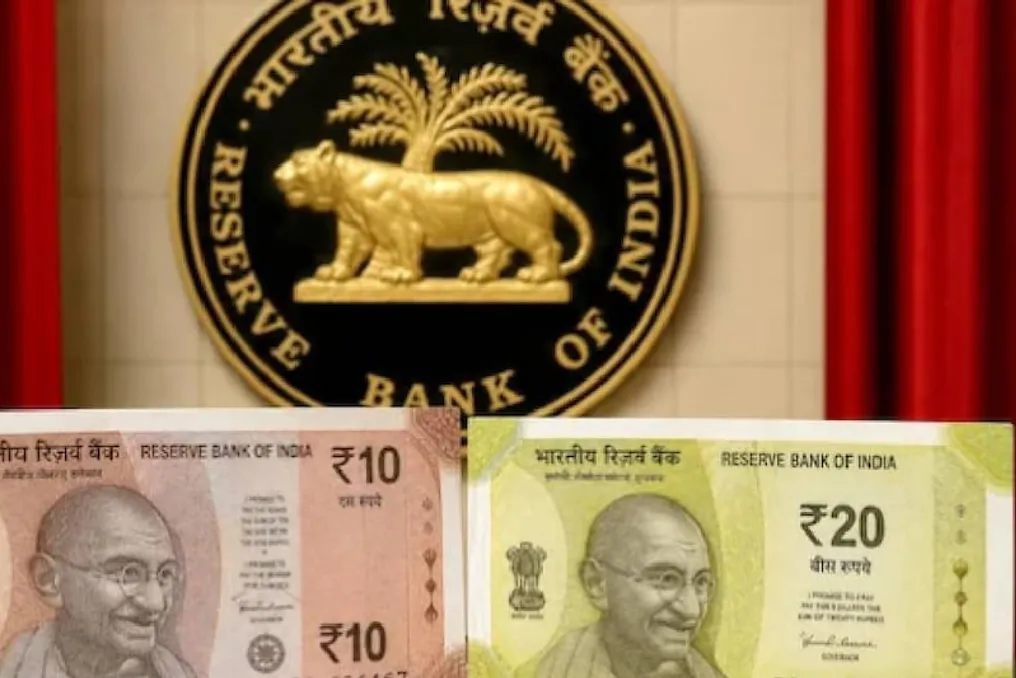
The Reserve Bank of India (RBI) is studying the possibility of printing small denomination notes, such as ₹10 and ₹20, on polymer instead of traditional paper. Thus, work has begun to introduce more durable and robust polymer banknotes. However, this transition has not yet been implemented and is in the stage of testing, sample preparation, and tendering.
As part of promoting this initiative, the RBI-owned company Indian Reserve Bank Note Printing Private Limited (BRBNMPL) conducted a tender. According to available data, two foreign companies and one Indian company submitted bids for this tender. Special conditions were introduced during the development of the polymer notes.
Considering disputes that arose in some countries, including the United Kingdom, regarding the use of animal fat, the RBI established strict provisions in the process. Tender participants must provide a declaration confirming the complete independence of their operations in India from operations in China and Pakistan. Furthermore, they are obliged to guarantee that the polymer film used contains no traces of animal fat or DNA.
BRBNMPL urgently requires a supply of 68,000 rolls of polymer substrate, with one roll containing 500 sheets of polymer film. Tender participants must also submit samples for testing in various climatic zones of India to assess the durability and suitability of the polymer substrate under different conditions.
Both Indian and foreign firms participated in the tender. Among them, the Indian company Cosmo First, a major BOPP exporter, found a technical partner in the British De La Rue. De La Rue will provide technologies related to the polymer substrate and security features.
Australian CCL Secure also submitted a bid, providing polymer note solutions to more than forty central banks in Dubai. This company claims that its polymer substrate is six times stronger than conventional banknotes.
Additionally, Q&T Hi-Tech Polymer from Vietnam presented its technology, stating a 78% reduction in costs for polymer banknotes compared to paper money.
Polymer notes are considered more durable and resistant than standard paper ones. They are less susceptible to moisture, dust, and water, and their service life can be significantly longer than that of paper counterparts. These notes can incorporate modern security features, such as transparent windows, which makes counterfeiting difficult. It is also noted that cleaning the polymer surface is relatively easy.