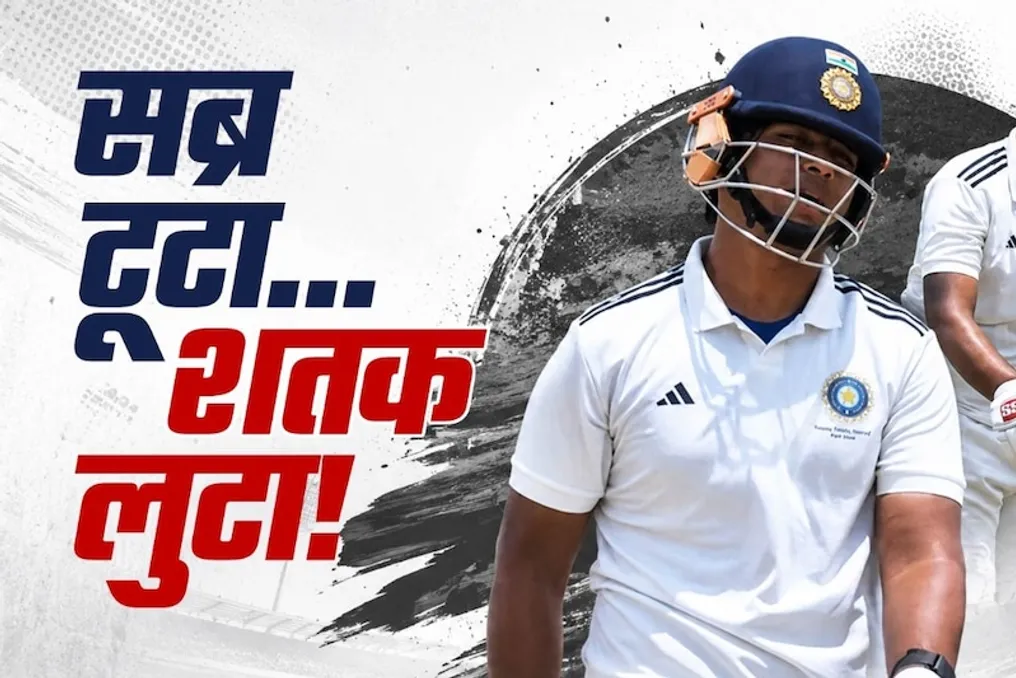
Vaibha Suryavanshi played an impressive innings in the Dalip Trophy semi-final, falling 8 runs short of a century
Read more
Aaj Tak
www.aajtak.in

Vaibha Suryavanshi played an impressive innings in the Dalip Trophy semi-final, falling 8 runs short of a century

15-year-old Vaibha Suryavanshi demonstrated outstanding abilities in the Dalip Trophy semi-final on Monday, although he could not reach a century, falling short by only 8 runs. After being dismissed at 92 runs, Vaibha showed significant disappointment and angrily threw his bat. RP Singh, a former Indian fast bowler and selection committee member, also looked surprised by his dismissal from the stands watching the match.

Century Milestone in 42 Balls

Starting for the East Zone against the Central Zone, Vaibha reached a half-century in just 42 balls. This allowed him to enter the history of the Dalip Trophy as the youngest batsman to score a half-century. Vaibha was born on March 27, 2011, and achieved this milestone at the age of 15 years and 157 days, breaking a record that stood for about six decades. Previously, this record was set by Lakshman Singh of the Central Zone in 1968-69, who was 16 years and 23 days old when he scored 63 runs against the North Zone.

Aggressive Start Against Bowlers

After the Central Zone scored 266 runs, the East Zone began its innings, and Vaibha immediately declared his intentions. In the very first over, he hit two fours, reaching a score of 21 runs off 14 balls. Within 21 balls, he scored 31 runs. By the end of the 12th over, he had already scored 40 runs off 28 balls. During this period, he also had a chance to save a shot: his lofted shot went in the air but was not caught. Vaibha was heading towards the dressing room but returned to the field upon seeing that the ball was not caught. He then seized the moment and completed his half-century in 42 balls.

Demonstration of Understanding Beyond Attacking Style

A feature of this innings was not only Vaibha's aggressive style of play. At times, he showed respect for the ball, using defense, playing ground shots, and rotating the strike. Thus, this young batsman, known for his explosive style in T20 cricket, demonstrated an understanding of the requirements of classical cricket. This innings is also important for Vaibha, as his first-class statistics were not as impressive before this. Before the semi-final, he had scored 215 runs in 13 matches, with an average of 16.53. His best first-class score was 93 runs, which he scored for Bihar against Meghalaya.

Dream Shattered by 8 Runs Short of a Century

After reaching a half-century, Vaibha did not stop and aimed for his first first-class century. However, his innings ended at 92 runs. He attempted to hit a big shot to the left side off Harsha Dubey's bowling but got trapped at deep mid-wicket. His disappointment after being dismissed was evident, and he angrily threw his bat. His score of 92 runs was the highest in the Dalip Trophy, and only one run less than his best first-class score of 93 runs.

RP Singh's Surprise

Vaibha's dismissal also attracted the attention of the selection committee members present in the stands. RP Singh, a former Indian fast bowler and selection committee member, was watching Vaibha's game. As soon as the 15-year-old batsman was dismissed at 92 runs, RP Singh also looked surprised. Besides RP Singh, Ajay Ratra and SS Das were also watching the match. According to the new BCCI policy, two selection committee members are present in every Dalip Trophy playoff match. Thus, Vaibha's innings was noticed by the selection committee members.

Significant Signal for Test Cricket?

So far, Vaibha has been known mainly as a player capable of explosive attack in limited-overs cricket and setting age-related records. However, this innings in the Dalip Trophy showed another side of his game. In addition to setting the record for the youngest player to score a half-century in the Dalip Trophy, he demonstrated patience, defense, and strike rotation in his 92-run innings. Although the century fell short by 8 runs, this innings clearly showed that Vaibha is quickly mastering the challenges of classical cricket.
Similar stories

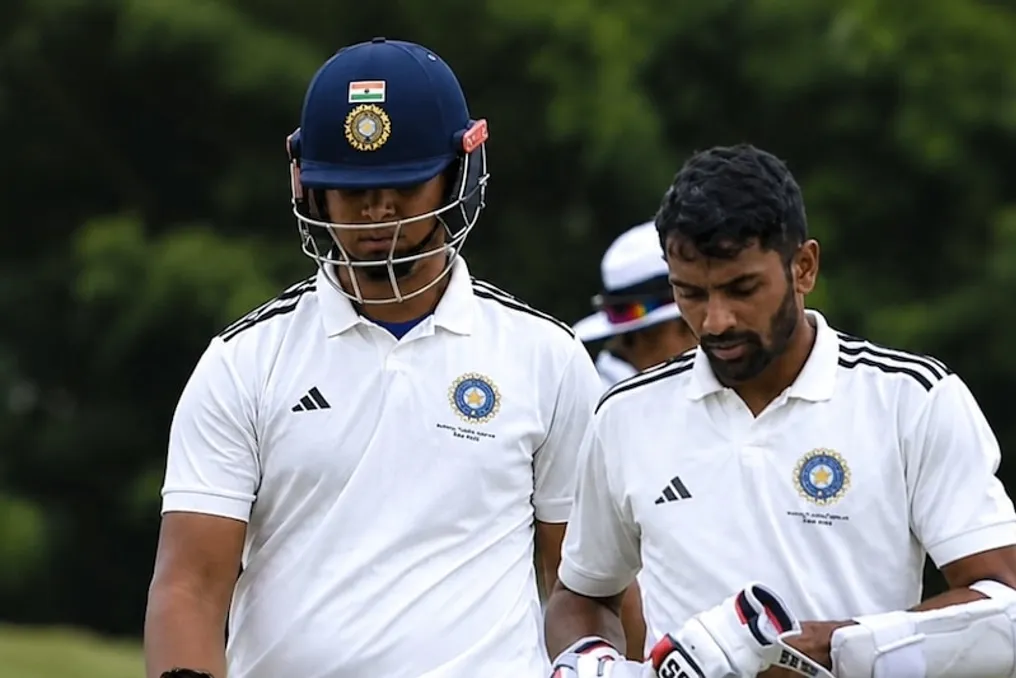
In Duleep Trophy Semi-Final: Vaibhav Suryavanshi Scores Half-Century in ODI Style
Read more
www.aajtak.in

In Duleep Trophy Semi-Final: Vaibhav Suryavanshi Scores Half-Century in ODI Style

The first semi-final of the Duleep Trophy features a match between the Eastern and Central Zones teams. The game is ongoing at the Central of Excellence (CoE) stadium in Bangalore, which belongs to the Board of Control for Cricket in India (BCCI).

All attention is focused on Vaibhav Suryavanshi, who has demonstrated an impressive performance for the Eastern Zone team. In the first innings, he reached a half-century, scoring five fours and three sixes off just 42 balls.

The Eastern Zone scored 138 runs in 21 overs. Vaibhav Suryavanshi started his contribution with singles, then gained momentum by hitting two fours off Yash Thakur in the second over. Following this, he continued his aggressive play, hitting powerful shots against loose deliveries. He completed his half-century milestone by hitting a sixteen off spinner Saransh Jain in the 15th over. This is Vaibhav's first half-century in the Duleep Trophy; previously, in his debut match against the North-Eastern Zone team, he scored only 8 runs.

The Eastern Zone won the toss under the captaincy of Ishan Kishan, who decided to bat first. The Central Zone team managed to score only 266 runs in the first innings. Rinku Singh played excellently, scoring 60 runs off 88 balls with eight fours. Aryan Jual (46 runs) and Yash Thakur (30 runs without dismissal) also made useful contributions.

From the Eastern Zone, Mukesh Kumar and Abidjit Sarkar each took three wickets. Additionally, Mohammed Shami and Mohammed Kaunin Kuraiashi took two wickets each.

The Eastern Zone squad included: Abhimanyu Ishwara, Vaibhav Suryavanshi, Kumar Kushagra, Sudip Kumar Garam, Ishan Kishan (wicketkeeper/captain), Virat Singh, Mohammed Kaunin Kuraiashi, Anukala Roy, Abidjit Sarkar, Mohammed Shami, and Mukesh Kumar.

The Central Zone squad consisted of: Aman Mokhade, Aryan Jual (wicketkeeper), Kunal Chandela, Yash Rathore, Rajta Patidar (captain), Rinku Singh, Saransh Jain, Harsha Dubey, Arshad Khan, Yash Thakur, and Aryan Pandey.

Pakistani batsman sets awkward record: first time in 43 years this has happened
Read more
www.aajtak.in

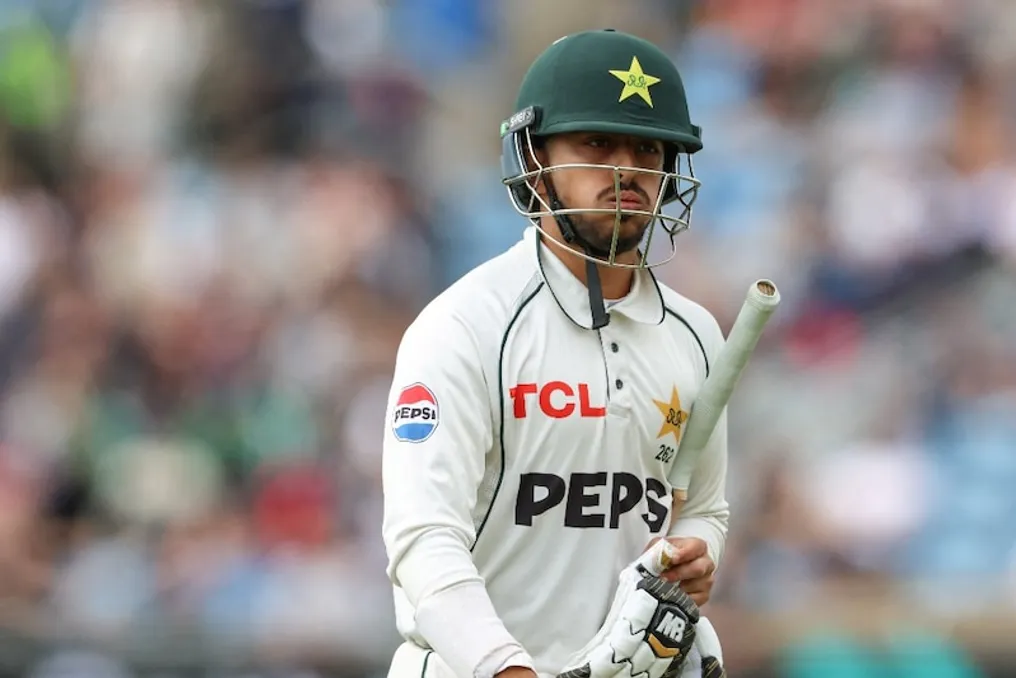
Pakistani batsman sets awkward record: first time in 43 years this has happened

The first match of the three-match series of test games between England and Pakistan took place at Headingley in Leeds. In this game, the performance of the Pakistani batsmen in the first innings was extremely poor, and the entire team scored only 171 runs. Opener Azan Aways did not meet the hopes of Pakistani fans.

On the very first delivery, Ollie Robinson dismissed Azan Aways via LBW. Robinson bowled a wobbling seam delivery that pitched inside to left-handed batsman Azan Aways. Azan could not correctly judge the trajectory of the ball, and it hit him directly on the pad. After persistent demands from the English team, umpire Chris Gaffney declared him out.

Azan Aways disagreed with the umpire's decision and immediately requested a video review (DRS). The replay clearly showed that the ball did not hit his bat. However, after tracking the ball, which showed three radii from contact to the stumps, and analysis, the third umpire upheld Chris Gaffney's decision because the ball struck the upper part of the middle stump.

Thus, Azan Aways was forced to leave the field on the very first ball of the test series and found himself on an undesirable list. Azan is the second opening batsman for Pakistan to be dismissed on the first ball of a test match. A similar incident occurred in 1983 when Mohsin Khan was dismissed on the first ball against India in a match in Jalandhar. This means that this event has been repeated among Pakistan's opening batsmen after 43 years.

Although Azan Aways set an awkward record, Ollie Robinson achieved a significant feat. He became the fourth English bowler to take a wicket on the first ball in any Test match played in England. This phenomenon began with Maurice Tate in 1926, when he dismissed Warren Bardsley of Australia on the first ball in Leeds.

Forty-eight years later, George Arnold in 1974 sent Indian batsman Sunil Gavaskar to the pavilion on the first ball in a match in Birmingham. In 2007, Ryan Sidbottom dismissed Darren Ganguly of West Indies on the first ball in a match in Chester-le-Street. Now, in 2026, Robinson has joined this rare list by dismissing Azan Aways.

After Ollie Robinson delivered the initial blow to Pakistan, he did not allow the pressure to ease. Four out of the first five batsmen fell victim to him. Robinson bowled a total of 18 overs, taking 5 wickets for 51 runs. This result is particularly important for Robinson as he recently returned to the national team after a long break. In June, he played a key role in England's victory at Lord's against New Zealand, taking 7 wickets for 77 runs. Now he has demonstrated his impact even before the start of the match against Pakistan.

Popular