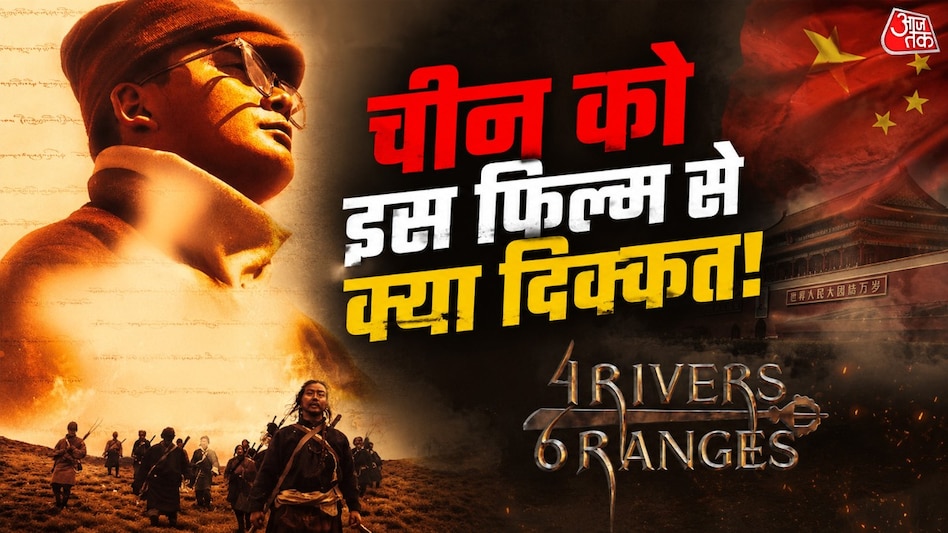
In Indian cinemas, the film titled Four Rivers, Six Ranges will premiere on September 11. Its plot touches upon not just a historical event, but a highly sensitive geopolitical issue relevant today. The director is Tibetan filmmaker Shenpen Khimsar, who was born in Darjeeling. However, China has expressed strong disapproval of this film.
The film narrates the flight of the Dalai Lama from Tibet to India in 1959, as well as the role of fighters from the Tibetan opposition organization Chushi Gangdruk, who ensured his safety. This organization provided the film's title, as Chushi Gangdruk means 'four rivers and six mountain ranges' in Tibet. This name is associated with the Kham region in Eastern Tibet and later became linked to the Tibetan armed resistance movement.
Central to the film are the warriors of this movement who participated in the mission to safely evacuate the Dalai Lama from Tibet to India in 1959. Interestingly, the father of producer Dorji Wangdi Devatsanga was also among those who helped the Dalai Lama leave Tibet. The film's story is inspired by the book 'Flight at the Cuckoo’s Behest.'
The director spent years researching the material, meeting with elderly veterans of this resistance and their families, who were direct witnesses to those events. Nevertheless, creating the film proved more difficult than writing the script. The main challenge was the filming location.
Filming took place in the Mustang region of Nepal, which is very close to the Chinese border. According to Shenpen Khimsar, obtaining permission to film a movie concerning Tibet, the Dalai Lama, or anti-Chinese activities in Nepal was extremely difficult. He noted that China exerts significant pressure on Nepal, making direct approval for such films virtually impossible.
Therefore, the film crew had to resort to an unconventional solution. Instead of presenting an official script detailing the true story, Khimsar presented the Nepalese officials with a fictional script titled 'The Himalayan Robin Hood.' It was based on this permit that the real film Four Rivers Six Ranges was shot.
The shooting process did not adhere to the standard schedule for such a historical action film, which usually takes one and a half to two months. Khimsar and his team completed the entire project in just 19 days. This was done in the high-altitude Himalayan region, at an altitude of about 15,000 feet, under harsh weather conditions and limited resources.
Reports indicate that the film's budget was around sixty million rupees. Completing the project in 19 days, despite the high altitude, modest budget, the use of first-time actors, and security issues, is one of the most remarkable aspects of this project.
The reason for China's strong indignation is directly related to the content and political viewpoint of the film. It depicts Tibetan warriors taking up arms to defend their faith, land, and the Dalai Lama, reflecting a view of Tibetan history through the lens of Tibetan resistance and the pursuit of independence. China's reaction was extremely sharp.
Chinese state media published a lengthy article about the film on August 20 under the headline 'Four Rivers, Six Ranges: A fictitious rewrite of Xizang's history.' In it, they alleged distortion of history. China linked the film to an attempt to present Tibet separately from China and to a narrative of separatism. The Chinese side asserts that Tibet has always been an integral part of China, and the film attempts to dispute this historical fact.
The director himself has spoken out actively on this matter. During the launch of the Indian trailer in August, Khimsar stated that the Chinese government was trying to stop the film's screening.
The release of the film in India is also significant because its theme is directly connected to the history of India itself. In 1959, the Dalai Lama left Tibet and arrived in India, and his life in exile remains an important part of the Tibetan political question to this day. Four Rivers Six Ranges seeks to portray this escape not through diplomatic documents, but through the eyes of ordinary Tibetan fighters who helped safely transport the Dalai Lama across dangerous mountain passes.
Thus, the film tells not only about the Dalai Lama but also about people whose names are relatively rarely mentioned in mainstream historiography. The film is not a product of a major studio; it is an English-language project created with a limited budget, involving many Tibetan actors. Navazuddin Siddiqui voiced a character in Hindi, and Hollywood actor and Tibetan supporter Richard Gere also supported the film.