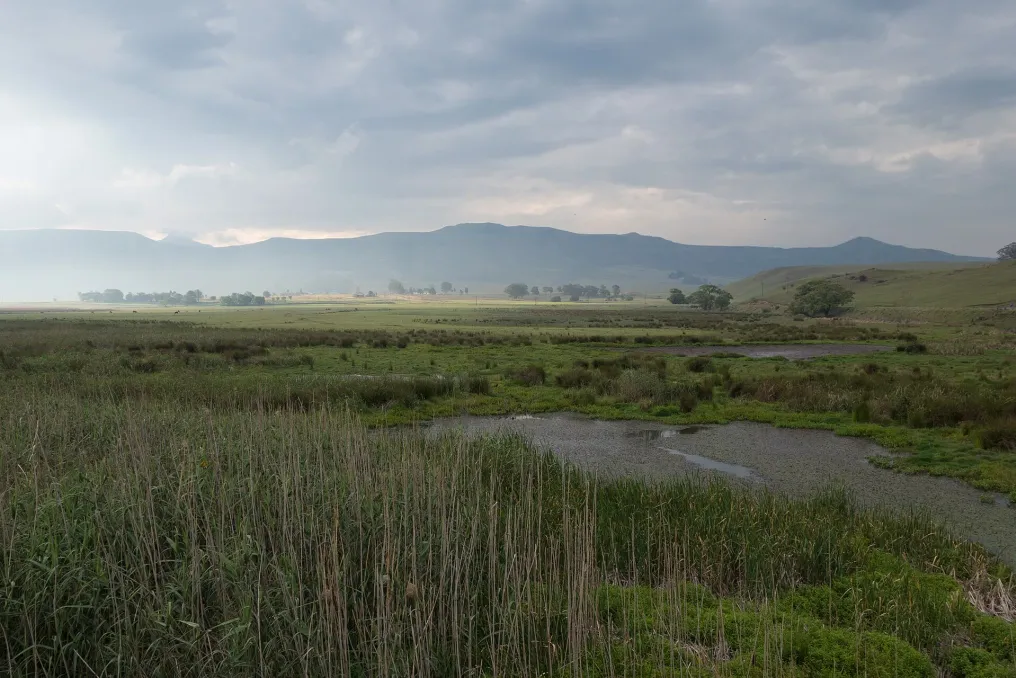
Relaxing in Wakkerstroom is often associated exclusively with birds. This is understandable, as the small town in Mpumalanga is known for its wonderful avifauna and wetlands. For serious bird lovers, this is a sufficient reason to visit, but what if you are not interested in birdwatching?
This small town in Mpumalanga has international recognition due to its birdlife, and its wetlands constitute a Special Protected Area for birds and biodiversity, covering about 700 hectares. But what if you prefer not to engage in birding?
What if you cannot distinguish a Rudd's lark from a blue crane, do not want to stand motionless by the wetlands at dawn, and would rather spend the weekend walking around the old settlement, enjoying good food, taking a longer route home, and generally doing very little?
Nevertheless, Wakkerstroom is still worth visiting, and perhaps that is its specialty. The town is located in the southern part of Mpumalanga, near the border with KwaZulu-Natal, surrounded by grasslands, wetlands, and hills. It is a place where the landscape begins to speak long before you reach the town itself.
The village has managed to retain its old charm. According to Wakkerstroom Tourism, there are only two paved roads in the town, no traffic lights, and no large retail chains. Furthermore, it is a simple way to escape for the weekend from Johannesburg, as the distance is about three and a half hours by car. The absence of commercial noise is part of the appeal of this place.
Wakkerstroom does not require you to arrive with a minute-by-minute schedule. Of course, you can fill your days with walks, bike rides, fishing, or exploring the surrounding countryside. But you can also just wander, and for a short holiday, that is sometimes enough.
Long before it became a destination for tourists and bird lovers, the area of Wakkerstroom was home to indigenous communities, among whom the Khoisan are among the earliest known inhabitants of the area. The town itself was officially founded in 1859, although white settlers arrived in the region earlier.
The name of the town comes from the Wakkerstroom River. Initially, the settlement was called Martinius-Wesselstroom in honor of the President of the Republic of South Africa, Martinius Wessel Pretorius, before the name Wakkerstroom was established.
The town is also linked to some defining historical periods of South Africa, including the Anglo-Zulu and Anglo-Boer Wars. Its cemetery and several preserved buildings recall the past, and the urban landscape includes historical structures dating from the 19th and early 20th centuries. To appreciate this, you do not need to be a history expert.
The pleasure lies in wandering through a place where the past remains visible. Old churches, bridges, buildings, and streets give Wakkerstroom a sense of continuity that many small towns have lost.
One of the simplest ways to get to know Wakkerstroom is simply by exploring it on foot. Wakkerstroom Tourism has compiled an 11.6 km route around the village and surrounding area, which can be walked, cycled, or driven. This route passes by several historical attractions, including the Old Butchery, NG Church, Wakkerstroom Hotel, cemetery, wetlands, and views of Ossewakop and Honey Moon Valley.
You do not have to complete the entire route. Choose a direction, take your time, and stop when something catches your attention. Wakkerstroom is small enough not to create pressure for efficiency, which probably explains why it is so well suited as a place for a short holiday.
There are cities you visit to tick off items on a list. Wakkerstroom is not quite like that. Even if birds do not interest you, the landscape surrounding Wakkerstroom is worth your attention. The town is surrounded by highveld grasslands, hills, and extensive rural areas, where walking, touring, and scenic routes offer a way to explore the area outside the city streets. Wakkerstroom Tourism lists routes ranging from short excursions to long day adventures, with options for walking, cycling, and driving.
Ossewakop is one of the most recognizable features of the landscape. The mountain rises above the town, and although the ascent is described as challenging, the views of Wakkerstroom and its surroundings are a reward for those willing to put in the effort.
For a less strenuous option, a scenic drive through the surroundings is better. Routes around Wakkerstroom pass through wetlands, agricultural lands, and grasslands, and the act of leaving the town becomes part of the experience.
It is here that the talk of birds becomes inevitable, but only briefly. The wetlands of Wakkerstroom are one of the defining natural features of the area and are among the largest reed beds in South Africa. These wetlands are also registered as a Natural Heritage Reserve.
You do not need to know what you are seeing to appreciate the scale and tranquility of the landscape. Walk near the reeds. Stop at a viewpoint. Watch the weather move over the grasslands. Take photos without feeling obligated to identify every bird that appears in the frame. Nature does not become less impressive because you forgot the field guide. The Wakkerstroom Wetlands Reserve is worth visiting simply as part of the broader landscape that gives the town a sense of remoteness from everyday life.
Wakkerstroom is not a place to chase the discovery of the next big restaurant. That is why it is perfect for a slow lunch. The village has a collection of cafes, restaurants, and bakeries, allowing you to easily structure a weekend around long breakfasts and meals that do not require rushing.
Village Bakery – Wakkerstroom is a natural stop to grab something to take away, while Red Rooster offers another place to stop, rather than immediately eat and leave. If your ideal weekend includes a more relaxed evening, The Mucky Duck adds another option to the village repertoire. The point is not to build the trip around food. The point is to leave enough room for the meal to be a plan.
When planning a trip, there is always the temptation to justify every hour. You have traveled so far, so you should probably climb the mountain, visit the monument, take the route, see the sights, and book an activity. Wakkerstroom is a good place to resist this urge.
Find comfortable accommodation. Walk. Cycle until the road becomes interesting. Stop for coffee. Look at the old buildings. Sit outside when the weather permits. The town offers everything: from guesthouses and self-catering options to hotels and campsites, depending on the type of weekend you desire. Staying at Wakkerstroom Hotel is one of the accommodation options in the village itself, while DeKotzenhof offers another guesthouse-style base for exploration. Since Wakkerstroom is compact, where you sleep is less important than what you allow yourself to do with the time. And hopefully, there isn't much of that.
Undoubtedly. Although birdwatching made Wakkerstroom famous, it is not the only reason to visit. The town suits people who love old places, open landscapes, quiet roads, and weekends that don't have to be productive equally well. Come for the history if that interests you. Come for the walks and scenic drives if you need to move. Come for the food, fresh air, and small-town atmosphere if you just need to disappear for two days. And if you happen to spot a worthy bird along the way? Well, that's between you and your binoculars.