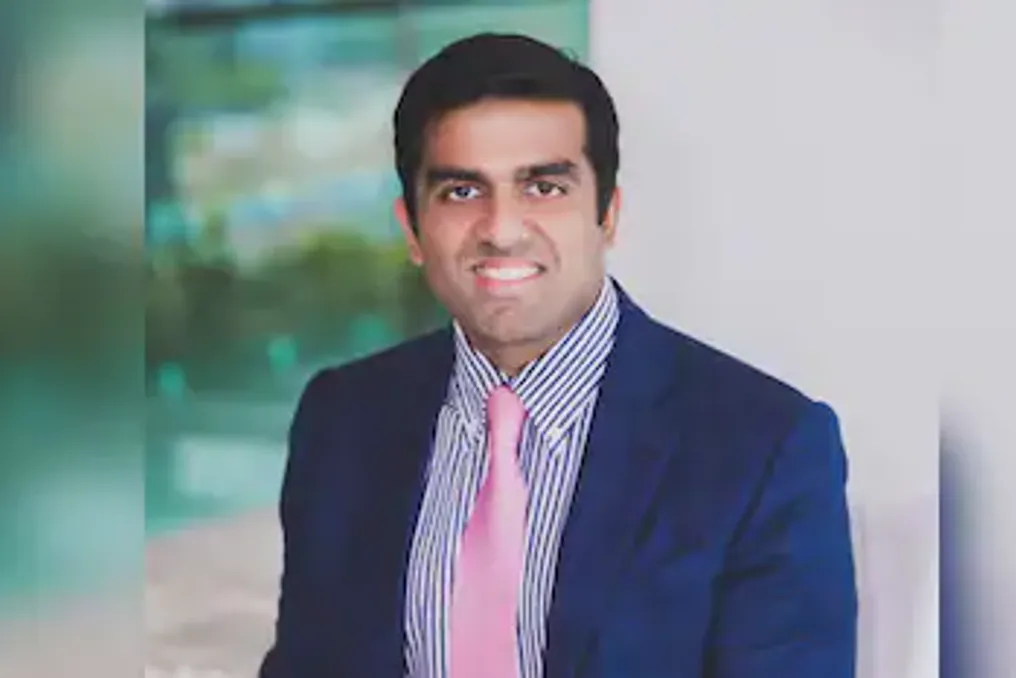
Part Jindal, the 36-year-old son of JSW Group Chairman Sajjan Jindal and Managing Director of JSW Cement and JSW Paints, was appointed Chairman of JSW MG Motor India on Monday. This appointment strengthens his central role in the group's expanding automotive ambitions.
Jindal has been on the board of directors of the joint venture between JSW Group and China's SAIC Motor since its inception and has actively participated in the product strategy, production expansion, and localization program of the company.
His promotion comes as JSW's automotive aspirations extend far beyond MG. The group is simultaneously developing an independent passenger vehicle manufacturing business under the JSW Motors brand, preparing vehicles using technology from China's Chery Automobile, and negotiating a potential partnership with Volkswagen Group regarding its operations in India.
Jindal himself emphasized the scale of these plans, stating in an interview last year: 'I think our entry into the automotive industry will be the next steel for the group.'
Jindal spoke about the desire to create an operational track record independent of his family name. He recalled feeling at the beginning of his career that his place in meetings was determined by being the promoter's son rather than his own achievements. By taking over the loss-making cement business and later building JSW Paints, he gained the opportunity to build this track record.
He noted in the same interview: 'My thought was: can I create my own footprint? My own name, even in my own head?' The automotive industry now provides this ambition on a much larger and more complex level.
When JSW and SAIC signed the agreement in 2023, it was Jindal who signed the deal with SAIC President Wang Xiaocheng at MG's headquarters in the UK. This partnership gave JSW a 35% stake in MG's Indian operations and provided for a higher degree of localization, capacity expansion, and a larger electric vehicle portfolio.
Since then, MG has provided JSW with an operational automotive platform instead of requiring the group to build the business from scratch. Windsor EV has become an important electric model for the company, and JSW MG has introduced the battery-as-a-service offering in an attempt to lower the initial cost of purchasing an electric vehicle.
The need for significantly larger investments
JSW MG and its suppliers are investing around 6,000 crore rupees, including approximately 3,500 crore rupees from the company itself and 2,500 crore rupees from suppliers. Their Halol plant is expanding from approximately 110,000 vehicles per year to 220,000 units by January 2028. The company is also increasing the level of localization: Windsor and the recently launched Hector Tomahawk are expected to reach about 70% localization by the end of calendar year 2027.
However, MG is only one component of JSW's automotive plans. The group has created JSW Motors as a separate business for future sales of vehicles under its own consumer brand. It collaborates with Chery Automobile in terms of technology and plans to offer several next-generation powertrains, rather than relying solely on electric vehicles.
Speaking at the Davos summit in January, Jindal called automobiles the largest consumer project for JSW and announced that the group plans to launch its first passenger car under the JSW brand around Diwali 2026.
JSW is also developing a zero-emission next-generation vehicle manufacturing plant in Chhatrapati Sambhajinagar, Maharashtra. JSW Motors secured a credit line of about 8,000 crore rupees from the State Bank of India this year, partly to finance its production plans.
Separately, JSW is in talks with Volkswagen Group regarding a potential partnership concerning its operations in India. No agreements have been announced yet.
A partnership with Volkswagen would add another global automaker to JSW's expanding network of relationships in this sector. The group already works with SAIC through MG and with Chery for its independent automotive business.
Managing these various partnerships while simultaneously building its own automotive capabilities will be a key challenge as JSW scales up in this industry.
There is a pattern in Jindal's approach to other businesses: creating operational capabilities and using partnerships or acquisitions to accelerate growth.
Jindal graduated from Brown University with a degree in Economics and Political Science and received an MBA from Harvard Business School in 2016. He took over the management of JSW Cement, which today has a capacity of 24.1 million tonnes per year, and later founded JSW Paints, launched in 2019.
His biggest deal so far was in the paint sector. When AkzoNobel put its Indian business up for sale, JSW Paints initially lagged behind competing buyers. Jindal subsequently traveled to Amsterdam to engage directly with AkzoNobel's global management, attempting to improve JSW's position in the auction.
The experience of Holcim's Indian assets being lost to the Adani group taught him a lesson. Jindal said in a media interview about the AkzoNobel deal: 'From the days of Holcim... I learned that it is important to establish good relations with international management.'
Ultimately, JSW won the bid for AkzoNobel India, completing the acquisition in December 2025. This deal gave the company control over the Dulux business in India and significantly expanded the scale of JSW Paints. Jindal is now Chairman of JSW Dulux, in addition to being the Managing Director of JSW Paints.
The AkzoNobel deal also demonstrated Jindal's willingness to personally intervene when a deal risked falling through.
His interests have also led JSW into another consumer-facing sector. Jindal founded JSW Sports and is Chairman and Co-owner of Delhi Capitals, and is closely associated with the Inspire Institute of Sport. He is also a director of JSW Energy and is responsible for a number of other group ventures.
Nevertheless, the automotive industry presents a completely different level of complexity. He will have to transform these disparate elements into a unified automotive business while JSW develops its own capabilities.
Thus, his appointment as Chairman of JSW MG Motor goes beyond just another position in a growing portfolio. It places him at the center of JSW's efforts to transition from a steel supplier to the automotive industry to an independent vehicle manufacturer.