80th Anniversary of the 1946 Campaign of Passive Resistance Against Racial Injustice
Read more
IOL
iol.co.za

80th Anniversary of the 1946 Campaign of Passive Resistance Against Racial Injustice

This year marks the 80th anniversary of the Campaign of Passive Resistance, which was a landmark protest against racial injustice organized by the Natal Indian Congress. This campaign was initiated in response to the Asiatic Land Tenure and Indian Representation Act.

The Campaign of Passive Resistance began in 1946. The Natal Indian Congress (NIC) started its actions as a protest against the Asiatic Land Tenure and Indian Representation Act, which prohibited Asians from occupying controlled territories in the Durban area. Before this law was passed, the main residential areas of Indians were located across the Umgeni River, in Riverside and Hall Parade, and further inland in Duikerfontein and Lake Si Kou Leyk. A significant part of the Indian population also lived in Springfield and Sydenham, as well as in areas such as Mayville, Cato Manor, Clairwood, Barracks Store, and Bluff.

Despite the existence of informal segregation, the first major restriction was introduced only in 1922 when the municipality gained the right to exclude Indians from purchasing municipal land. Then, in 1934, the Slum Act was passed, which was formally intended to improve conditions and conduct 'slum clearance' in the city, but in fact served to expropriate Indian property, masking it as urban cleansing and industrial expansion.

Paradoxically, even in the 1970s, Indians in places like Tin Town in Springfield continued to live in shanties without basic amenities. By 1936, only 20% of Indians in Durban owned houses made of brick, stone, or concrete; the rest lived in wooden and iron structures, and the colonial government denied them electricity because it did not trust Indians.

In January 1946, the then South African Government under Prime Minister J.C. Smuts announced its intention to replace the Land Tenure Act with the Asiatic Land Tenure and Indian Representation Act of 1946, which prohibited local Indians from buying land from non-Indians. Furthermore, Indians were allowed to elect eight white representatives to existing state structures (white only) based on communal electoral rights with educational and property qualifications, which caused strong dissatisfaction among the Indian community.

The NIC sent a telegram to the Indian government requesting that it urgently appeal to the United Nations on behalf of Indians in South Africa. A mass meeting was proposed to object to the proposed bill through effective mass resistance, as well as demanding an immediate high-level conference in South Africa involving representatives from India.

In early February 1946, Indians gathered in Cape Town to organize a protest against the legislation. It was decided to first send a delegation for consultations with government officials, but this attempt was unsuccessful. On June 13, 1946, the day of Hartal was declared, when 20 Indians began the campaign of passive resistance on Thursday evening, setting up five tents on vacant land in the controlled zone at the intersection of Gail Street and Umbile Road and settling there. This group of 20 people, led by Dr. G. M. Naicker, chairman of the Natal Indian Congress, maintained strict discipline. Dr. Naicker stated: 'If he and his people are arrested or removed from the camp, then another 20 will take their place.'

The Natal Indian Congress, led by Dr. Morgamberry (Monty) Naicker, organized a mass meeting at Curis Fonian Stadium on February 20, 1946, as a day of prayer, during which Indians were asked not to go to work, and traders were asked to close their businesses. In March 1946, the NIC announced its decision to start the Campaign of Passive Resistance, and the necessary steps were taken.

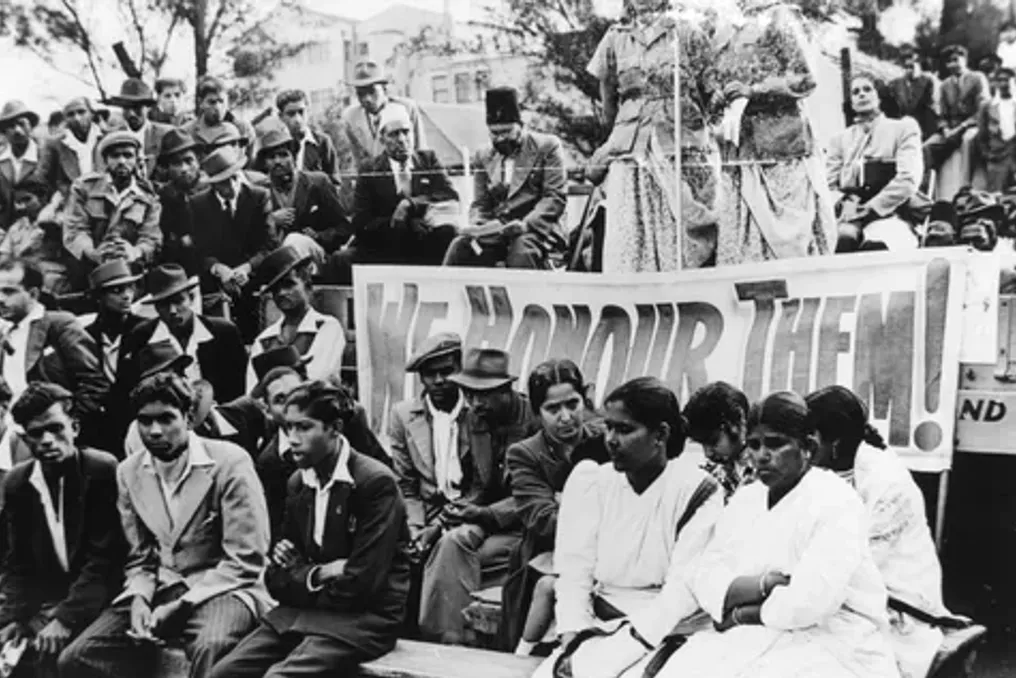
The Campaign of Passive Resistance, the first after Mahatma Gandhi's departure from South Africa, launched with a mass gathering of over 15,000 people at Red Square (now Nelson's Square in Pine Street, Durban) on June 13, 1946, followed by a march to the site at the intersection of Gail Street and Umbile Road in Durban. The first group of resistors, including 17 women led by NIC leaders, Dr. Monty Naicker, Mr. MD Naidu, and Dr. Yusuf Dadu, set up five tents on this vacant plot of land. Their constant slogan was 'Damn the Ghetto Act,' which, like the Land Tenure Act, became a precursor to the Group Areas Act of 1950, restricting Indian property ownership and leading to forced evictions.

'We will resist!' was the rallying cry of the 1946 Campaign of Passive Resistance, led by the Natal Indian Congress and Transvaal. Fatima Mir, a professor of sociology and biographer of Nelson Mandela, joined the campaign as a teenager. Recounting this momentous movement, she recalled: 'We walked in the footsteps of the great Mahatma... I remember leading my group to occupy the resistance site... We were arrested while occupying the site and taken to the Umbile police stations, where we spent the night. The next morning we appeared before the magistrate in the Durban court. We again declared our disagreement with the discriminatory laws in court and were sentenced to hard labor imprisonment. Not a single resistor paid a fine. After that, we were sent to the Durban Central Prison.'

Recalling his father's life, President Nelson Mandela wrote: 'Monty, as we affectionately called him, was a generous, cheerful man with sufficient political foresight to realize that the problems of the underprivileged residents of South Africa affected not only ethnicity and needed to be solved on a broad united front. He breathed new life into the mighty Natal Indian Congress, founded by Mahatma Gandhi in 1894, when he took its chairmanship in 1945, and mobilized the Indian people for militant passive resistance against General Smuts' racist laws. He tirelessly fought for the rights of all South Africans until the end of his life and remains deeply rooted in our history as an outstanding participant in the struggle for freedom.'

For Monty Naicker, the years from 1960 to 1974 were a period of constant bans that restricted his life and effectively cut him off from any political activity. Despite declining health, from 1977 he became the head of the Anti-South African Indian Council to re-mobilize the Indian people to reject the fictitious Indian Council and the fraudulent three-chamber parliament for whites, Coloureds, and Indians. Almost at the last moments, when visited by his close friend Yusuf Dadu and Dr. Gunam, they reported what Monty Naicker said on his deathbed: 'Monty... Hello... How are you?' — he replied: 'Fine, moving forward—but things in this country—they move too slowly—too slowly for change.' His hand rose in a clenched fist and remained there. 'Amandla!' he said. The clenched fist grew stronger... My father died as he lived, defiantly and unyieldingly devoted to the freedom and ideology of the Congress movement.'

In honor of the 80th anniversary of the Campaign of Passive Resistance, the call is to draw strength from the courage, determination, and resistance of all those who chose to oppose injustice. Inspiration must be drawn from their aspiration to build a better life for the entire South African nation.
Similar stories

Memory of the Class of 1956 Women: 30 Minutes of Silence in Front of the Union Building
Read more
iol.co.za

Memory of the Class of 1956 Women: 30 Minutes of Silence in Front of the Union Building

The author notes that modern women, including the author herself, stand on the shoulders of brave women who made huge sacrifices to reach the Union Building and observe 30 minutes of silence.

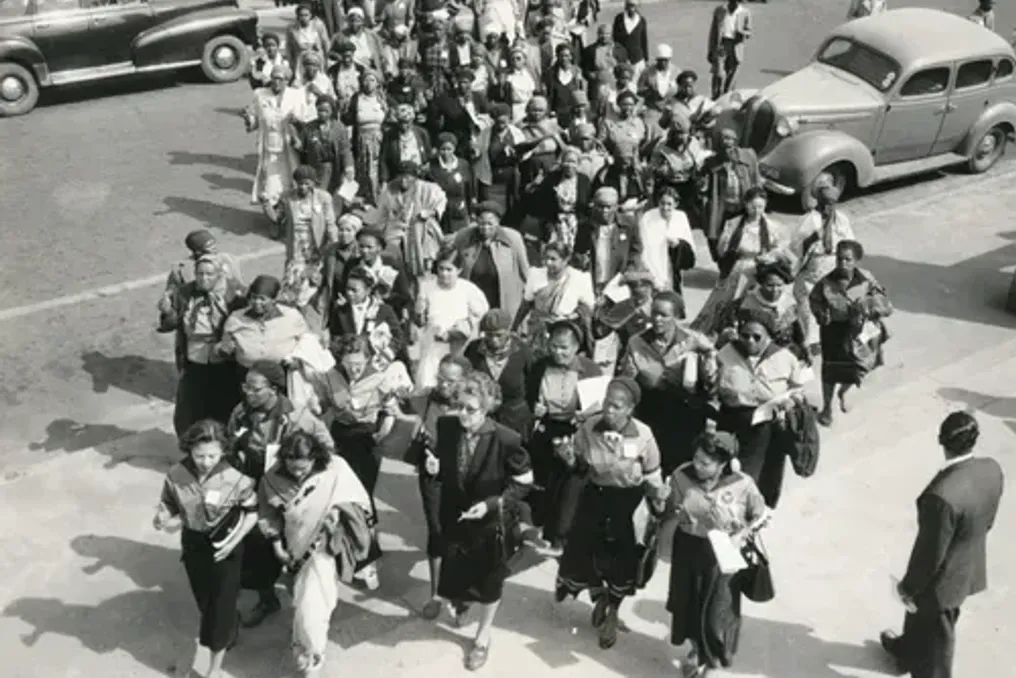
The entire month of August is traditionally dedicated to honoring courageous women who marched to the Union Building on August 9, 1956, an event that occurred about seventy years ago. For many, this is just another state holiday. This year there was an additional day off due to a decision the author calls a 'moment of foolishness or madness,' according to which the Monday following a Sunday holiday must also be a public holiday.

The author became interested in the details of organizing this march, which mobilized about 20,000 women. Lillian Ngoyi recalls in her book that the ANC leadership was not entirely confident in the success of this procession, doubting the women's ability to withstand the brutality of apartheid police. However, the women did not back down and convinced the leadership that everything would be fine and that there was a backup plan.

The details of planning the march day are astonishing. It began two years before the event. Modern technology did not exist in that era. Planning required women to visit homes in the evenings to obtain permission from men for their wives and daughters to participate in the procession. The time was chosen for the evening when men returned from work, despite it being the middle of winter, and it was unsafe for anyone to be outside, especially for women.

The march had to take place under absolute secrecy due to fears of Special Branch agents. Some men refused to give consent. Furthermore, there was no funding, so women raised money by using their skills in cooking, knitting, or sewing and selling these items.

The main goal of this march was to demand the repeal of pass laws. At that time, women could not open bank accounts, own housing or other assets, vote, and their earnings were at least 50% lower than those of male colleagues, even when performing the same job. These women showed great courage.

The women faced severe penalties: Lillian Ngoyi was banned for 15 years, Helen Joseph was placed under house arrest, Sophie de Bruyn was only 18 years old, and Rahima Musa was heavily pregnant. Unfortunately, the march was not successful because the newspaper Strijdom did not come out to meet thousands of women, and they left their petition on the floor. Nevertheless, they maintained their dignity and demonstrated the power of unity. They were punished when the pass laws were expanded to include women.

Despite the initial failure, the actions of these women contributed to raising the status of women, transforming them from second-class citizens into equals to men. Today, our daughters have rights that the Class of 1956 did not have, such as access to education and equal opportunities in the workplace. However, the question remains: are we truly free?

Sophie de Bruyn, one of the active participants in the march, shared her reflections at the Union Building on August 9. She said that after so many years, she feels both pride and sadness: pride that they influenced women's rights, and sadness that women are still marginalized, especially those facing gender-based violence (GBV).

In recent years, GBV, in the author's opinion, has increased and become more brutal, affecting victims and children. Nevertheless, Sophie de Bruyn maintains hope, emphasizing that women are a resilient gender. Many companies mark Women's Day with events, inviting 'successful' women to speak as speakers to inspire others. The author considers such events a conversation with those already convinced.

Some of these events are very expensive, starting from R250 per person and going up to R750 or more, which for some amounts to a month's supply of food or weekly transport costs. In addition to promises of luxurious lunches and teas, there are special offers during Women's Month advertising cosmetic procedures, such as 'Goddess Flush' or 'Angelic Haze,' costing around R2000. The author questions the advisability of such spending.

The article also mentions an advertised 50% discount offer related to vaginal strengthening and rejuvenation. Although the author is not interested in this procedure, they contacted the salon to learn about the process. It turned out to be a special mixture of oils and herbs in a steam boiler. The author notes how many traditional Indian practices are turning into profitable businesses and wonders about finding a similar way to earn a living.

The author is critical of high-paid invitations where the slogan features the phrase 'empowerment, connection, and celebration of the virtuous woman.' They question who defines what a 'virtuous' woman is, considering such phrasing potentially divisive. The author argues that true celebration should encompass women in all their diversity, unlike narrowly focused invitations.

In conclusion, the author supports charitable initiatives, such as a friend's event where entry was a donation to the SPCA, and an upcoming Phoenix event to raise funds for AIDS medication for people with disabilities. The author concludes that true empowerment lies in supporting those in need. They once again express admiration for the courage of the Class of 1956, urging that this bravery not be overshadowed by meaningless events in the name of Women's Day.

80-Year Passive Resistance Campaign of 1946 Laid the Foundation for Further Anti-Apartheid Struggle
Read more
iol.co.za

80-Year Passive Resistance Campaign of 1946 Laid the Foundation for Further Anti-Apartheid Struggle

The 1946 passive resistance campaign marked a turning point in the fight against apartheid. On the occasion of the 80th anniversary of this event, Selvan Naidu and Kira Naidu recall the brave protest organized by ordinary South Africans against injustice. These courageous people not only changed the course of history but also paved the way for ongoing struggle and resilience in the face of adversity.

The slogan of the 1946 passive resistance campaign, led by the Natal and Transvaal Indian Congresses, was 'We will resist!'. The central issue was the racist law dividing residential areas. Durban was the location where this struggle took place.

The resistance influenced the strategic direction of the freedom struggle in South Africa in two significant ways. Firstly, collective non-nationalist action entered the political lexicon as representatives of different races began to participate in the struggle, even if symbolically. Passive resistors Gadija Christopher and Dr. K Gunam were observed during the 1946 passive resistance campaign.

Secondly, racism in South Africa was officially included in the agenda of the newly established United Nations due to the joint efforts of the African National Congress and the South African Indian Congress. The initial cause was the violation of housing dignity. The population was growing, but the city council paid little attention to the needs of its black population regarding housing and development.

In the early 1940s, wealthier members of the Indian community began acquiring property in historically European-populated areas. This phenomenon, termed 'Indian encroachment', provoked demands for the adoption of segregation legislation. The first was the 'Fixity Act' of 1943, which prohibited real estate transactions between Indians and whites. This was followed by the Asiatic Land Tenure and Indian Representation Act of 1946. Laws targeting Indians eventually received nationwide application in the form of the Group Areas Act of 1950, which became a cornerstone of apartheid.

Between 1946 and 1948, a total of 10,267 resistors violated the law by occupying forbidden lands. Dr. Jairam Reddy, chairman of the Shastri College Alumni Association (SCAS), vividly described their sacrifice: 'They gave up their freedom so that we could be free.' The resistors preferred imprisonment, most often receiving sentences of hard labor. Their actions were revolutionary and passive only in the sense that they did not resist arrest. SCAS played an important role in creating the Resistance Monument at the intersection of Gail Street and Umbhilo Road and continues to hold memorial events on the anniversary of the campaign.

The campaign began with a historic mass gathering at Red Square on March 31, 1946, organized by the radical leadership of the NIC, which included figures such as Dr. Monty Naiker and K Gunam, MD Naidu, Fatima and Dawood Siddat, as well as Kay Munsamy. At this meeting, journalist and poet HIE Dhlomo declared support for the youth in the ANC, stating: 'Justice is not Indian, and freedom is not Indian either. We want all people to be free.'

In the then Transvaal, the ANC's President-General, Dr. Alfred Bitney Shuma, also spoke in support of the campaign at the Transvaal Indian Congress venue. June 13 was declared Hartal day, when 20 Indians initiated the passive resistance campaign by setting up five tents on unoccupied land in the controlled area at the intersection of Gail Street and Umbhilo Road and settling there. This group of 20 men, led by Dr. Naiker, chairman of the Natal Indian Congress, maintained strict discipline. Dr. Naiker noted: 'If he and his people are arrested or removed from the camp, another 20 will take their place.'

Later, Professor of Sociology and biographer of Nelson Mandela, Fatima Mir, joined the campaign as a teenager. Speaking about this pivotal moment in the struggle, she said: 'We walked in the footsteps of the great Mahatma... I remember leading my group to occupy a resistance site... We were arrested for occupying the site and taken to the Umbhilo police stations, where we spent the night. The next morning, we appeared before the magistrate in the Durban court. We reiterated our disagreement with the discriminatory laws in court and were sentenced to prison with hard labor. Not a single resistor paid a fine. Then we were sent to the Durban central prison.'

The idea of 'direct action', defined by Martin Luther King Jr. in his famous Letter from Birmingham Jail, was to 'create such a crisis and foster such a tension that the community which has constantly refused to negotiate is forced to confront the issue.' In South Africa, the seeds of non-violent resistance were sown by Mahatma Gandhi in various Satyagraha campaigns fighting other racist laws.

The Smuts government insisted on preventing the 'arrival of foreigners', but it was forced to confront this issue. The crisis culminated in 1946 at the United Nations, when delegations from the ANC and the South African Indian Congress jointly lobbied diplomats and international media. Smuts found himself in an extremely awkward position at the UN and was condemned as a racist South African. India became the first country to sever diplomatic relations with South Africa and imposed cultural and trade sanctions.

The history preceding the 1946 campaign and the issues of land and housing are instructive. Before the acts were passed, the main areas occupied by Indians were located across the Umgeni River, in Riverside and Prospect Hall, and further inland in Duykerfontein and Sy Coe Lake. Springfield and Sedanham were also predominantly Indian. Indians also settled in places such as Mayville, Cato Manor, Clairwood, Magazine Barracks, and Bluff.

Although informal segregation existed since the first colonial invasion, the first major ban was introduced only in 1922 when the municipality excluded Indians from purchasing municipal land. The Slum Act was adopted supposedly to improve sanitation but served as a cover for the expropriation of Indian property. Ironically, even in the 1970s, Indians in places like Tin Town in Springfield still lived in shanties without basic amenities. By 1936, only 20% of Indians in Durban owned brick, stone, or concrete houses; the rest lived in wooden and iron structures.

Indians were forcibly evicted from areas such as Mayville, Cato Manor, Clairwood, and Magazine and Railway Barracks. By 1950, advertisements appeared in newspapers for an exclusively Indian suburb called 'Umkhlatuzana'. Later, Red Hill and Silver Glen (later Chatsworth) were also advertised. Reservoir Hill was also declared an Indian area. North and south of Durban, La Mercy and Isipingo Beach were also designated as Indian areas. In Mirebank, specially designed houses were built instead of poor settlements, and by the late 1950s, the reconstructed Mirebank offered affordable housing with installment payments.

The housing issue remained a pressing problem throughout the years of apartheid, and organizations such as the Cato Manor Residents Association and the Durban Housing Legislation Committee continued the work of the brave men and women of the 1946 campaign. Despite the defeat of apartheid in the democratic elections of 1994, the need for land and dignity remains one of the main challenges facing the state and society.

To commemorate the 80th anniversary of the 1946 passive resistance campaign, SCAS will hold a ceremony honoring the resistors at a historical site, as well as an additional program on the Shastri College campus on August 22.

Popular