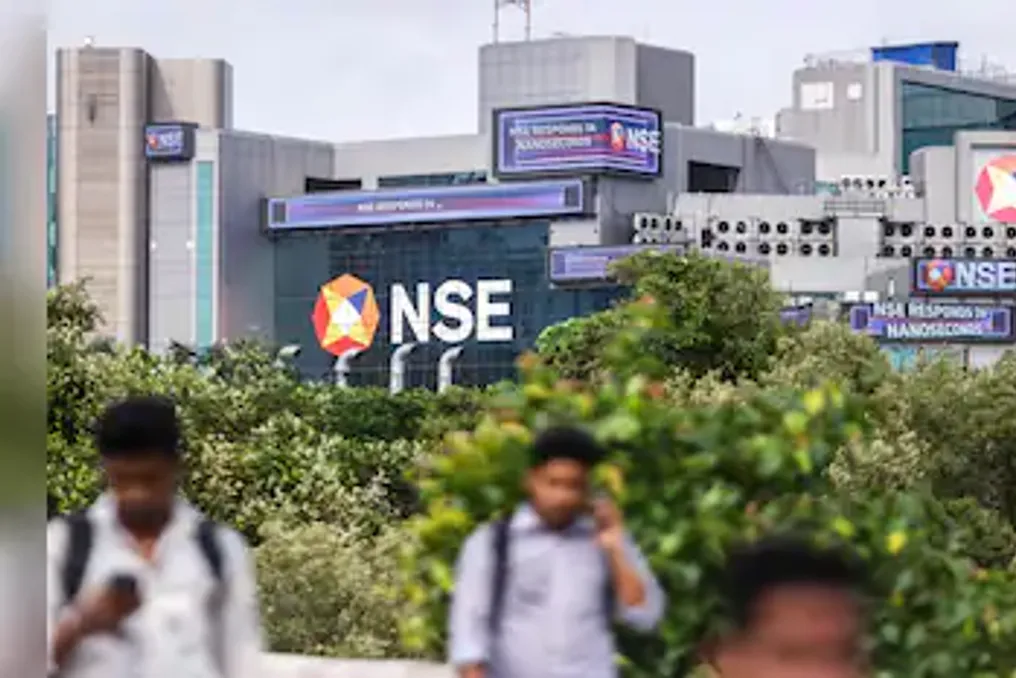
India's new closing auction system faces a significant test on Monday due to the MSCI index rebalancing, which is expected to channel around $5 billion through the markets via passive fund trades, raising liquidity concerns.
The quarterly adjustment of MSCI indices is scheduled for Monday and will be a key moment to test the mechanism's ability to handle large institutional orders without sharp price fluctuations, which have worried traders since the system's launch at the beginning of the month.
According to Brian Freitas, founder of Periscope Analytics in Oakland, the index changes could trigger trading turnover of about $5 billion from global passive funds, with approximately $4 billion passing through the Closing Auction Session.
Freitas noted that the situation 'could become quite complicated,' as the expected inflow is thirty times the typical throughput capacity of the CAS window.
The scale of this event significantly exceeds what the auction has handled previously; daily turnover usually amounted to around $125 million. This rebalancing will once again draw close scrutiny to the Indian Securities and Exchange Board's most significant market reform following negative trader reactions.
Last Thursday, the BSE Sensex experienced a 'flash crash' during a 20-minute auction, intensifying anxiety regarding insufficient liquidity and manipulation within the trading window.
Passive funds are obligated to strictly track their benchmarks, so index changes may prompt large buy orders for added or increased-weight stocks and sell orders for excluded or reduced-weight stocks. These trades are typically executed near the actual close to minimize tracking error, concentrating a large volume of supply and demand within the auction.
MSCI stated in an electronic filing that it will monitor the 'practical effectiveness' of the new closing auction based on feedback from market participants, including its clients and index users.
The Indian market regulator stated that the auction was designed to reduce tracking error for passive funds and bring the stock market in line with global standards. Last week, Chairman Tushar Kant Pandey reiterated that the new mechanism would remain in effect despite growing calls for its modification.
Following the latest quarterly review, MSCI announced that Lenskart Solutions Ltd., Laurus Labs Ltd., Adani Energy Solutions Ltd., and Billionbrains Garage Ventures Ltd. would be added to its standard indices, while Balkrishna Industries Ltd., SBI Cards & Payment Services Ltd., and Astral Ltd. would be removed. According to Abhilash Pagaria of Nuvama Wealth Management Ltd., the weight reduction of Reliance Industries Ltd. would lead to an outflow of about $500 million.
Most passive funds are likely to execute the bulk of these trades through the auction window, as this allows them to conduct operations closer to the official closing price, according to Pratik Oswal, head of passive business at Motilal Oswal Mutual Fund. However, the scale of the rebalancing means some orders may require different handling.
Oswal warned that the 'primary execution risk is liquidity, especially in smaller quantities of less traded stocks, where absorbing large orders without significant price impact can be difficult.' He added that for relatively less liquid issuers, funds might have to execute some trades during the regular trading session.
The risk is less pronounced for index 'heavyweights' with deeper order books, so stocks like Reliance should handle larger volumes more smoothly, according to Oswal.
One of the main challenges is attracting a sufficient number of investors to the auction to ensure liquidity, a hurdle other markets faced when implementing similar systems. For instance, Australia also observed sharp fluctuations initially after implementation, including during the Covid period, when nearly 3 percentage points of the S&P/ASX 200's 4.4% growth occurred during the auction.
Andrew Sullivan, founder of Asian Market Sense in Hong Kong, termed this a 'chicken and egg problem': 'Institutions want to see that the system works, is fair, and free from manipulation before participating. Once they see that, they will start participating, and liquidity will deepen.'