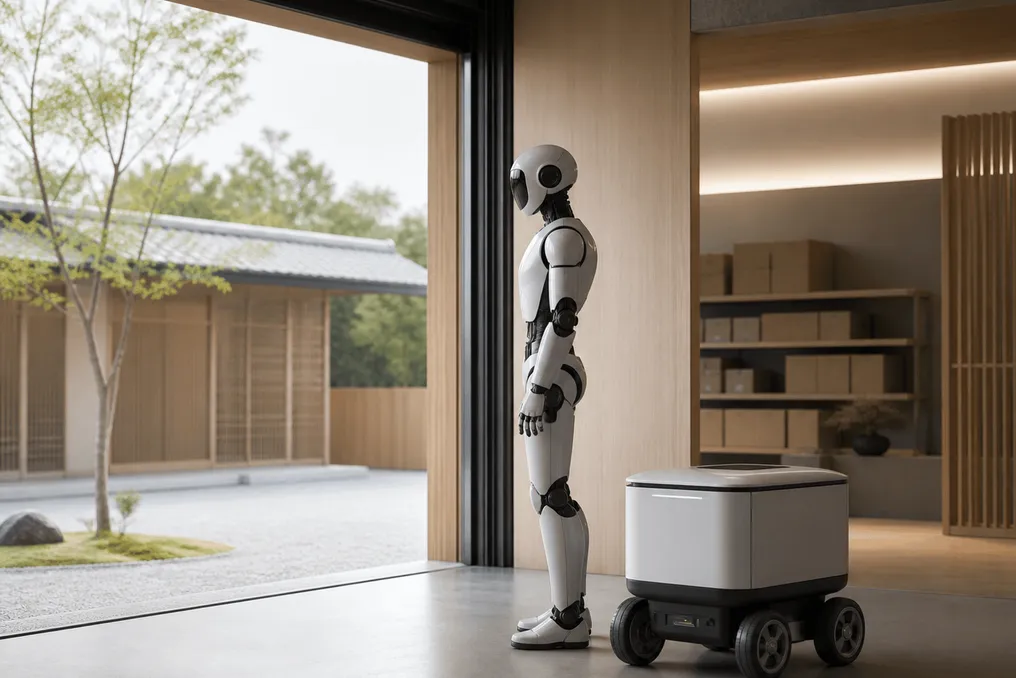
At the 80th birthday celebration of a man in Japan, two Chinese humanoid robots danced on stage, after which one of them extended its hand to a guest with a gift. This image has become a symbol of a growing trend: robot manufacturers from China are actively entering one of the world's leading robotics economies.
An engineer from a Japanese humanoid software development firm noted that Unitree has become one of the most well-known Chinese humanoid brands in Japan, as clients increasingly approach this company directly. According to Smart Analytics Global, Chinese manufacturers accounted for 97 percent of global shipments of humanoid devices, totaling about 18,500 units in the first half of 2026. Japan, facing an aging population where demand is concentrated in warehousing, restaurants, domestic services, automotive manufacturing, and airports, is a key target market for these companies.
Japan's industrial robotics base remains strong. Its manufacturers dominated the traditional 'four giants' and exported about 45 percent of global industrial robots in 2020. However, new service and logistics sectors require equipment that is easier to implement and adapt.
McKinsey predicts that Japan's available workforce will decrease by approximately 1.5 million people over the next two decades. Furthermore, a survey conducted by Reuters-Nikkei showed that 34 percent of 220 firms are already using, planning to use, or considering using AI robots.
Nevertheless, Chinese companies face the reality that this market is not an easy path to success. Japanese buyers prefer automation that integrates into existing processes, is serviced by local teams, and demonstrates tangible returns, rather than just an impressive humanoid performance. Geek+, which provides warehousing services, completed its first overseas project in Japan in 2017. Pudu's BellaBot delivery robot entered restaurant chains, and the home automation brand SwitchBot now serves over two million Japanese households.
In May 2026, Hitachi partnered with UBTECH, and in June, Unitree signed an agency agreement with GMO AIR in Japan. Product distribution is carried out through trading houses and system integrators, and sales cycles are often long, sometimes stretching over years. Keenon opened a branch in Japan in 2022, which includes over 200 support points, while Dobot opened an office in Tokyo in 2023. Orders for robotic products in Japan reached 1.0456 trillion yen in 2025, a 25.7 percent increase. For Chinese participants, Japan remains a test of patience and long-term commitment.