In the mountainous regions of southern Kyrgyzstan, the sounds of heavy machinery are becoming part of a larger story. Excavators and loaders from the Chinese manufacturer LiuGong are being used in the construction of the China-Kyrgyzstan-Uzbekistan (CKU) railway in Jalal-Abad, Kyrgyzstan. Construction work is progressing on a route that has been discussed for almost three decades. This equipment is being used for earthworks and material transportation as the cross-border railway line takes shape.
For local worker Marcel Chokoyev, this project has also provided an opportunity for learning. He joined the LiuGong team in Kyrgyzstan in February 2026 with minimal knowledge of construction equipment. Within six months, he was able to provide basic technical support and consult with local clients, working alongside his Chinese colleagues and helping to bridge communication gaps between the company and local customers. The story of this young employee demonstrates the broader relationship being built not only through roads and railways but also through deepening economic interaction and growth in educational and skills development exchanges.
From construction projects to trade flows
The CKU railway is one of the most closely monitored infrastructure projects in Central Asia. The idea was first proposed in the 1990s and has been under discussion for about 30 years. Significant construction work began in 2025 with the launch of the construction of three major tunnels in Kyrgyzstan. Upon completion, the railway is expected to provide a shorter land route connecting China with Central Asian countries.
This railway is part of a broader transport network forming between China and Kyrgyzstan. The first and second stages of the "New North-South" highway have been completed and opened to traffic, forming part of a major north-south route through the mountainous country. Both countries have also worked to improve cross-border connections and simplify trade. Growth in trade volume is reflected in statistics: in the first seven months of 2026, trade between China and Kyrgyzstan reached $11.7 billion. According to the Ministry of Commerce of China, there is rapid growth in the export of Chinese mechanical and electrical products, as well as products from the "new trio"—electric vehicles, lithium-ion batteries, and photovoltaic products. China remains Kyrgyzstan's largest trading partner, and direct Chinese investment in Kyrgyzstan exceeded $2 billion by the end of July.
Simultaneously, Kyrgyz products are gaining wider access to the Chinese market, including agricultural products such as honey and fruits. Bilateral cooperation also extends to agrotechnology and other sectors.
Power grids and growing ties
Connectivity has also expanded in the field of energy and green development. The Datka-Kemin 500 kV power line project, implemented with Chinese financing and expertise, connected the northern and southern power systems of Kyrgyzstan, strengthening the national electricity transmission grid. Cooperation subsequently expanded to renewable energy sources, including hydropower and solar energy.
According to the Ministry of Commerce of China, projects in large-scale infrastructure, energy, minerals, agriculture, and green development are developing steadily. These achievements come against the backdrop of a broader expansion of bilateral economic ties. More than 30 years after establishing diplomatic relations between China and Kyrgyzstan, the two countries upgraded their status to comprehensive strategic partnership in 2018, and then again raised it to comprehensive strategic partnership of a new era in 2023. In 2025, the presidents of the two countries met multiple times as the sides continued to expand cooperation and translate common development goals into concrete projects across various sectors.
Training the workforce of the future
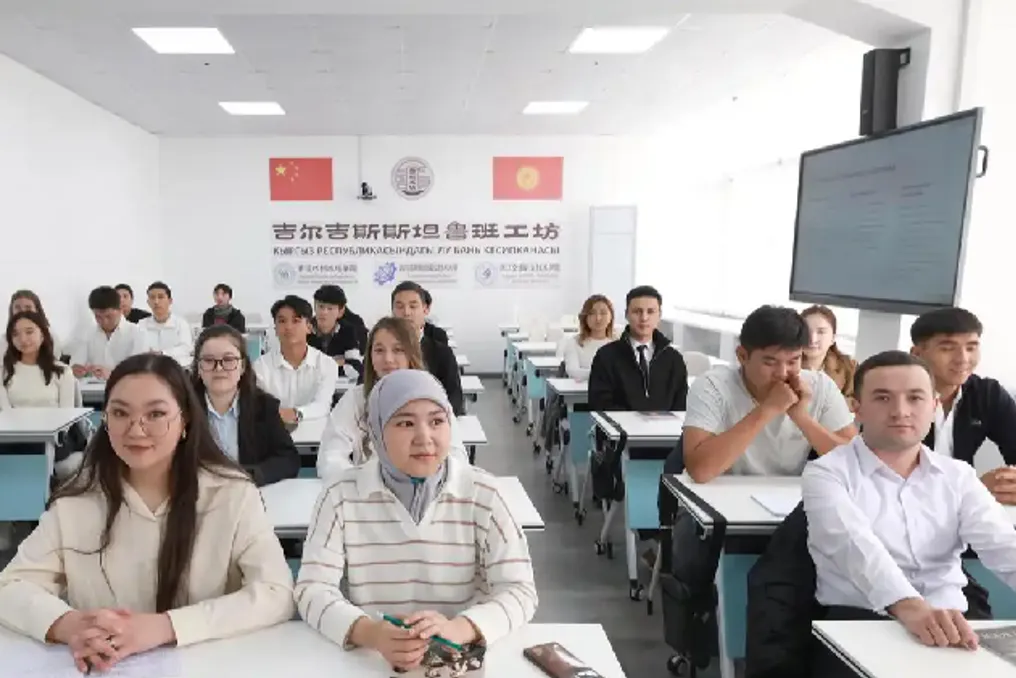
Another form of connection is being formed in Bishkek that requires neither roads nor railways. At the Luban Workshop at the Kyrgyz State Technical University in Bishkek, vocational training is closely linked to sectors contributing to Kyrgyzstan's development, including water resource management and electrical equipment. This workshop, jointly established by the Jiangxi University of Water Resources and Electric Power, the Jiangxi Institute of Communications, and the Kyrgyz State Technical University, has trained thousands of local technical specialists. Its curriculum standards for intelligent water and electrical equipment management are now integrated into the country's national education system.
Language and cultural exchanges are also expanding. Confucius Institutes and Confucius Classrooms in Kyrgyzstan provide local students with the opportunity to study the Chinese language and learn about Chinese culture. These cultural and educational programs have promoted increased opportunities for exchange between the peoples of the two countries. The railway connects markets, roads unite communities, energy projects strengthen power supply networks, and professional training connects youth with new skills. Although the railway is still under construction, the network around it is already forming through trade, infrastructure, technology, education, and daily human contact.