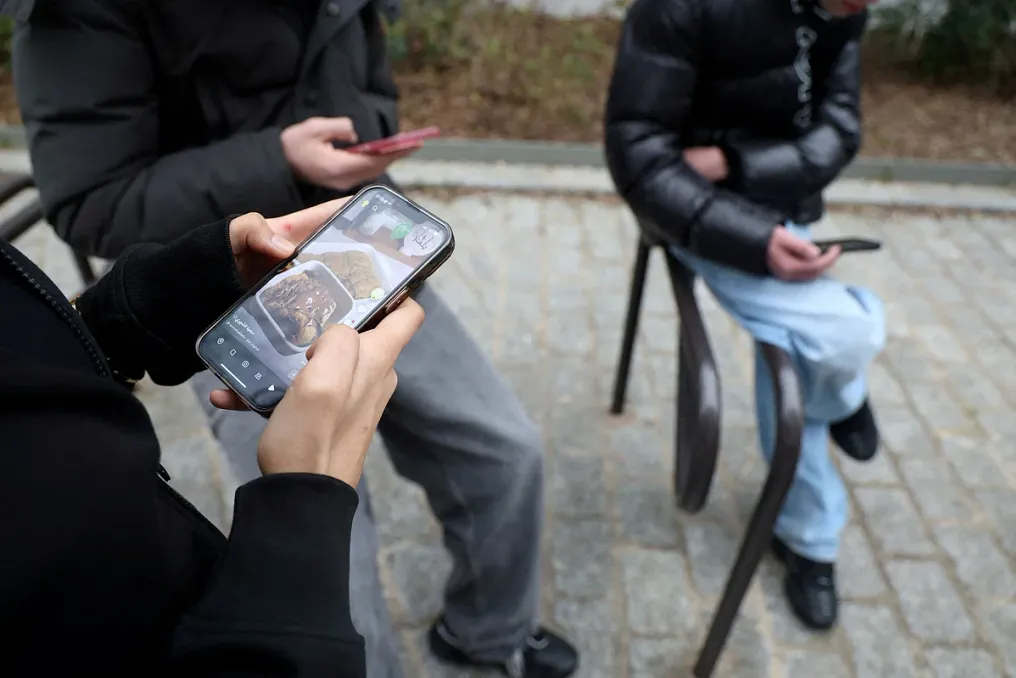
Following the end of summer vacation, UAE students returned to classrooms where schools are once again attempting to balance the use of technology in education with concerns related to distractions, screen time, and overall student well-being.
This debate gained new momentum after the French parliament approved legislation in July banning children under 15 from social media access and prohibiting mobile phone use in senior classes. This step is supported by President Emmanuel Macron's initiative to reduce screen time, amid concerns from medical experts about the impact of excessive screen use on child development.
However, for families in the UAE, restrictions on mobile phone use at school are already a reality. Last year, a ministerial decree banned students from bringing mobile phones to public and private schools in accordance with the Ministry of Education's curriculum, stipulating penalties for violations.
Although private schools do not follow a unified policy, many have implemented their own measures, including requiring phones to be surrendered or stored in secure locations during the school day.
Noufal Ahmed, founder and CEO of Woodlem Education, noted that the UAE has already 'taken a clear stance' regarding mobile phone use in schools, aiming to create a more focused and disciplined environment. He emphasized that successful implementation depends on consistency, communication, and a strong partnership with parents.
Ahmed added that students must understand the purpose of the policy, rather than perceiving it merely as a restriction. Schools set clear expectations from day one and enforce them fairly. In his view, schools should use this policy as an opportunity to promote digital responsibility alongside care for well-being, sports, reading, and creativity. Non-compliance can lead to confiscation of phones for the academic year, and success should be measured by the growing 'digital maturity' of students.
At Diyafa International School in Abu Dhabi, Director Nicole Haynes stated that these restrictions are part of broader efforts to support students academically, socially, and emotionally. She clarified that the mobile phone ban is part of their overall commitment to creating an environment where students can thrive academically, socially, and emotionally. Clear expectations were communicated to students, parents, and staff before the start of the new academic year so that everyone understood both the requirements and the reasons behind them. Furthermore, according to Haynes, this does not mean excluding technology from education.
The school continues to run a Bring Your Own Device (BYOD) program starting from the 3rd grade, allowing students to use technology for structured learning under teacher supervision and with protective measures in place. Haynes highlighted the importance of distinguishing between personal smartphones and educational devices, as schools aim to minimize distractions without abandoning technology.
For the Director of JSS Private School, Chitra Sharma, the French experience serves as a warning about what can happen if the logistics of a phone ban are underestimated. She believes the most valuable lesson from France is cautionary. French unions do not object to the principle of the ban but warn that many schools lack the systems, staff, and storage facilities to implement it effectively.
Sharma noted that the international pattern is such: phone bans rarely fail because the idea is flawed; they fail due to underestimating logistics and leaving enforcement up to individual teachers. She suggested that the UAE could benefit from having an existing regulatory framework and strong communication between parents and schools, but insisted that sustainable compliance must go beyond simple device confiscation.
In her opinion, the ban controls behavior for seven hours a day but does not teach judgment for the remaining seventeen. A student who surrenders their phone at 7:30 AM and then scrolls through feeds until 2:00 PM has not developed healthier relationships with technology—they have simply been paused. Therefore, ambitions must be broader than mere rule adherence: schools have the opportunity to help students understand when technology truly serves them and when it subtly takes something away. This involves integrating digital well-being into daily school life, including discussions about screen time habits, social media, online safety, concentration, and sleep. She concluded that educational devices must be kept separate from personal phones. School laptops and tablets can remain central elements of learning where they are beneficial, under proper supervision. Personal smartphones belong to a completely different category because they introduce social media, group chats, and notifications into the school day. Clear demarcation helps students view the policy as targeted, not anti-technology.