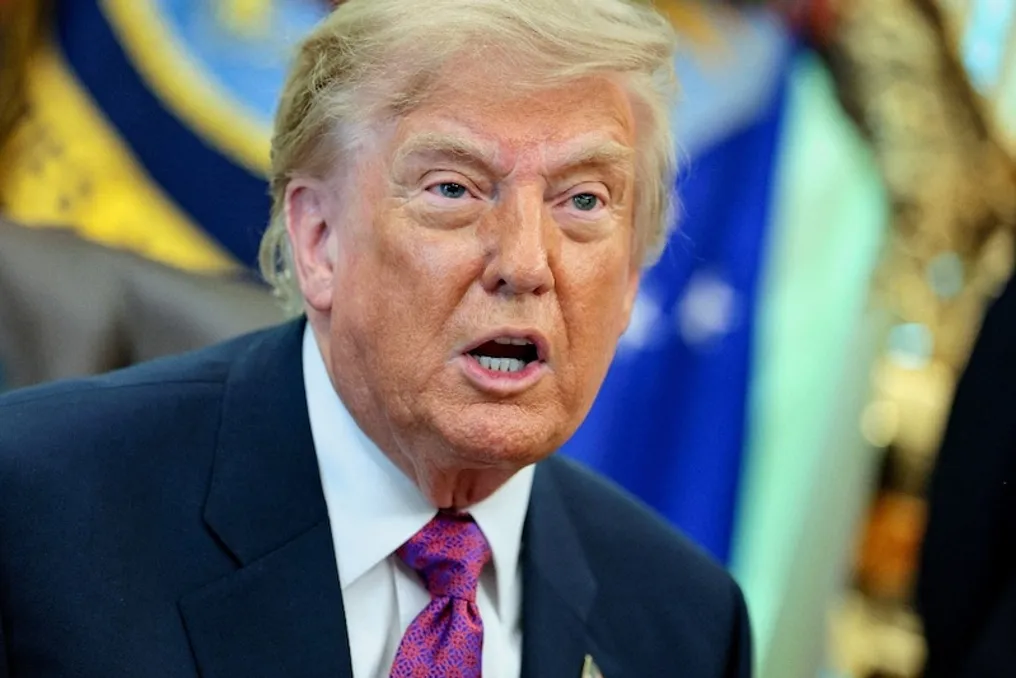
American President Donald Trump stated that the oil obtained through a recent agreement with Venezuela will be used to replenish the U.S. Strategic Petroleum Reserve (SPR). This reserve reached its lowest level in over four decades.
Trump announced that the process of replenishing the reserve will start soon, calling the Venezuelan oil a 'gift from Venezuela to the American people.' He also blamed the previous administration of Joe Biden for nearly depleting the reserve.
According to data from the U.S. Department of Energy, in August, the crude oil stock in the SPR was about 28.97 crore barrels, which is the lowest figure since November 1982.
On Friday, Trump announced the signing of the agreement. According to him, thanks to partnerships with private companies, the U.S. will receive a controlling stake in over 65 billion barrels of confirmed Venezuelan oil reserves. He emphasized that this will allow the U.S. to access a significant portion of Venezuelan reserves without additional costs to American taxpayers.
In turn, interim President of Venezuela, Dilcy Rodriguez, later stated that the energy agreement will be valid for 25 years and provides for the development of 17 strategic oil production areas. The initial production target is set at over 1.5 million barrels per day, and the plan includes eight new oil blocks. Rodriguez specified that Venezuela will retain sovereignty over its natural resources, using foreign capital, technology, and expertise to restore its oil industry.
Despite Venezuela possessing the world's largest confirmed oil reserves, it currently produces only about 1.25 million barrels per day due to lack of investment, poor management, and sanctions.
Despite Trump's statements, it remains unclear how quickly the oil from Venezuela will begin flowing into the SPR. Trump did not provide detailed information on the structure of the agreement, the involved oil production areas, the companies, or the mechanism for the U.S. to obtain a controlling stake. Furthermore, Venezuela's old oil infrastructure will require major investments before its production can be increased. Large throughput capacity is needed for the extraction and transportation of heavy crude oil, so increasing supplies may take a long time.
The Strategic Petroleum Reserve was created after the 1973 oil embargo. It is the world's largest emergency crude oil stockpile, designed to support the U.S. in case of serious supply disruptions. The reserve has a potential storage capacity of about 71.4 crore barrels of oil, but after recent reductions, only about 29 crore barrels remain, which is approximately 40 percent of the total capacity.