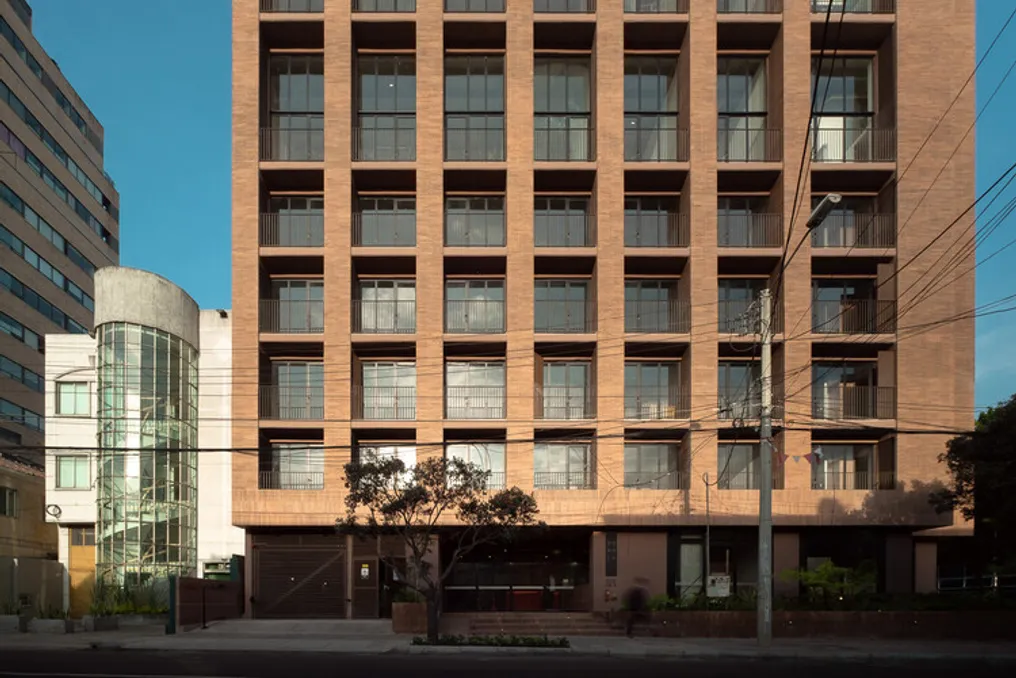
The Boroló project, developed by AR-AR Martínez Arquitectura y Paisaje in collaboration with María Paula González Bozzi, is located in the Teusaquillo neighborhood. This area of the central zone is notable for its historical brick architecture and its vibrant cultural dynamics.
The work proposes a contemporary reinterpretation of the typical architecture of these neighborhoods, which helped define the identity of life in the city of Bogotá. In response to the growth of individual residences, students, and young professionals, the project aims to offer functionality in more compact environments, adapting to the needs of a modern metropolis without neglecting the connection to local memory.
The project recognizes that quality of life transcends private space, also depending on the possibility of integrating housing with community settings that stimulate daily encounters. The relationship with the neighborhood is a fundamental pillar, realized through the concept of the collective house.
In this model, large common areas dedicated to activities such as work, cooking, rest, and socializing function as a center that complements private space and connects to the public environment. The ground floor was designed with open social spaces relative to the exterior.
The corner of the building was planned as an open area, including places for staying and integrated with vegetation, promoting a smooth transition with the public space. This vision is materialized by the use of exposed brick, created specifically for the project, in dark tones, which, along with concrete and raw materials, establishes a balance between the region's architectural tradition and the current urban language.
To elevate the living experience, the interior design adopts a color palette focused on Bourbon Red, complemented by textures of natural leather, velvet, and woods in mauve tones. This combination generates a warm and welcoming atmosphere, transforming corridors and terraces into ideal places for spontaneous and daily encounters.
The social and urban impact of Boroló lies in promoting unity, a sense of belonging, and the revitalization of the surroundings through the interaction among its residents. Additionally, the use of durable and low-maintenance materials ensures a sustainable architectural legacy, designed to maintain its relevance and age with dignity over time.