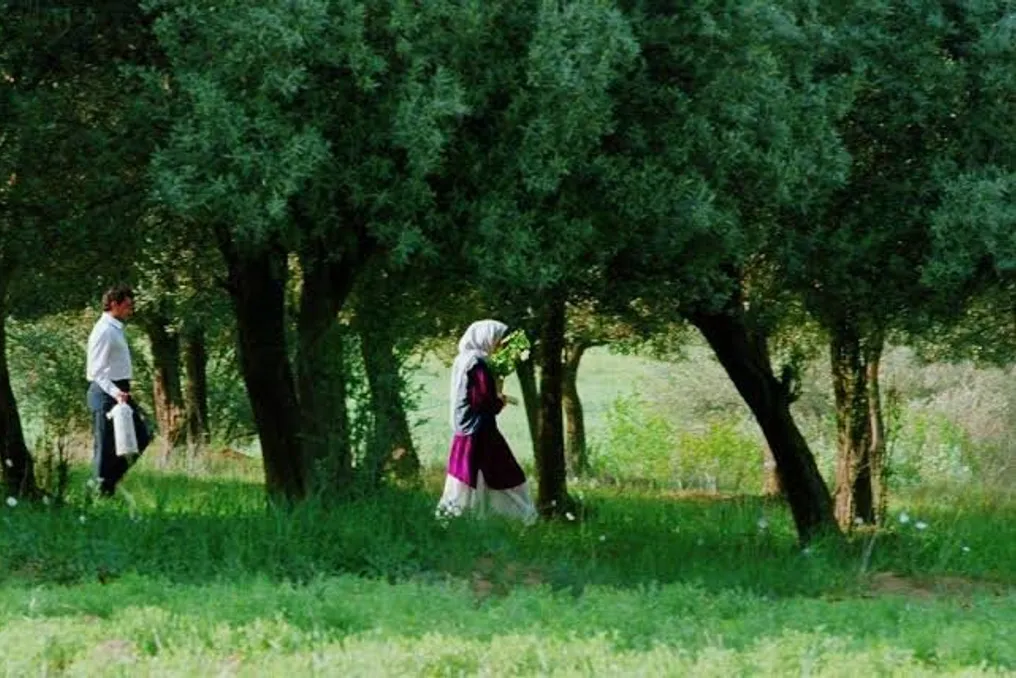
The Iranian Film Museum in Tehran will host a screening and discussion of the restored version of 'Through the Olive Trees,' directed by Abbas Kiarostami. This screening is part of the 'Guild Classics' program, with participation from the Iranian Guild of Film Directors and the Iranian Film Museum, as reported by Honaronline.
The film, considered one of Kiarostami's most significant works, will be analyzed and reviewed by film critic Said Gotbizadeh. The discussion will cover various aspects of Kiarostami's cinematic vision, his narrative style, and the film's place in his body of work.
The 'Guild Classics' program aims to examine the legacy and works of prominent Iranian directors. This upcoming event highlights the outstanding role and significance of Abbas Kiarostami in Iranian cinema.
'Through the Olive Trees' is a 1994 drama written, directed, edited, and produced by the acclaimed filmmaker Abbas Kiarostami. The film serves as the concluding part of Kiarostami's 'Koker' trilogy. The action takes place in earthquake-affected Northern Iran and centers around the filming of 'And Life Goes On…,' which is a reinterpretation of his earlier work 'Where Is the Friend's Home?'.
The film explores the interaction between art and reality, skillfully blurring the lines between fiction and truth in Kiarostami's characteristic manner. It tells the story of Hossein Rezaei, a local stonemason who becomes an actor. He faces difficulties both on and off set, where he proposes to his partner Tahereh. Misunderstandings arise due to his social status and illiteracy, leading to rejection by Tahereh's family.
As the boundaries between their on-screen roles and personal lives blur, the complexities of love and communication intensify. The film was submitted as Iran's entry for the Best Foreign Language Film at the 67th Academy Awards ceremony, although it did not receive a nomination. Nevertheless, 'Through the Olive Trees' is recognized by many as a masterpiece of cinema due to its subtle narrative and deep exploration of human relationships and emotions.
The poetic and thought-provoking plot leaves viewers contemplating because of its open ending, as the characters move through olive groves, symbolizing the ambiguity of life's answers. The film received high praise from international critics, particularly in France, and was nominated for the prestigious Palme d'Or at the Cannes Film Festival in 1994. Furthermore, it won the Espiga de Oro award at the Seminci Festival in Valladolid in 1994, solidifying its reputation. The mysterious final scene sparked lively discussions and was noted for its provocation.
In the 2012 Sight & Sound poll, 'Through the Olive Trees' was included in the top 10 greatest films of all time according to six critics and four directors. Abbas Kiarostami (1940–2016) was a highly regarded Iranian filmmaker, known for his unique narrative style and innovative approach to cinema. His films often blurred the line between reality and fiction, prompting viewers to question the nature of truth and perception.
Kiarostami's works, characterized by a minimalist and naturalistic aesthetic, deeply addressed the complexities of human feelings and relationships, offering a profound and contemplative view of life and society. Throughout his career, Kiarostami achieved international recognition and numerous awards, including the Palme d'Or at the Cannes Film Festival for 'Taste of Cherry.' He was considered a master of cinematic art, whose ability to poetically and deeply convey the essence of everyday life garnered critical acclaim. Kiarostami's influence extended beyond Iran, shaping the landscape of world cinema and inspiring generations of directors with his unparalleled vision and storytelling mastery.