Water supply enterprise in Namangan has doubled its capacity to 180 thousand cubic meters
Read more
UzDaily
uzdaily.uz

Water supply enterprise in Namangan has doubled its capacity to 180 thousand cubic meters

The Zydyakapa water intake and supply enterprise in the Uch region of Namangan region has been put into operation after a complete reconstruction. Thanks to this, its water intake and supply capacity has almost doubled, reaching 180,000 cubic meters per day, according to the press service of the Namangan region administration.

The opening ceremony took place the day before the 35th anniversary of Uzbekistan's state independence. The event was attended by the governor of Namangan region, Shavkatjon Abdurazzakov, deputy chairman of the board of JSC 'O'zsuvtaminshot', industry representatives, elders, and the public.

The enterprise's reconstruction was carried out using modern technologies as part of a project implemented with the participation of the European Bank for Reconstruction and Development (EBRD). As a result of the modernization, the former production capacity of 90,000–100,000 cubic meters of water per day was increased to approximately 180,000 cubic meters.

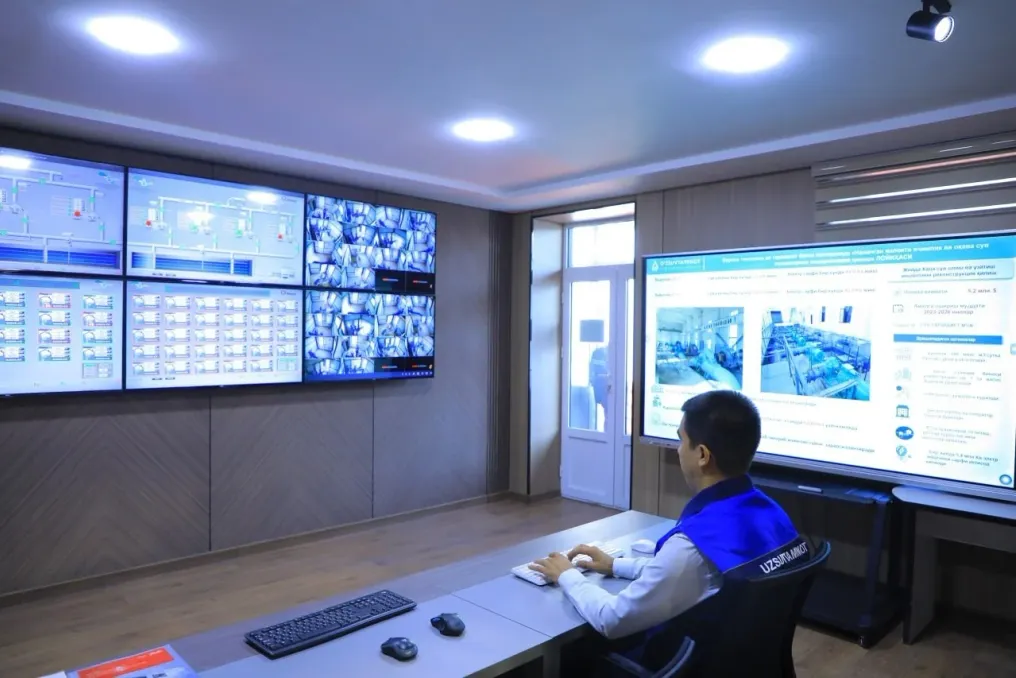
Energy-efficient pumps and motors were installed at the facility, and a digital SCADA monitoring and control system was implemented, allowing the enterprise's operation to be monitored using modern technological solutions.

The Zydyakapa enterprise plays a critically important role in the water supply system of Namangan, providing water to about 60–65% of the city's population. Thus, the goal of the reconstruction was not only to increase capacity but also to improve the stability of drinking water supply in Namangan.

During the ceremony, industry representatives and elders symbolically opened the reconstructed facility. Participants were also provided with information on the technical capabilities, operating mode, and principles of functioning of the new SCADA system.

Speaking at the event, the governor of Namangan region, Shavkatjon Abdurazzakov, emphasized the attention given to the development of regional infrastructure and improving access to drinking water. He also spoke about the current work in the region in light of new opportunities and allocated funds.

After the completion of the reconstruction works, the Zydyakapa water intake and supply enterprise resumed operations with updated technical specifications.
Similar stories

Namangan Region Launches Two Small Hydroelectric Power Plants with a Capacity of 18 MW
Read more
uzdaily.uz

Namangan Region Launches Two Small Hydroelectric Power Plants with a Capacity of 18 MW

Uzbekistan's state hydropower producer, Uzbekhydroenergo, announced that two small hydroelectric power plants—Kugai-1 and Kugai-2—were commissioned on August 25, 2026. These 18 MW stations are located in the Uchkurgan and Naryn districts of the Namangan region in Uzbekistan.

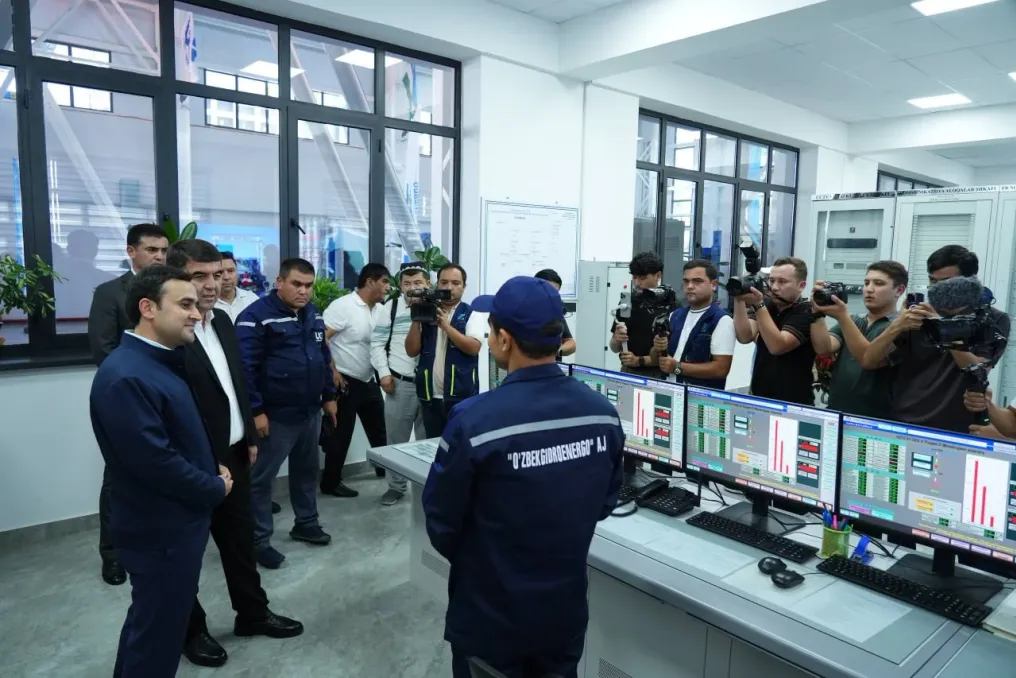
The construction was carried out on the Great Andijan Canal and took place just before the 35th anniversary of Uzbekistan's state independence. The opening ceremony was attended by the Governor of the Namangan region, Shavkat Abdurazzakov, the Chairman of the Board of Uzbekhydroenergo, Islam Abdurakhmonov, local officials, contractors, and media representatives.

Hydroelectric power plant Kugai-1 has an installed capacity of 12 MW, while Kugai-2 has a capacity of 6 MW. Their combined output of 18 MW increases the total installed capacity of ten existing hydroelectric power plants in the Namangan region by approximately 18%, raising it to a new level from 100.5 MW.

The new facilities utilize the water flow of the Great Andijan Canal for electricity generation without disrupting the main functions of the canal's water resource management. The operation of the stations does not affect the hydrological regime, the environment, or aquatic fauna.

These two stations are part of a larger project worth 54.7 million US dollars aimed at creating a cascade of small HPPs along the canal, which also includes the future Beshkurgon station. Upon the full completion of all three facilities, the total installed capacity will reach 23 MW, ensuring the generation of 172.5 million kWh of electricity annually.

Only Kugai-1 and Kugai-2 are designed to produce an average of 132.1 million kWh per year, which is enough to provide electricity to about 53,000 households annually. Furthermore, the operation of these two new stations will allow for annual savings of up to 40 million cubic meters of natural gas or 33,000 tons of coal.

This initiative is intended to expand Uzbekistan's share of renewable energy and diversify electricity production. Before the official launch, Uzbekhydroenergo also organized a traditional sunnat-toy ceremony for 11 young boys from the Naryn district.

Popular