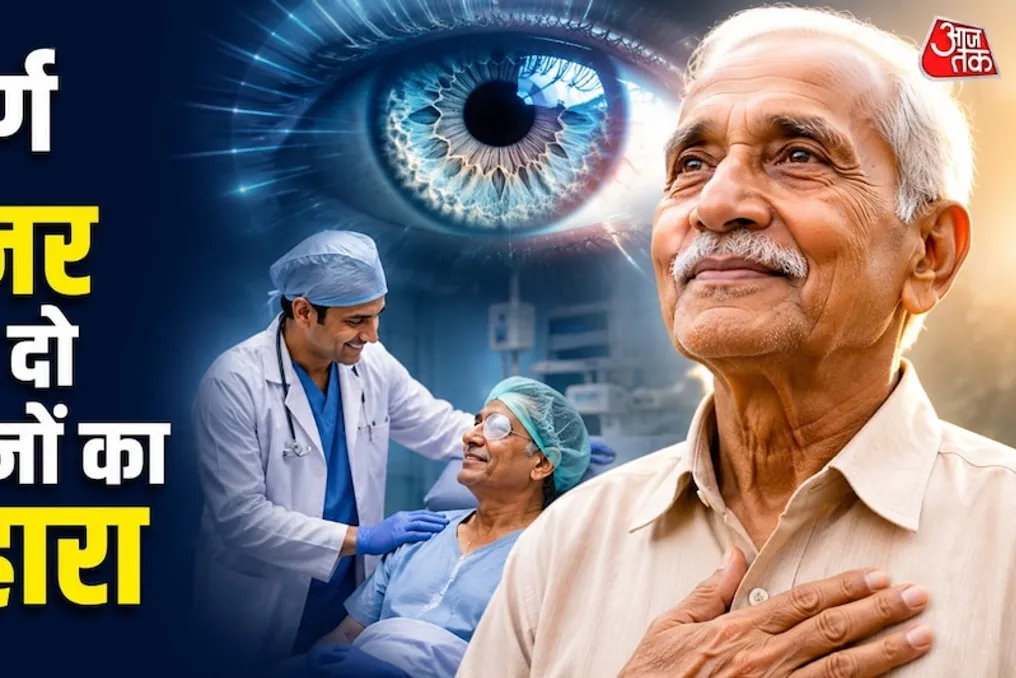
Typically, when donating vision organs, the donor's age is limited to 60, or at most 65–75 years. Although there is no strict age criterion for eye donation, donors of younger age are most common. However, a unique case occurred in France where a 100-year-old person donated their eyes, gifting sight to two patients suffering from a serious infection.
This clinical case was published in the British Medical Journal. According to the description, both patients had such severe fungal infections in their eyes that excision (removal) of the eyes might have been necessary. The infection led to almost complete vision loss. Nevertheless, thanks to corneal and tissue transplantation from the 100-year-old donor, surgeons were able to perform the operation and restore some degree of vision in the patients.
The first patient, a 55-year-old woman, suffered from keratoconus—a corneal disease. She developed a recurring fungal infection in her right eye. Over the last nine months, she underwent five corneal transplant operations, totaling six procedures on that eye, but her vision did not recover. Tests showed that this patient had aspergillosis—a fungal infection that spread beyond the cornea and penetrated inside the eye, leaving her only able to distinguish light.
The second patient, a 74-year-old man, had diabetes and had previously undergone eye surgeries. He had an infection in his left eye. As the infection progressed, his condition deteriorated to the point where he could only perceive light but see nothing. The infection also reached the internal structures of this patient's eye.
When a fungal infection is limited only to the surface of the eye, i.e., the cornea, it can be treated with medication or, if necessary, corneal transplantation. However, in the case of these patients, the infection spread deeper, affecting the internal parts of the eye, which made treatment extremely difficult. Such cases carry the risk of spreading the infection to other organs of the body. To prevent this, sometimes the entire eye must be surgically removed. This is the situation that arose for both patients, but the 100-year-old donor gave them new life.
The donor was a deceased person aged one hundred, who passed away due to a stroke. The donor's relatives decided to donate their eyes. Despite the doctors' doubts about the health of the eyes at such an age, examinations revealed that the donor's cornea and tissues were suitable for implantation in these patients. Operations were performed on both patients using tissues obtained from the donor.
The goal of this surgical procedure was not only to restore vision but, above all, to remove a significant part of the infection to save the eye. After the operation, the structure of both patients' eyes was restored. One month later, the 55-year-old woman registered a vision of 30/80, and the 74-year-old man registered 30/200. This means that their vision did not become completely normal, but instead of merely perceiving light, they were able to begin to see faintly.