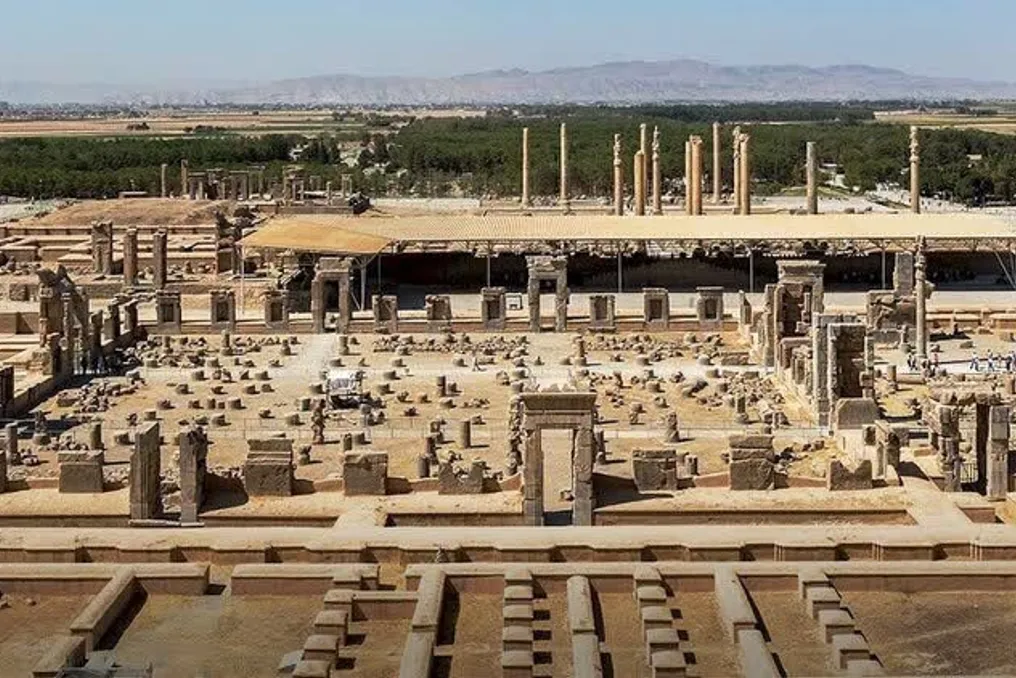
A number of new projects aimed at preserving heritage and developing infrastructure are being implemented at the UNESCO-registered site of Persepolis in southern Iran. The director of the World Heritage site announced the start of these works.
Mohammad-Javad Jafari specified that about 35 hectares of land in the Chah-Jangal garden area were recently fenced off, increasing the total protected perimeter to approximately 70 hectares.
Speaking at the administrative council meeting of the Persepolis World Heritage Site on Friday, Jafari presented the preservation and development measures undertaken over the past year. He noted that the fencing project is intended to strengthen the protection of the historical site and adjacent territories.
Other measures included improving pedestrian paths in the garden area, modernizing the surroundings of the archaeological terrace, reorganizing the entrance route and trails on the Persepolis terrace, as well as enhancing the quality of infrastructure in the garden and organizing visitor movement paths.
Jafari also added that a new route for visitors leaving the area is being planned and organized to optimize guest entry and exit management.
Furthermore, the implementation of four research contracts at the site was announced. These contracts cover geophysical and archaeological surveys in Chah-Jangal, restoration work for the Hall of a Hundred Columns (Apadana), preparation of the cadastral map of Persepolis, and research for creating a new access corridor and parking area.
Persepolis, one of Iran's most important archaeological monuments, served as the ceremonial capital of the Achaemenid Empire. This monumental complex is known for its stone reliefs depicting royal ceremonies, soldiers, and high-ranking officials, as well as architectural structures including the Apadana Palace and the Throne Hall.
The site was inscribed on the UNESCO World Heritage List in 1979 and remains one of the key directions of cultural tourism in Iran.