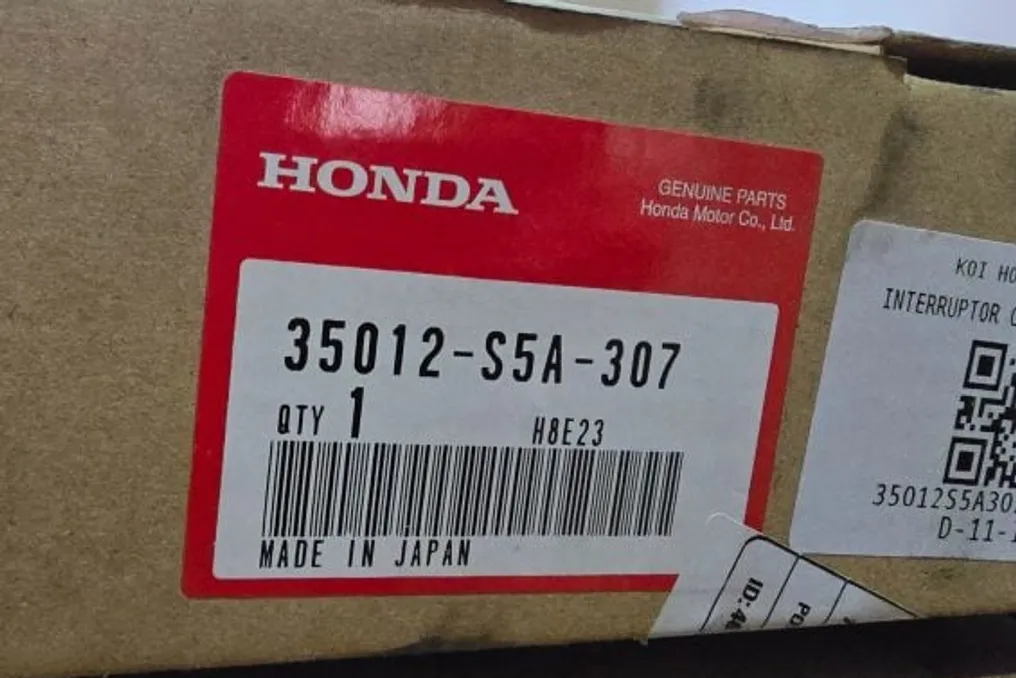
After the warranty period of a car ends, the vehicle's durability comes to depend significantly on how it has been maintained. Although using high-quality components is a positive starting point, the question arises whether the cost of genuine parts supplied by the manufacturer is truly necessary, or if an original part from a recognized supplier is sufficient.
Genuine parts are typically found exclusively in dealership networks, and stock for older models can be limited. Due to this situation, many consumers and mechanics end up opting for components available in retail trade.
See Also:
Even when distributed in packaging by the car manufacturer, genuine parts are not always produced internally. They can come from third-party suppliers who provide services to both manufacturers and retailers.
For this reason, using an item produced by these suppliers can be seen as a way to save on maintenance costs. Established companies such as Bosch, Denso, Varga, Continental, Schaeffler, and others serve as examples of this practice.
According to General Motors, its genuine parts manufactured by external partners must undergo manufacturer validation and have a specific identification code for the company's internal system. General Motors imposes rigorous standards regarding materials, durability, engineering, quality, application, and traceability.
The automaker points out that similar parts, produced by suppliers, may differ in terms of material and quality, in addition to being simplified to lower the final price; in these cases, the part number is also different.
General Motors further clarifies that its OE (Original Equipment, production line) genuine parts are exactly those used during the vehicle's manufacturing, meeting all requirements established by the engineering in the car's development. Furthermore, it provides replacement components that are not OE but are equally validated to suit the vehicle's application.
This implies that the genuine part must guarantee correct adaptation, functionality, and compliance with the technical specifications defined for that vehicle.
Currently, with new cars offering warranties exceeding five years, maintaining this coverage is no longer solely the concern of the first owner, becoming even a sales argument in the used car market.
According to the General Motors Warranty Standards and Procedures Manual, parts that are not genuine are not covered by the manufacturer. Any alteration to the vehicle voids the warranty of the modified components. This manual directs the exclusive use of genuine parts during warranty service, as lower-quality components tend to fail sooner and can impact other automotive systems, requiring attention to the services performed during this period.
The main selling point for genuine parts is the dealerships. Even those who have lost warranty coverage and prefer to take their car to their trusted mechanic will remain dependent on the authorized network if they wish to maintain this level of quality.
Ludovico Ballesteros, a mechanic and owner of Pitucha Centro Automotivo, comments that there are parts that the repairer cannot easily access, but the customer can. In these cases, the only option is to resort to a dealership to acquire the component. Despite this inconvenience, Ludovico Ballesteros agrees that using these genuine parts is beneficial due to their superior quality, although not all customers prioritize this when getting services done.