ICC revokes Sri Lanka's right to host the 2027 Women's World Cup due to government interference
Read more
Aaj Tak
www.aajtak.in

ICC revokes Sri Lanka's right to host the 2027 Women's World Cup due to government interference

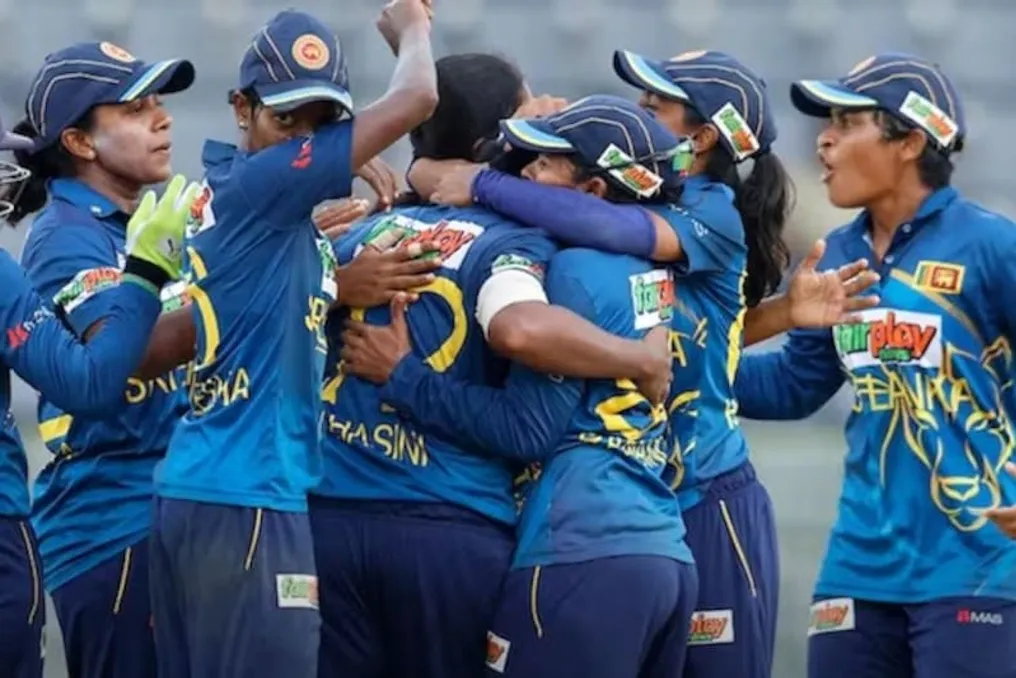
The International Cricket Council (ICC) has decided to revoke Sri Lanka's rights to host the 2027 Women's World Cup. This tournament, scheduled to take place from February 14 to 28, will no longer be held in Sri Lanka.

The main reason for this decision was the government's interference in the operations of the Sri Lankan cricket board. There is a strict ICC regulation stipulating that the government must not exercise direct control or interfere with the work of any national cricket council.

In April of this year, the Sri Lankan government temporarily took control of the board by establishing a transformation commission to oversee cricket activities. Although the ICC repeatedly demanded elections to form an independent board, this did not happen, which prompted the ICC to take strong measures.

Prakash Shafter, Secretary of the transformation commission, confirmed that the tournament has been removed from Sri Lanka, but it has not yet been determined where it will be held.

A similar situation occurred previously: due to state interference, the Sri Lankan cricket board was suspended for several months in 2023–2024. During that period, the country suffered serious consequences, losing the right to host the 2024 U-19 Men's World Cup, which was handed over to South Africa.

The venue for the next tournament for the six teams has not yet been determined and will be decided at the next ICC council meeting. There is also a question regarding the possibility of the Sri Lankan women's team participating in this tournament. Since the teams with the highest rankings and the host nation were originally supposed to qualify, and the Sri Lankan team currently ranks sixth, the revocation of hosting rights jeopardizes its participation.

Similar stories

Possible ban for Yashasvi Jaiswal after clash with Sri Lankan player
Read more
www.aajtak.in

Possible ban for Yashasvi Jaiswal after clash with Sri Lankan player

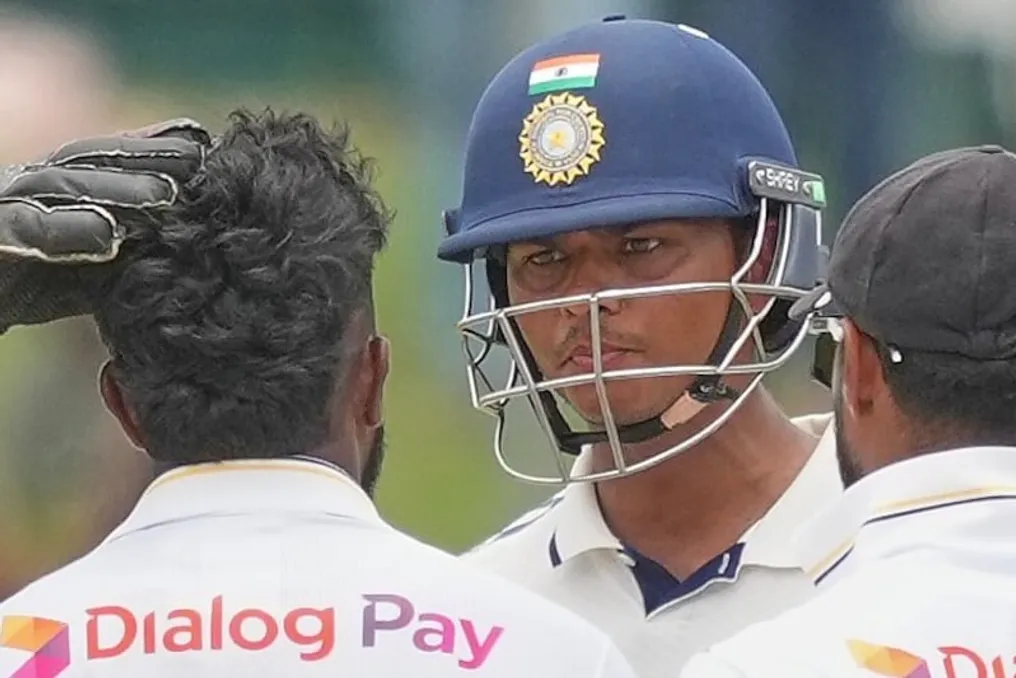
During a Test match between India and Sri Lanka in Colombo, a confrontation occurred on the first day between Yashasvi Jaiswal and Sri Lankan bowler Asitha Fernando. After Jaiswal was dismissed, Asitha ejected him from the field. The situation escalated, and both players came face to face, resulting in a physical collision.

The International Cricket Council (ICC) may now take action against both athletes. It will be necessary to determine whether the match officials classify this as routine on-field tension or as deliberate physical confrontation. If the latter proves true, Indian batter Yashasvi Jaiswal could face a harsher penalty.

The situation became more serious when Yashasvi Jaiswal headed towards Asitha Fernando instead of returning to the dressing room. His teammate, Devdutt Padikkal, tried to persuade him to leave, while other Sri Lankan players also gathered nearby. Yashasvi and Asitha approached each other so closely that their heads touched. This interaction could be the cause of potential disciplinary action.

The ICC has established very strict rules to combat physical violence and aggression on the field. Article 2.18 of the ICC Code of Conduct addresses physical assault on a player, support staff, umpire, match referee, or any other person during an international match. Furthermore, Article 2.19 relates to any acts of violence on the field.

It will depend on the basis upon which the ICC assesses this incident. Both players could be fined, and they may also be assigned demerit points. Yashasvi Jaiswal has not received any demerit points in the last 24 months. Therefore, if Yashasvi receives at least 4 demerit points from the ICC, he could face a ban of one Test or two ODI/T20I matches. It should be noted that if a player accumulates four or more demerit points within 24 months, it escalates to a suspension sanction, leading to a ban.

The ICC evaluates on-field incidents on levels: Level-1, Level-2, Level-3, and Level-4. Typically, Level-1 results in 1 or 2 demerit points, whereas Level-2 can lead to 3 or 4 points. More severe cases, such as Level-3 and Level-4, may result in direct severe sanctions related to suspension. Level-4 is the most serious category of violation in the ICC Code of Conduct, and the penalty for it can range from a five-Test or 10 ODI matches ban to a lifetime ban. If the ICC classifies the entire incident as at least Level-2, Yashasvi Jaiswal could be banned from one Test match.

A similar incident occurred earlier in Yashasvi Jaiswal's career. During the 2022 Duleep Trophy final, playing for the Western Zone, he repeatedly got into altercations with South Zone player T. Ravi Tedjay. Despite warnings from the umpires, the dispute continued, and captain Ajinkya Rahane personally sent Yashasvi off the field. Later, Rahane reported that the match referee was preparing to issue Yashasvi a four-match ban. However, thanks to the captain's immediate action, Yashasvi avoided punishment.

India vs Sri Lanka: Pressure on Gill and Yashasvi in Colombo; Victory could make three years historic and bring benefits in the WTC
Read more
www.aajtak.in

India vs Sri Lanka: Pressure on Gill and Yashasvi in Colombo; Victory could make three years historic and bring benefits in the WTC

In the match between the Indian and Sri Lankan teams, scheduled for Sunday (August 23) at the Singhalese Sports Club (SSC) stadium in Colombo, attention will be focused on the performances of Shubman Gill and Yashasvi Jaiswal. Furthermore, Shubman Brigade has an opportunity to create history.

After winning the first Test in Galle, where the Indian team won by 165 runs, the team is leading the series 1-0. Now, the team under Shubman Gill's leadership has the chance to win the series 2-0 in Sri Lanka.

This match is highly significant for India as it has been three years since the team won a Test series away from home. India last won a Test series on foreign soil in July 2023 against the West Indies. Following that, the team lost a series in Australia, and confrontations with South Africa and England ended in draws abroad.

Disappointment from losses against New Zealand and South Africa on home grounds also overshadowed the brilliance of the Indian Test team. Therefore, the victory in Galle was a significant relief for the team. Although Sri Lankan spinners created difficulties for Indian batsmen on the tricky pitch, India managed to maintain control of the match.

If India wins in Colombo and wins the series 2-0, its position in the ICC Test Championship table could improve. With a clean collection of points, India could reach 57.58 percent, which would increase its chances for fourth place. Currently, Bangladesh is in fourth place with 66.67 percent. If Bangladesh loses the second Test against Australia in Darwin, its points could drop to 55.56 percent, and it might slip to fifth place, opening the path for India to fourth place. Thus, the Test in Colombo is important not only for winning the series but also for the battle in the Test Championship.

Despite the victory in Galle, the Indian team expects a big performance from its captain, Shubman Gill. Gill has been in excellent form, scoring two centuries in the last six matches and showing good overall momentum. However, he consistently shows a weakness against spinners, especially traditional left-arm spinners.

In the Test in Galle, Prabhat Jayasuriya dismissed Gill in both innings: he scored 16 runs in the first innings and 8 in the second. In Test cricket, Gill has already been dismissed 11 times against left-arm spinners. This is why Gill spent a lot of time training against left-arm spinners in Colombo on Friday. He practiced his technique against Manav Sutara, Ravindra Jadeja, and some local bowlers.

As a captain, Gill's statistics are impressive: he has scored 1100 runs in 10 Tests with an average of over 73. Before taking on the captaincy duties, he scored 1893 runs in 32 Tests with an average of around 35. Now, Gill faces a double task: overcoming his weakness against spinners and achieving the first Test series victory away from home under his leadership. If he performs well with the bat, this phase of his captaincy could become even more special.

Yashasvi Jaiswal's form is also a concern for the Indian team. After scoring a century against the West Indies in New Delhi last year, Jaiswal managed to score only one half-century in his last eight innings. A certain pattern has also emerged in his problems: he loses a wicket while trying to play across or over the point against fast bowlers. In the Test in Galle, Jaiswal was dismissed due to run-out in the first innings. He did not last long in the second innings either. While attempting to play a cross shot off a short ball by Asith Fernando, the ball touched the edge of the bat, and wicketkeeper Niroshan Dickve was able to catch it.

After this, Jaiswal spent a lot of time on the SSC practice ground on Friday. Indian bowling coach Morne Morkel made him play against balls outside the stumps. The goal was to provoke Jaiswal into playing a cross or over the point. However, this time Jaiswal showed good situational awareness. He missed many balls and allowed them to pass behind the batsman.

Indian bowlers who failed to make an impact in the first Test include Kuldeep Yadav. Kuldeep bowled 25 overs in both innings of the Test in Galle and took only one wicket, conceding 103 runs. His only wicket came thanks to a brilliant catch by Shubman Gill. The question arises whether the team management will give the off-spinner Saransha Jain a chance instead of Kuldeep. There are several left-handed batsmen in the Sri Lankan squad, so the option of Saransha's off-spin could be strategically useful for the Indian team. However, removing such an experienced bowler as Kuldeep after one Test is not an easy decision. Kuldeep attended the practice sessions on Friday but did not participate in bowling or batting.
International Cricket Council threatens Australia with sanctions over slow pace of play in WTC
Read more
www.aajtak.in

International Cricket Council threatens Australia with sanctions over slow pace of play in WTC

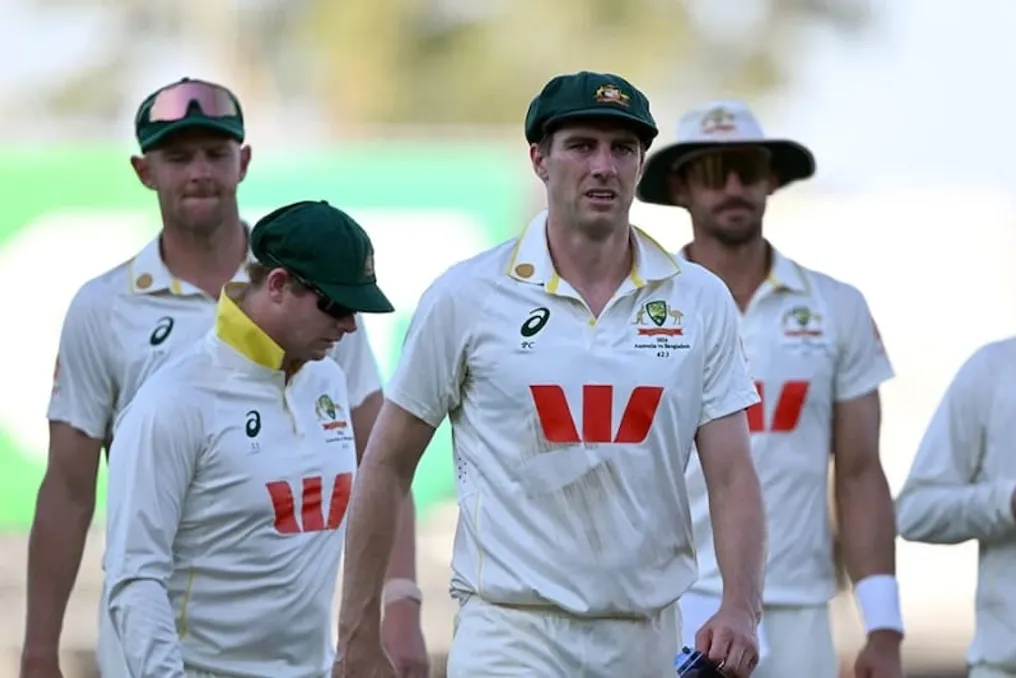
The Australian team faced issues after losing to Bangladesh in a match in Darwin, where they lost by 9 wickets. This was the first time Australians had lost a Test at home against Bangladesh, raising questions about the team's players. However, difficulties continue: the Australian team is under threat of measures from the International Cricket Council (ICC) due to the slow pace of play.

If the team is found guilty, it faces not only the withholding of player match fees but also the loss of important points in the World Test Championship (WTC). The problem arose on the third day of the match. Australia completed only 86 overs that day, whereas under normal conditions, 90 overs are required. Thus, the host side lagged behind the established number by four overs.

Although the match concluded before tea on the fourth day, the slow pace on the third day cannot be ignored. The final decision on the situation will be made by the match referees, taking into account the conditions and time delays. Previously, former Australian batsman Simon Catch expressed dissatisfaction with the slow pace, calling it a serious issue in modern cricket and noting that the current rate of completing overs is ridiculous.

The greatest danger for Australia is the possible reduction of points in the WTC. According to ICC rules, points can be deducted from a team for slow play. Currently, Australia ranks first in the WTC table with 84 points and a percentage of 77.78. With a deduction of four points, their score could drop to 80. Although the exact penalty will be determined after assessment by the ICC and the match referees, the slowdown in pace has already harmed Australia previously; in the past WTC cycle, four points were deducted from them for slow play.

Australian players may also suffer financial losses. The rules provide for a fine of five percent of the match fee for every over played slower than the established pace. Reports indicate that Australian players earn around $20,000 per Test. If a 20 percent fine is applied for the deficit of four overs, each player could lose approximately $4,000, totaling about $44,000 for the starting eleven.

Nevertheless, no official announcement of any sanctions against Australia has been made yet. The match referees may take factors such as the high heat and humidity in Darwin into consideration when making their decision.

Popular