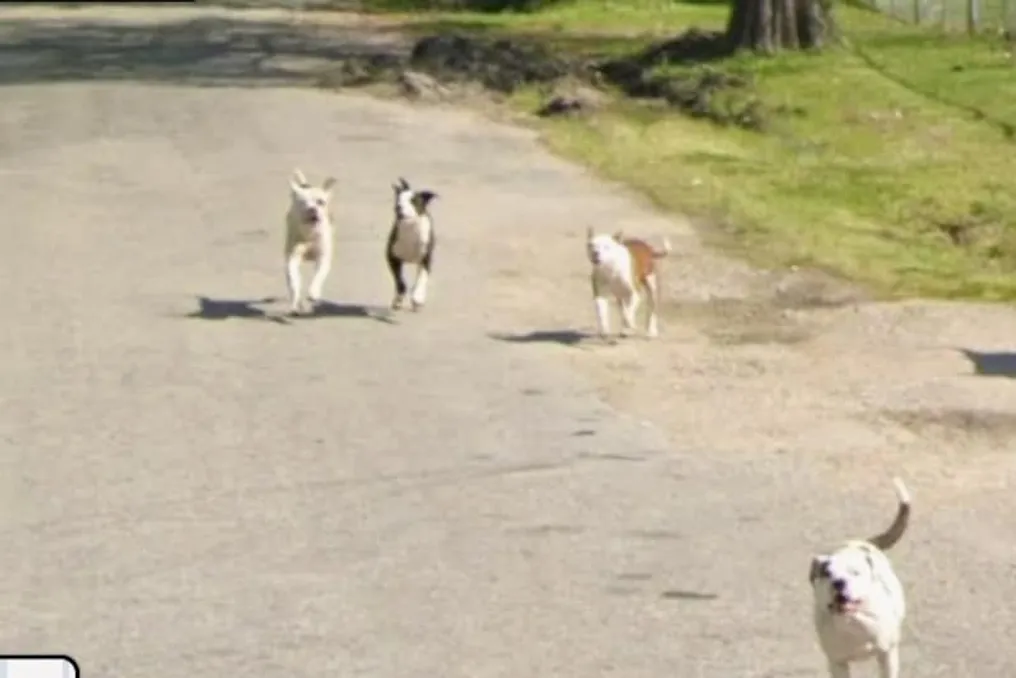
Google Maps footage appears after aggressive dogs attack elderly man in the USA
Read more
Aaj Tak
www.aajtak.in

Google Maps footage appears after aggressive dogs attack elderly man in the USA

In a deserted area of America, a pack of vicious dogs hunts people. Several days ago, these dogs tore apart one person. After this news emerged, people began searching on Google Maps for the location where these aggressive dogs were visible in Street View.

In Illinois, America, a pack of dogs attacked an elderly man, leading to his death. Following this incident, the public paid attention to old Google Maps photos of the area. Photos taken in April show about five dogs freely walking down the street. However, it is unclear if these were the same dogs involved in the attack.

The incident occurred in the Washington Park area. On the night of Thursday, a pack of dogs attacked 68-year-old James L. Gibson. According to local media reports, Gibson was working at a rented property and went outside to smoke while working. It was at that moment that at least five dogs attacked him.

After this tragic situation, Google Street View images of the area became a topic of discussion. The photos, taken in April, show about five dogs moving freely along the street among the houses. At that time, they looked as if they were ready to attack. The pictures also show houses, a small farm shed, and several large transport containers. The free movement of the dogs on the street is causing growing concern among residents.

Nevertheless, it is impossible to claim that the dogs seen on the map were the ones that attacked Gibson, as this has not been independently confirmed.

According to local reports, the dogs severely mauled Gibson. There were serious bite marks on his face, abdomen, arms, and legs. The attack was so dangerous that the dogs tried to drag him into a pit in the street. Bystanders reported the incident to the police. Police officers who arrived at the scene encountered aggressive dogs. Police officers shot several dogs, after which the rest fled into a nearby forest. Gibson could not be saved and died at the scene.

Local residents spoke about the long history of the dogs. Investigators suspect that these dogs were stray. However, some local residents claim that the pack of dogs had been roaming nearby for the past two years. According to neighbors, these dogs often left their enclosure, although it is unknown who owns them. Interestingly, according to records from the St. Clair County Animal Control Service, there had previously been no complaints or calls regarding dogs in this area.

During the attack, neighbor Mike Tomlin heard Gibson's screams. He told local media that he first heard the person scream, and then the sounds of dogs. Tomlin realized that the person was being attacked by dogs and said that the person was screaming while trying to save his life.

Now, questions are arising regarding freely roaming dogs in the area following this incident. The Google Maps photos, showing a pack of dogs walking down the street in the same area several months before the tragedy, are of particular interest. It has not yet been proven that the dogs in the picture were responsible for Gibson's death. The police and relevant authorities are investigating the case.

Similar stories

Mameloedi Farmers Learn to Conduct Soil Testing Using Simple Tools
Read more
foodformzansi.co.za

Mameloedi Farmers Learn to Conduct Soil Testing Using Simple Tools

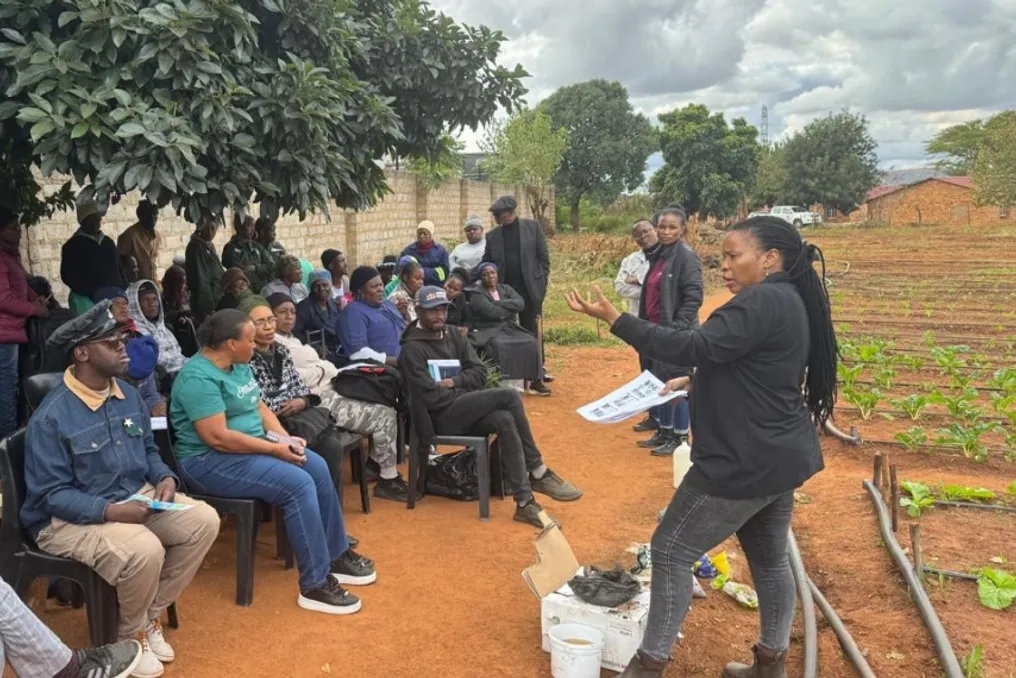
Researchers from ARC-NRE held a meeting with farmers from Mameloedi to demonstrate simple methods for assessing soil condition directly in the field using basic tools such as water bottles and shovels. These sessions aim to address the challenges faced by small-scale agriculture in South Africa.

The main obstacles for smallholder farms in South Africa include climate change, lack of adequate agricultural technology and infrastructure, resource scarcity, degradation of ecosystem services and biodiversity, skills gaps in farming, limited market access, and difficulties in accessing resources and credit programs.

These situations are often exacerbated by droughts, prolonged periods without rainfall, and extreme weather events, which can sometimes lead to complete crop loss and perpetuate poverty in farming communities. Furthermore, the expected negative consequences of the 2026 El Niño wave will particularly affect low-resource farmers.

The Agricultural Research Council – Natural Resources and Engineering (ARC-NRE) seeks to address some of these difficulties by promoting sustainable soil management practices that contribute to soil health restoration and improvement, as well as the development of resilient food systems across various communities in the country.

One approach is conducting awareness and knowledge-sharing activities focused on assessing soil health using participatory methods. Information exchange sessions were held with farmers and local stakeholders in Mameloedi, Pretoria, between March and May 2026.

During practical demonstrations, farmers were taught how to assess various indicators of soil health. Soil health is defined as the capacity or potential of soil to sustain productivity, diversity, and the ecological services of terrestrial ecosystems. This assessment is made using three measurable indicators: physical, biological, and chemical, which help understand how effectively the soil is functioning.

Researchers and extension specialists showed farmers how to determine soil texture and assess its structure right in the field, without sending samples to a laboratory. Simple tools such as shovels, water bottles, buckets, corrugated sheets, measuring containers, infiltration rings, and rulers were used for the assessment.

For many small farmers, the cost of laboratory soil analysis can represent a significant financial burden or limitation. Practical soil condition assessment helped reduce costs associated with laboratory services, transportation, and sample processing. With these skills, farmers have become active participants in assessing and managing their own soils, rather than relying entirely on external experts.

It was noted that the practical assessment allowed farmers to share traditional knowledge and conduct experiments with various soil health indicators, such as color, structure, texture, compaction, and water permeability, through direct observation.

Several farmers reported their intention to repeat field assessments throughout the growing season to monitor changes in soil condition over time. This indicates that farmers have transitioned from passive recipients of information to active participants in research, knowledge generation, and application.

Knowledge about soil health often remains confined within research institutions, agricultural organizations, or experienced farmers, leaving many young people disconnected from one of the world's most valuable natural resources. One of the most promising ways to build sustainable farming systems is through knowledge exchange between farmers and students.

At the end of each farmer information session, they were encouraged to share the acquired information with other farmers and schoolchildren in local communities. Some farmers visited local schools to demonstrate practical farming and soil management techniques, thereby creating opportunities for two-way knowledge exchange between students and farmers. Schools are ideal places for introducing youth to issues of soil health and sustainable agriculture.

The school garden became an ideal tool and strategy for providing practical learning experience. Education on soil health gained greater meaning when students could experience it firsthand. As a result, farmers demonstrated how to determine soil texture, collect soil samples, and make compost for the school garden.

The multi-stakeholder soil health information exchange sessions enabled farmers to integrate traditional and scientific knowledge, exchange ideas with students, promote sustainable land management, strengthen community relationships, and inspire future generations toward careers in agriculture.

Six Dangerous Insects That Invade Homes During Rains and How to Prevent Their Entry
Read more
www.aajtak.in

Six Dangerous Insects That Invade Homes During Rains and How to Prevent Their Entry

The monsoon season and constant rain, while making the weather pleasant, contribute to a rapid increase in insect appearances due to dampness, water accumulation, and overflowing sewage drains. Although people often fear snakes or scorpions during the rain, there are actually many small and dangerous insects that penetrate bedrooms, kitchens, and bathrooms after rainwater accumulates.

Some of these insects bite with venomous stings, while others carry deadly diseases such as Dengue fever, malaria, and skin infections. The article examines six such dangerous insects that enter homes during the rain and also provides advice on how to protect against them.

Scorpion: When water collects in scorpion burrows during the rain, they seek a dry and warm place, hiding in shoes, clothes, or dark corners of the house. A scorpion sting is extremely painful and highly venomous.

Mosquitoes: Mosquitoes, which breed in stagnant water, pose the greatest threat during the rains. Their bites can cause fatal diseases, including Dengue, malaria, and chikungunya.

Centipede: In conditions of high humidity and dampness, centipedes enter homes through drains in bathrooms and kitchens. Their bite causes severe pain, as well as intense skin irritation and swelling.

Wasps & Fire Ants: During the rain, wasps or fire ants build nests near windows and rooftops of houses in search of dry places. Their sharp bites lead to allergic reactions on the skin, severe pain, and swelling.

Winged Termites: In the evening, winged termites are attracted by lamp light and begin to penetrate inside the house. They not only contaminate the floor but also secretly destroy expensive wooden furniture, hollowing it out from the inside.

Cockroaches & Toxic Beetles: When sewage overflows during the rain, cockroaches and various toxic beetles may appear in the house. They sometimes land on dirty dishes and food in the kitchen, increasing the risk of food poisoning and typhoid.

To protect against insects, it is recommended to use fine mesh screens on windows and seal the space under doors to prevent their entry. It is also important not to allow water to accumulate in pots, buckets, or on the roof, which will stop mosquito breeding.

Regularly spray a solution of vinegar, frankincense, or neoprene oil in the corners of the house, in bathroom drainage holes, and on windows. Additionally, during the rainy season, before putting on shoes, you should shake them thoroughly to avoid contact with potentially dangerous scorpions or centipedes.

Popular