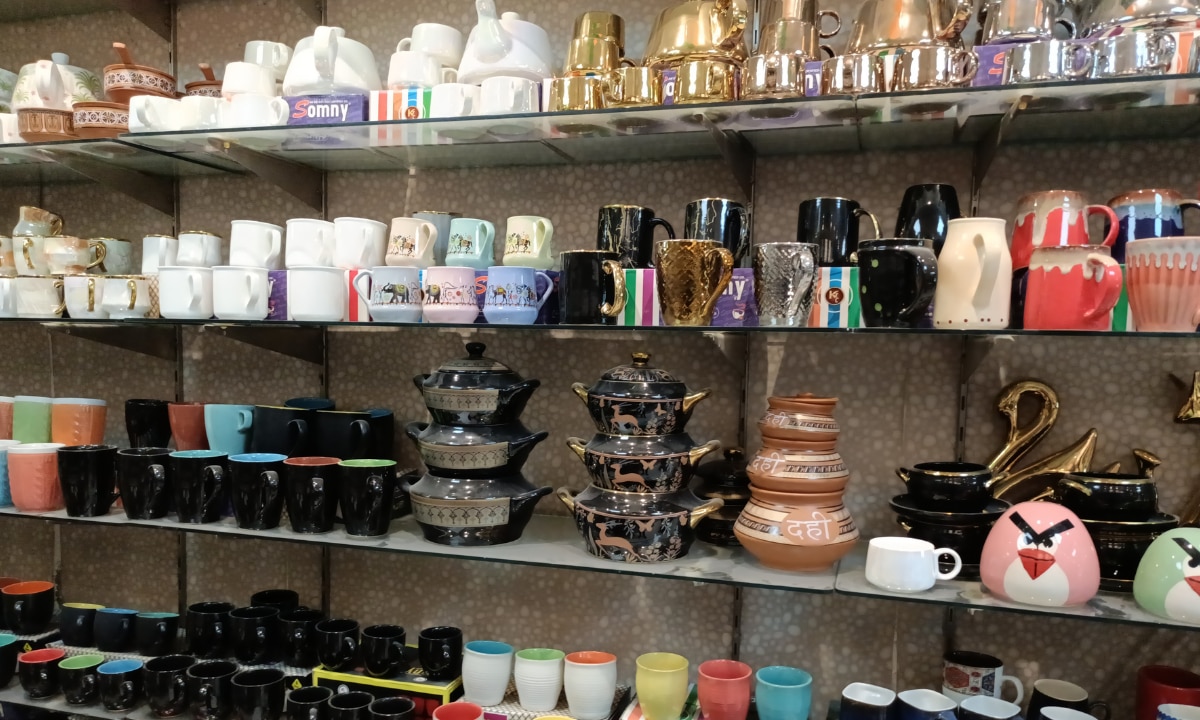
Ceramic products from Khurja, located in Bulandshahr, are now gaining recognition not only domestically but also internationally. The inclusion of this production unit in the 'One District, One Product' (ODOP) initiative has allowed the industry to receive support from government programs.
Entrepreneurs gain access to loans, subsidies, and infrastructure improvements, including roads and transport. Khurja's ceramic production has a long history dating back to the Mughal era, and the demand for porcelain tableware made there has significantly increased. Special attention is paid to design, finishing, glazing, and firing of the products before packaging and shipping to the market.
Previously, production relied on kilns running on coal and diesel fuel. However, the government has transitioned this industry to gas fuel by connecting about 300–400 units to the gas pipeline. Access to subsidized gas has been a significant relief for businessmen. Under the ODOP program, artisans receive training, entrepreneurs receive financial assistance, and workers receive insurance and medical care.
Constant efforts are being made to promote Khurja's products in international markets. Various items are produced here, including tea and dinner sets, as well as tiles. Blue ceramics from Khurja and designs inspired by the Mughal era are particularly popular, leading Khurja to be called the 'capital of ceramics.' A ceramic waste park was also established in Khurja at a cost of six crore rupees, housing over 100 enterprises that utilize about 80 tons of ceramic waste.
In accordance with government programs, many entrepreneurs in Khurja have been approved for financial assistance ranging from two to two and a half crore rupees. Many businessmen use the 'One District, One Product' scheme to develop their products. Dhanney Singh, a member of the district's central management, stated that all entrepreneurs have benefited from the ODOP program and are regularly informed about it.
Entrepreneurs note that ODOP has provided them with the opportunity to display and sell their products in one place, enabling them to reach international markets. They claim that state support and training have increased production, and skilled labor has become more accessible. Previously, there was a shortage of manpower, but this problem has largely disappeared after training. According to the businessmen, Khurja's products are now easily available to foreign buyers.
New aspiring entrepreneurs can receive funding of up to 20–25%, which simplifies starting their business. Entrepreneurs also emphasize that government aid has led to the installation of gas generators in most factories, solving the pollution problem previously caused by diesel generators. Furthermore, subsidies have been increased from 5 to 10 lakh rupees.
Four key areas have been launched under the 'One District, One Product' program. The first is ODOP financing, under which 50 new enterprises are created or existing ones are modernized annually, with subsidies provided by the Uttar Pradesh government.
The second area is training and skill development. About 400 people undergo ten-day training annually and receive tools to start their own businesses. The third area relates to participation in exports and exhibitions: large entrepreneurs are compensated up to 75% of the costs for renting stands at national and international exhibitions, benefiting 20–25 large enterprises annually.
The fourth area is the creation of a Common Facility Centre (CFC). An international laboratory and raw material bank are planned to be established here, allowing for quality checks of ceramic products on-site and resolving issues with product rejections during export. Overall, thanks to the 'One District, One Product' program, 500 beneficiaries benefit annually through loans, training, and exhibition participation.