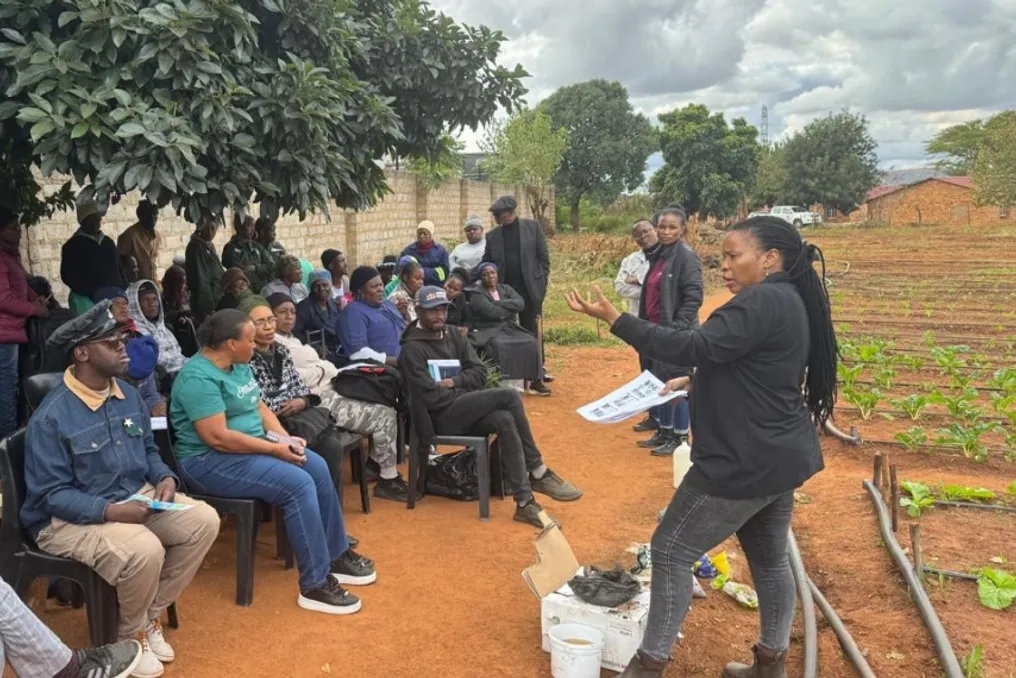
Researchers from ARC-NRE held a meeting with farmers from Mameloedi to demonstrate simple methods for assessing soil condition directly in the field using basic tools such as water bottles and shovels. These sessions aim to address the challenges faced by small-scale agriculture in South Africa.
The main obstacles for smallholder farms in South Africa include climate change, lack of adequate agricultural technology and infrastructure, resource scarcity, degradation of ecosystem services and biodiversity, skills gaps in farming, limited market access, and difficulties in accessing resources and credit programs.
These situations are often exacerbated by droughts, prolonged periods without rainfall, and extreme weather events, which can sometimes lead to complete crop loss and perpetuate poverty in farming communities. Furthermore, the expected negative consequences of the 2026 El Niño wave will particularly affect low-resource farmers.
The Agricultural Research Council – Natural Resources and Engineering (ARC-NRE) seeks to address some of these difficulties by promoting sustainable soil management practices that contribute to soil health restoration and improvement, as well as the development of resilient food systems across various communities in the country.
One approach is conducting awareness and knowledge-sharing activities focused on assessing soil health using participatory methods. Information exchange sessions were held with farmers and local stakeholders in Mameloedi, Pretoria, between March and May 2026.
During practical demonstrations, farmers were taught how to assess various indicators of soil health. Soil health is defined as the capacity or potential of soil to sustain productivity, diversity, and the ecological services of terrestrial ecosystems. This assessment is made using three measurable indicators: physical, biological, and chemical, which help understand how effectively the soil is functioning.
Researchers and extension specialists showed farmers how to determine soil texture and assess its structure right in the field, without sending samples to a laboratory. Simple tools such as shovels, water bottles, buckets, corrugated sheets, measuring containers, infiltration rings, and rulers were used for the assessment.
For many small farmers, the cost of laboratory soil analysis can represent a significant financial burden or limitation. Practical soil condition assessment helped reduce costs associated with laboratory services, transportation, and sample processing. With these skills, farmers have become active participants in assessing and managing their own soils, rather than relying entirely on external experts.
It was noted that the practical assessment allowed farmers to share traditional knowledge and conduct experiments with various soil health indicators, such as color, structure, texture, compaction, and water permeability, through direct observation.
Several farmers reported their intention to repeat field assessments throughout the growing season to monitor changes in soil condition over time. This indicates that farmers have transitioned from passive recipients of information to active participants in research, knowledge generation, and application.
Knowledge about soil health often remains confined within research institutions, agricultural organizations, or experienced farmers, leaving many young people disconnected from one of the world's most valuable natural resources. One of the most promising ways to build sustainable farming systems is through knowledge exchange between farmers and students.
At the end of each farmer information session, they were encouraged to share the acquired information with other farmers and schoolchildren in local communities. Some farmers visited local schools to demonstrate practical farming and soil management techniques, thereby creating opportunities for two-way knowledge exchange between students and farmers. Schools are ideal places for introducing youth to issues of soil health and sustainable agriculture.
The school garden became an ideal tool and strategy for providing practical learning experience. Education on soil health gained greater meaning when students could experience it firsthand. As a result, farmers demonstrated how to determine soil texture, collect soil samples, and make compost for the school garden.
The multi-stakeholder soil health information exchange sessions enabled farmers to integrate traditional and scientific knowledge, exchange ideas with students, promote sustainable land management, strengthen community relationships, and inspire future generations toward careers in agriculture.