The head of the project for the development of the Balal joint gas field announced the completion of drilling two wells at this field. He specified that after these wells are put into operation, the daily gas production in Iran will increase by approximately 14 million cubic meters, which partially compensates for the country's gas deficit.
In an interview with SHANA, Ehsan Mohammadi stated that the overall progress of the project has reached about 42%. He noted the successful completion of two work packages—drilling appraisal wells and manufacturing and installing the casing string—without any deviations from the schedule. Two other packages, concerning the fabrication and installation of the deck, as well as the drilling and completion of eight wells, have reached about 50% progress.
According to the field drilling schedule, Mohammadi explained that a total of eight wells will be drilled in Balal. Currently, the drilling of two wells is complete, and work on the remaining wells is being carried out in a batch drilling mode.
Emphasizing the significance of the field for increasing the country's gas capacity, the head of the project for the development of the Balal joint gas field stated that by the time the field is commissioned within the next two years, Iran's daily gas production will increase by approximately 14 million cubic meters, which will help solve part of the gas shortage problem.
Mohammadi also recalled that utilizing the potential of development projects and accelerating current initiatives—especially in light of the existing gas deficit—is a national necessity, and all sectors must work to restore and increase the country's gas capacity.
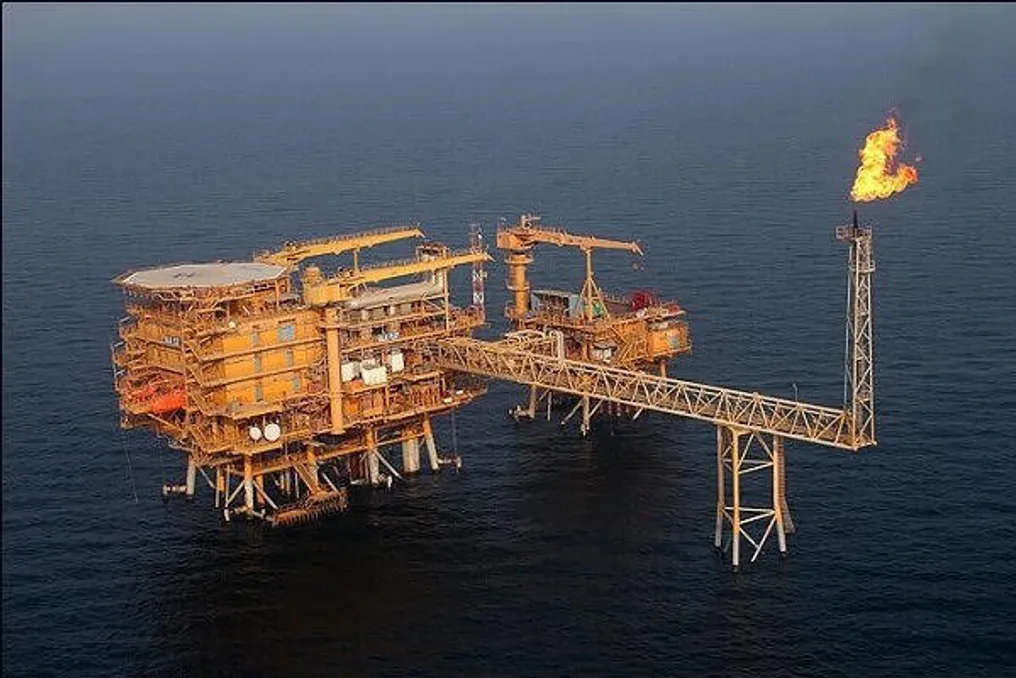
Speaking about the work packages of the Balal field development plan, he added that the project is being implemented within five work packages, including drilling, casing construction, deck fabrication and installation, well completion, and pipeline construction. Despite various difficult conditions, such as sanctions, the COVID-19 pandemic, and two recent wars, the project implementation has not stopped.
The Balal gas field, containing about 3 trillion cubic feet of gas and over 100 million barrels of proven gas condensate, is considered one of the country's key assets for increasing gas production and compensating for part of the energy imbalance. Thanks to the acceleration of this field's development plan under the 14th administration, and despite two imposed regional conflicts during this period, the casing string for the Balal gas field has been installed, and drilling operations have begun.
The Balal field represents a strategic joint hydrocarbon asset located in the Persian Gulf and shared between Iran and neighboring Qatar. With reserves of about 3 trillion cubic feet of gas and over 100 million barrels of proven gas condensate, it is a critically important pillar for Iran's energy security and economic stability.
Upon full commissioning, planned within the next two years, the field is expected to add approximately 14 million cubic meters to Iran's daily gas production. This significant increase is vital for mitigating the country's constant energy imbalance, especially during peak winter consumption periods when domestic demand often exceeds supply.
The development plan includes five comprehensive work packages: drilling, casing construction, deck fabrication and installation, well completion, and pipeline laying. Overall project progress is currently 42%. The installation of the offshore casing string has been completed, and drilling operations are actively underway. Two of the eight planned wells are finished, while batch drilling continues for the remaining six, and the deck and additional drilling packages are about 50% complete.
It is important to note that the project demonstrated exceptional resilience, facing strict international sanctions, the global COVID-19 pandemic, and two regional conflicts during the current administration, yet the project timelines were never suspended. The 14th administration prioritized accelerating the development of this field, viewing it as a national necessity for rapid recovery and strengthening domestic production capacity, thereby reducing dependence on imports and helping to stabilize the regional energy network.
Iran possesses more than 28 joint oil and gas fields with neighbors, including giants like South Pars (jointly with Qatar) and Azadegan (jointly with Iraq). The development of these fields is not just an industrial project but a strategic imperative with profound implications for national income, energy security, and geopolitical standing. The 14th administration has made this a cornerstone of its economic policy, striving to secure Iran's share in these critical resources.
Strategic Importance
The urgency is linked to competitive pressure. For instance, Qatar has increased its production from South Pars by approximately 1.5 times compared to Iran in recent years, representing billions of dollars in lost revenue. To address this issue, the government has allocated a colossal $130 billion for the development of joint fields. These investments are aimed at securing Iran's share in resources, stabilizing energy supply, and addressing public concerns about falling behind neighbors who often utilize these reserves more aggressively.
Main State Plans and Projects
The government's strategy includes several parallel initiatives: Azadegan Field (Phases 1 and 2), which is Iran's largest joint field, aims to increase production by 40,000 barrels per day in its second phase over 18 months. This is part of a broader strategy to optimize extraction and increase the national recovery factor. Three major projects—Azadegan, Azar, and Masjed Soleiman—require direct investments of $12 billion.
The Western Karun cluster, located along the Iran-Iraq border and including Yadavaran and Yaran, is considered a strategic center for increasing national production volume and counteracting the natural decline of older fields. Production at South Azadegan has already increased, with recent data showing output reaching 84,200 barrels per day.
New drilling contracts have also been signed for the Aban and Paydar Gharb fields to accelerate development and increase national production capacity. Legislative support now allows for production-sharing agreements under the Seventh Development Plan, and legal incentives and support measures for investors in joint fields exceed those for independent ones.
There is a strong impetus in technology and localization towards using domestic technological companies, reducing dependence on foreign technologies, and implementing advanced methods such as directional drilling for the first time in Iran's joint oil and gas fields. The financial scale is enormous: estimates suggest that required investments for these fields by the end of the 7th Development Plan (2029) will amount to over $20 billion annually for Iran's oil exports. Long-term contracts for projects like Azadegan will bring the government approximately $140 billion in revenue.
In conclusion, the development of joint oil and gas fields is a central element of Iran's national strategy to secure its wealth, energy future, and geopolitical influence. Through massive investments, technological progress, and supportive legislation, the government seeks to maximize production, balance the output of neighboring countries, and strengthen its position in the global energy market.