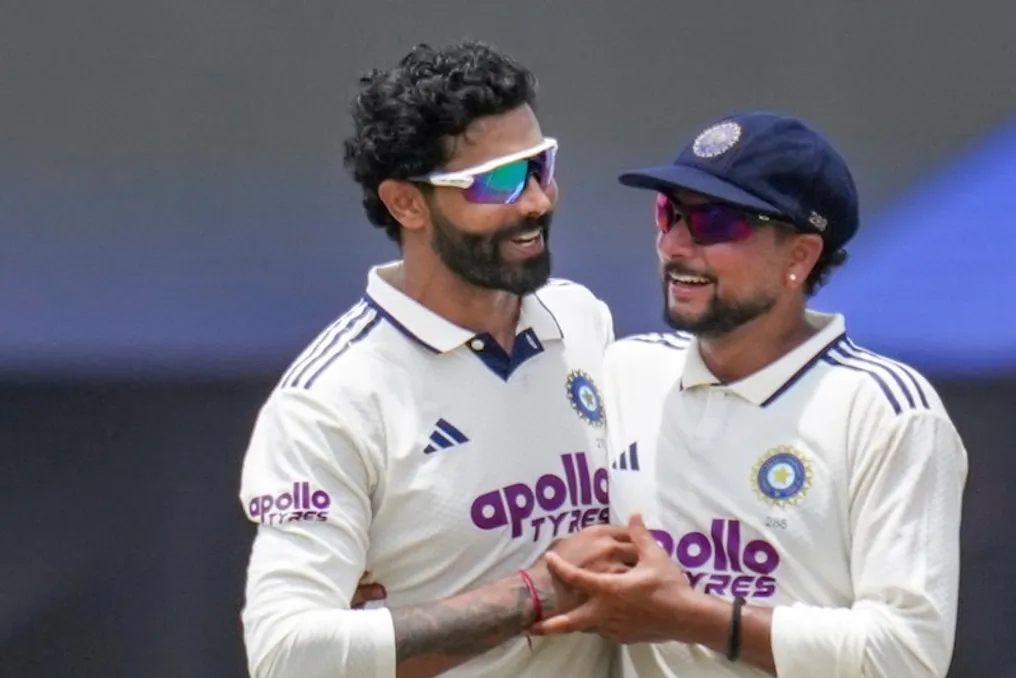
Indian team players undergo medical check-up and fitness test after visit to Sri Lanka
Read more
Aaj Tak
www.aajtak.in

Indian team players undergo medical check-up and fitness test after visit to Sri Lanka

Even without fully recovering from the fatigue following the trip to Sri Lanka, players of the Indian team had to prepare for the next stage. Within 48 hours of completing the two-match series of tests, many athletes included in the central contract list arrived at the Cricket Council of India's (BCCI) Centre of Excellence (CoE) in Bangalore to undergo mandatory fitness testing before the start of the new season.

The upcoming cricket season for the Indian national team promises to be very demanding. Players will have to maintain a high level of physical fitness over a long period, considering commitments in domestic cricket, international matches, and various formats. Therefore, the preliminary fitness assessment is considered extremely important.

Players such as Ravindra Jadeja, Rishabh Pant, and Yashasvi Jaiswal, who participated in the trip to Sri Lanka, arrived at the CoE. Shreyas Iyer, the captain of the T20 team, was also present. Rinku Singh, Sanju Samson, and Rituraj Gaikwad also took part in the matches.

The player check was aimed not only at assessing overall physical condition but also at determining how long they could cope with high speed and constant loads under match conditions.

A special part of the test was the 'Bronco Test,' during which players must perform continuous shuttle runs over distances of 0, 20, 40, and 60 meters. A total distance of 1200 meters is covered across five sets, which must be completed in less than 5 minutes and 30 seconds. Additionally, players have to run 2 kilometers in under 10 minutes.

In the traditional Yo-Yo test, the established standard was 16.5. Furthermore, the players' ability to demonstrate physical qualities under real match pressure through quick sprints between wickets, speed, agility, and high-intensity exercises was tested.

Some major players did not pass the initial fitness test. Jasprit Bumrah, Hardik Pandya, and Nitish Kumar Reddy are currently undergoing rehabilitation. The process of assessing their physical condition will only begin after receiving clearance from the medical team. Meanwhile, Mohammed Siraj and Prasidh Krishna received temporary exemptions due to their recent workload in the series of tests against Sri Lanka.

There is good news for prime bowler Prince Yadav, who suffered a hamstring issue during the visit to England. He has recovered from the injury and is now available for selection after receiving medical clearance. His physical condition is also important for the team, as significant pressure is expected on the fast bowling department in the upcoming long season.

Similar stories

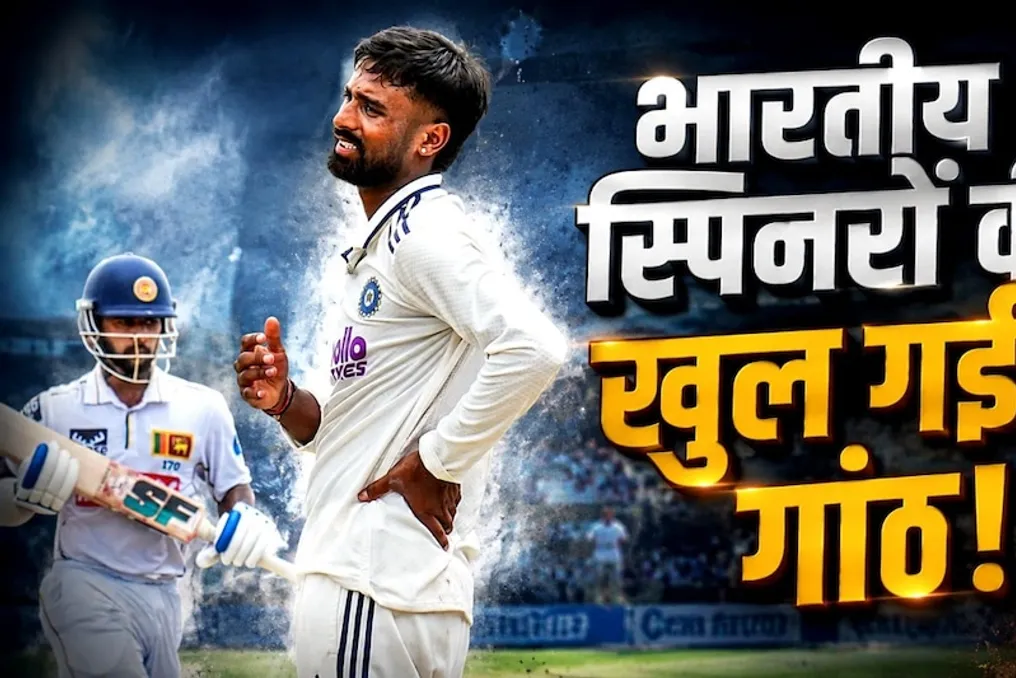
Indian team failed to quickly dismiss Sri Lanka's lower order in Colombo match
Read more
www.aajtak.in

Indian team failed to quickly dismiss Sri Lanka's lower order in Colombo match

Despite India winning the Test series against Sri Lanka 1-0, the fifth day of the match in Colombo proved to be more of a mirror than a triumph for the Indian side. The lower order of the Sri Lankan squad, which Indian spinners expected to dismiss, managed to withstand the Indian bowlers for nearly two days.

As a result, the match ended in a draw, once again highlighting an old weakness of India. The fact that four lower-order batsmen from Sri Lanka were not dismissed on a spin-friendly pitch raises serious questions about the Indian bowling.

In traditional Test cricket, a strong attack from the main part of the team is often compensated by the Indian bowlers successfully dismissing the lower order players. However, this usual pattern was absent in Colombo.

India had options to utilize spin, and the conditions were in its favor, with the lower order of Sri Lanka facing them. Nevertheless, wickets did not fall. This does not mean that Indian spinners suddenly became poor players, but it indicates that the sharpness capable of turning pressure into wickets has weakened somewhere.

When playing against tail-enders, it is not enough just to bowl good balls; constant pressure, aggressive field placements, and the drive to provoke a batsman's error are required. In Colombo, India created opportunities but could not deliver the decisive blow.

It brought to mind the tradition associated with players like Kumbala, Bedi, and Prasanna. In the past, tail-enders often became the easiest prey against bowlers like Subhash Gupta, Irapalli Prasanna, Bishan Singh Bedi, Bhagwat Chandrasekhar, and later Anil Kumble.

A characteristic of their game was an unwavering hunger: they never considered the opponent's last batsman a 'formality', regardless of whether he was number one or eleven.

Credit must be given here to Sri Lankan batting. Their fight, despite constant pressure, follow-on, and the challenge of the fifth day, is an example of the character of Test cricket. Sonal Dinusha's ability to withstand the Indian bowlers with such patience and courage took the match out of India's control.

However, it is easy for India to accept this result simply as 'Sri Lanka's bravery'. The question is: if four tail-enders could not be dismissed even in spin-friendly conditions, what will happen in foreign conditions?

India has valid arguments for defense. The bowlers played for two sessions. The pitch on the fifth day likely looked different from the start of the match. Furthermore, the Sri Lankan batsmen played extremely defensively and patiently.

But that is what Test cricket is... Great bowling units find a way, regardless of fatigue, pitch condition, or circumstances. It is this 'killing instinct' that distinguishes a great bowling unit from a good one.

Although India created pressure in Colombo, it could not deliver the decisive blow to end the match.

The series is won, but the question remains open. The draw in Colombo serves as a reminder that dismissing the lower order can still be a weakness in Test cricket.

Today it is Sri Lanka; tomorrow there will be another team with stronger batting. If four batsmen remain on the field as long as they did, the result might turn out to be not just a draw, but a lost Test.

Thus, the story of Colombo is not just about Sri Lanka's 'great escape'. Although the tail-enders batted, the real question pertains to the Indian spinners: when will their spin gain enough strength for the presence of batsmen numbers 8, 9, 10, and 11 on the field to become a punishment?

Second India vs Sri Lanka Test in Colombo: Focus on Big Score and Dhruv Jurel's Responsibility
Read more
www.aajtak.in

Second India vs Sri Lanka Test in Colombo: Focus on Big Score and Dhruv Jurel's Responsibility

In the second Test match of the series between India and Sri Lanka, the game is being played at the Singhalese Sports Club (SSC) in Colombo. Today, August 24th, marks the second day of this confrontation. The Indian team will continue its first innings with a current score of 300/5. Among the batsmen who have not yet come out are Dhruv Jurel (7) and Saransh Jain (4).

India leads the Test series 1-0. In the first match of the series, held at the Galle International Stadium, Shubman Gill's team defeated the hosts, Sri Lanka, by 165 runs. Now, the Indian squad aims to conclude the series with a brilliant victory in Colombo.

The first day of the Test was successful for India. Having been drawn first after the toss, the Indian team demonstrated strong play. Devdutt Padikkal played a magnificent innings, scoring 117 runs, facing 193 balls, and hitting 12 fours. This marked his second century in two consecutive Tests. Furthermore, captain Shubman Gill scored 50 runs with 6 fours, playing 108 balls. Yashasvi Jaiswal (45 runs) and Ravindra Jadeja (43 runs) also contributed to the game.

Tension increased in the first half of the day when Rishabh Pant left the field due to injury. The statistics of India's first innings are as follows: wickets fell at 37-1 (KL Rahul, 10.4 overs), 66-2 (Yashasvi Jaiswal, 16.6 overs), 186-3 (Shubman Gill, 51.5 overs), 281-4 (Devdutt Padikkal, 76.2 overs), and 296-5 (Ravindra Jadeja, 84.1 overs).

In this match, 33-year-old spinner Saransh Jain made his debut for India in Tests. He earned a spot in the starting XI because Kuldeep Yadav could not fully recover from a viral illness. Ravindra Jadeja presented Saransh with a debutant's medal. From Sri Lanka's side, Kamil Mishara opened the match as a batsman.

In the history of Test cricket, India has had impressive statistics against Sri Lanka. Before the start of this match, 47 Tests had been played between the two teams: India won 23, Sri Lanka won 7, and 17 matches ended in a draw. The last time Sri Lanka beat India in a Test was in Galle in August 2015.

The current team lineups include: for India — Yashasvi Jaiswal, KL Rahul, Devdutt Padikkal, Shubman Gill (captain), Rishabh Pant (wicketkeeper), Ravindra Jadeja, Dhruv Jurel, Manav Chatur, Saransh Jain, Mohammed Siraj, and Prasidh Krishna. Sri Lanka's squad includes Kamil Mishra, Lahiru Udara, Pasindu Suriyabandara, Kamindu Mendis, Danjaney de Silva (captain), Sonal Dinusha, Niroshan Dickve (wicketkeeper), Kesara Nuwanta, Prabath Jayasuriya, Lahiru Kumar, and Asitha Fernando.

Changes may occur in the Indian team before the Colombo match: replacement of Kuldeep Yadav with Saransh Jain is being discussed
Read more
www.aajtak.in

Changes may occur in the Indian team before the Colombo match: replacement of Kuldeep Yadav with Saransh Jain is being discussed

The second match of the test series between India and Sri Lanka will take place on August 23rd at the SSC stadium in Colombo. Following a convincing victory in Galle by 165 runs, the Indian team has gained a 1-0 advantage in the two-match series and is now aiming for a win in Colombo.

The composition of the Indian team is actively being discussed ahead of the second Test, particularly regarding the spin combination. Information has emerged that Saransh Jain, a 33-year-old all-rounder from Central Province Madhya Pradesh, might debut in the starting lineup. There is a high probability that he will be included in the squad for the next match.

However, there is an important nuance here: Saransh Jain specializes in off-spin, whereas Kuldeep Yadav is a left-arm wrist spinner. Therefore, simply replacing Kuldeep with Saransh based solely on his performance in Galle would not be a direct or natural change for the Indian team. The Indian team may consider different roles for both bowlers. Furthermore, the Sri Lankan team will also have to change its squad due to injuries to several players.

In the Galle match, Kuldeep Yadav could not exert the expected influence. In the game where India defeated Sri Lanka by 165 runs, Kuldeep took only one wicket. He secured this wicket in the first innings, but was unable to succeed in the second innings. His statistics for the match were 25 overs, 0 maidens, 103 runs conceded, and 1 wicket. In the first innings, he bowled 14 overs, conceding 65 runs and taking 1 wicket, while in the second innings, he bowled 11 overs, conceding 38 runs.

Conversely, young Indian spinner Manav Sutar demonstrated outstanding play in the debut Test, collecting a total of 10 wickets. Ravindra Jadeja also took four crucial wickets in both innings. Thus, a comparison based on spin figures is natural, but it does not mean that Kuldeep will be directly replaced by Saransh.

If the pitch in Colombo proves favorable for spin, the Indian team may consider bringing in an extra spinner. In such a case, Saransh Jain might be given a chance. Saransh's bowling style is off-spinning, while Kuldeep troubles batsmen with his left-arm wrist spin. The roles of these two bowlers are different, so the team management is unlikely to take the risk of dropping Kuldeep based solely on the statistic of one wicket.

India already possesses two left-arm spin options in Jadeja and Manav Sutar. When forming the squad, Saransh's contribution to the batting can also be considered, as he is an all-rounder. Currently, India leads the series 1-0. The Galle match was also the 600th Test for the Indian team, which was made memorable by the victory.

Saransh Jain, born on March 31, 1993, in Indore, debuted in T20 cricket in 2014. Cricket was previously represented in his family; his father Subodh Jain also played for Madhya Pradesh in the Ranji Trophy tournament. Subodh Jain himself wanted to play for India, but his career did not reach the desired level. After that, he began focusing on his son Saransh's cricket career.

Saransh honed his cricket skills at Vijay Club in Indore. During this time, he also played with Rajat Patidar, who later played for India and captained Royal Challengers Bangalore, as well as Madhya Pradesh.

Saransh made his mark in the 2021-22 Ranji Trophy when Madhya Pradesh achieved a historic championship victory. He participated in crucial matches such as the quarter-finals, semi-finals, and final. In the playoffs, Saransh collected a total of 13 wickets. His contribution was vital in the final against Mumbai, where he played a crucial innings of 57 runs, allowing Madhya Pradesh to win the Ranji Trophy title for the first time by defeating Mumbai.

Subsequently, in the 2022-23 Ranji season, Saransh enhanced his all-round capabilities. He scored 360 runs and took 35 wickets. For this outstanding performance, he was awarded the Lala Amarnath award for the best all-rounder of the Ranji Trophy.

Thanks to consistent performances in domestic cricket, Saransh gained recognition. In 2024, he was included in the India A team for a series against England Lions. In this series, he demonstrated his batting prowess, scoring a half-century in both innings. Then, in 2025, Saransh strengthened his credentials in the Dilip Trophy tournament. Playing for Central Zone, he took 16 wickets in just two matches. Moreover, he scored a half-century in the semi-final and the final. For this all-round performance, he was named player of the series.

His brilliant performances continued in the Ranji Trophy: he scored 518 runs at an average of 57.55 and took 30 wickets at an average of 20.43. This shows that Saransh Jain's statistics are not limited to bowling; he is capable of strengthening the team in the batting department as well. This is why, at the age of 33, he has reached the threshold for selection into the Indian Test team.

Popular