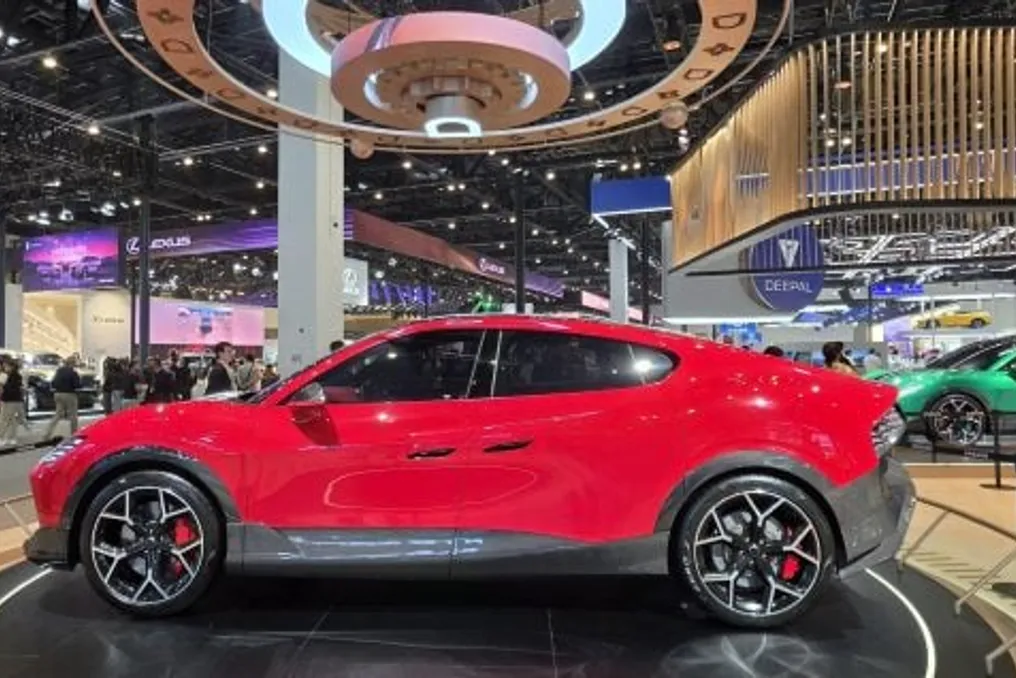
New car sales in China registered a 25% drop in July, marking the seventh consecutive month of decline this year. This situation has raised concerns among the Chinese Automobile Manufacturers Association (ACFA), which is analogous to Anfavea. The problem extends beyond domestic borders, impacting global competition, as pointed out by Automotive News.
The world's second most populous country, trailing only India, is heading toward recording a double-digit annual contraction in domestic vehicle sales for the first time. According to Fu Bingfeng, an ACFA representative, it is still premature to define the future after two decades of remarkable growth in the Chinese automotive industry, but this pace has exceeded consumer absorption capacity.
It is estimated that around 500 models from 130 brands will be sold this year, facing extremely tight profit margins. A 14% reduction in domestic sales is forecast by the end of the year, resulting in fewer than 21 million vehicles sold.
A recent regulatory change, which instituted a 5% tax on electric and plug-in hybrid vehicles, replacing less transparent subsidies, contributed to a 6% drop in sales just in July. As an alternative, exports have been boosted by government support, reaching a record volume of 5.35 million vehicles up to the previous month, representing a significant increase of 73% and intensifying commercial disputes outside China.
In Brazil, 16 Chinese manufacturers currently operate, with production plans announced by at least four of them, excluding GWM and BYD. However, Arcélio dos Santos Jr., president of Fenabrave, recently warned that his main concern is determining which companies will remain and which will leave the market. He emphasized that market growth does not keep pace with the arrival of brands in the country, which could cause losses to those who invested in new dealerships, and added that consumers themselves are also affected.
Non-Chinese manufacturers, some established in Brazil for decades, have announced a total investment of R$ 180 billion over the next five years. A study conducted by Carcon Automotive and released by Julian Semple details significant transformations in the light vehicle segmentation in Brazil, covering the period from early 2010 to July of the current year, or slightly more than fifteen years.
The most notable evolutions occurred in the SUV and crossover segments. In January 2010, these vehicles represented only 6.2% of the market share, with EcoSport and Tucson leading. By July 2026, they reached almost half of the sales share, with Tera (crossover) and T-Cross (SUV) models standing out.
Another growing sector was small and medium pickup trucks. These segments progressed from 11.2% in 2010, led by Strada and Saveiro, to 17.2% in 2026, with the Italian brand dominating, also including Toro. Conversely, hatchbacks, such as Gol and Palio, which held nearly half the market in 2010, saw their share drop to one-quarter of sales this year, with Polo leading, followed by Argo and Onix.
The largest declines in segmentation were observed in sedans, minivans, and station wagons. The latter already showed a strong decline in 2010 with Palio Weekend and Spacefox, culminating in their disappearance due to the rise in SUV sales. A similar scenario occurred with minivans, which 16 years ago were led by Fit and Meriva, leaving only Spin. In sedans, the share was 23.8% in 2010, with Corsa Sedan and Siena leading; however, in 2026, this slice reduced to only 6.3%, with sales dominated by Onix Plus, HB20S, and Corolla.