Springboks Game Ratings: Malcolm Marx Delivered Brilliant Performance in Match That Allowed Springboks to Level Series
Read more
IOL
iol.co.za

Springboks Game Ratings: Malcolm Marx Delivered Brilliant Performance in Match That Allowed Springboks to Level Series

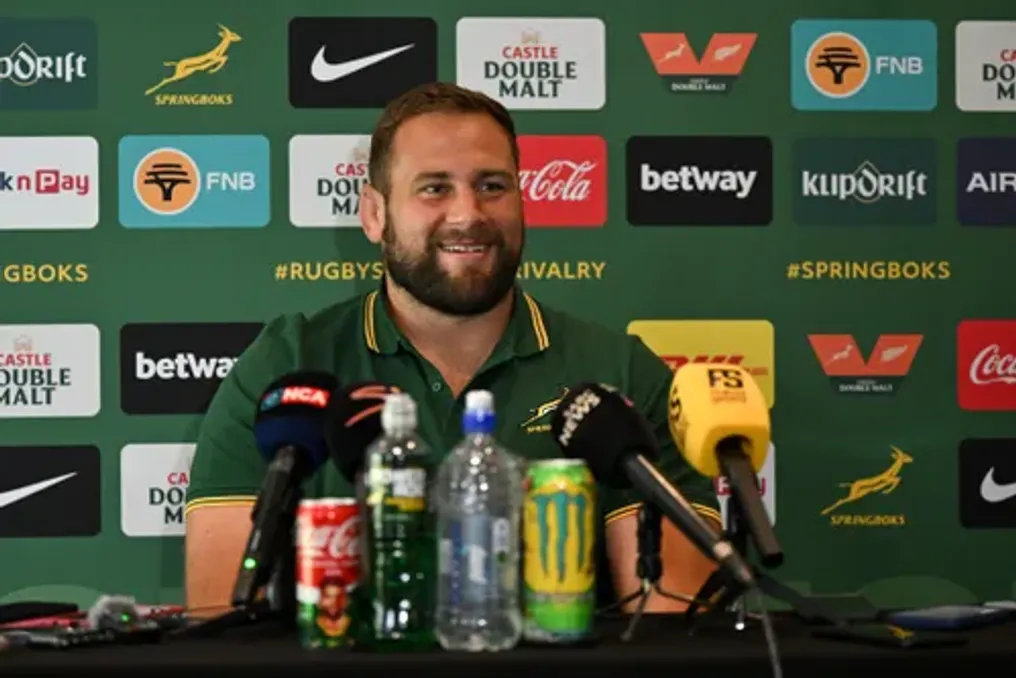
Springboks hooker Malcolm Marx delivered an outstanding performance against the All Blacks. The Springboks team managed to regain their footing in the great rugby rivalry series by securing a convincing 33–26 victory over the All Blacks at the DHL Stadium in Cape Town on Saturday evening.

The setbacks that occurred in the match at Ellis Park last week gave way to a much more effective game, as every Springboks player demonstrated improvement in their delivery.

Springboks Player Ratings

IOL Sport rated the performances of the Springboks players as follows:

Damian Willemse received a rating of 7.5, showing another good outing in aerial work. Although he lacked distance in some of his clearances, he corrected this later in the game. He left the game with an injury during the break.

Cezlin Kolbe received 8.5 points. He had to possess the ball several times and made an unplanned error when attempting to clear a pass out of bounds that should have gone forward. However, he brilliantly chased Sacha's pass, leading to a penalty five meters from the All Blacks line, which he executed flawlessly through the posts.

Damian de Allende received 8 points. His powerful run into the All Blacks' 22-meter zone resulted in a penalty and three points, after which he soon burst through the line for a high-energy quarter. His play was excellent, and his tactical execution was very good.

Ethan Hooker received 8 points for an excellent early interception of Renah's kick and physical battle with Jordie Barrett, which helped halt the momentum. Overall, it was a very good game.

Sacha Feinberg-Mngomezulu received 7.5 points. He made a crucial interception on Jordie Barrett and provided good distance in his clearances. His kick, which almost led to a try, was stopped by Jordie Barrett, but it was a significantly improved match compared to the game at Ellis Park.

Cobus Reinach received 7 points. This week he had better defense compared to the unfortunate Grant Williams in the first match. Reinach skillfully supported the Bok team's attacking drive.

Jasper Wiese received 6 points. Unlike how well he played in the first match, Wiese was heavily marked by opponents and barely had a chance to carry the ball.

Peter-Steph du Toit received 8 points. The centurion player delivered a performance worthy of the occasion. He was brilliant in everything he did.

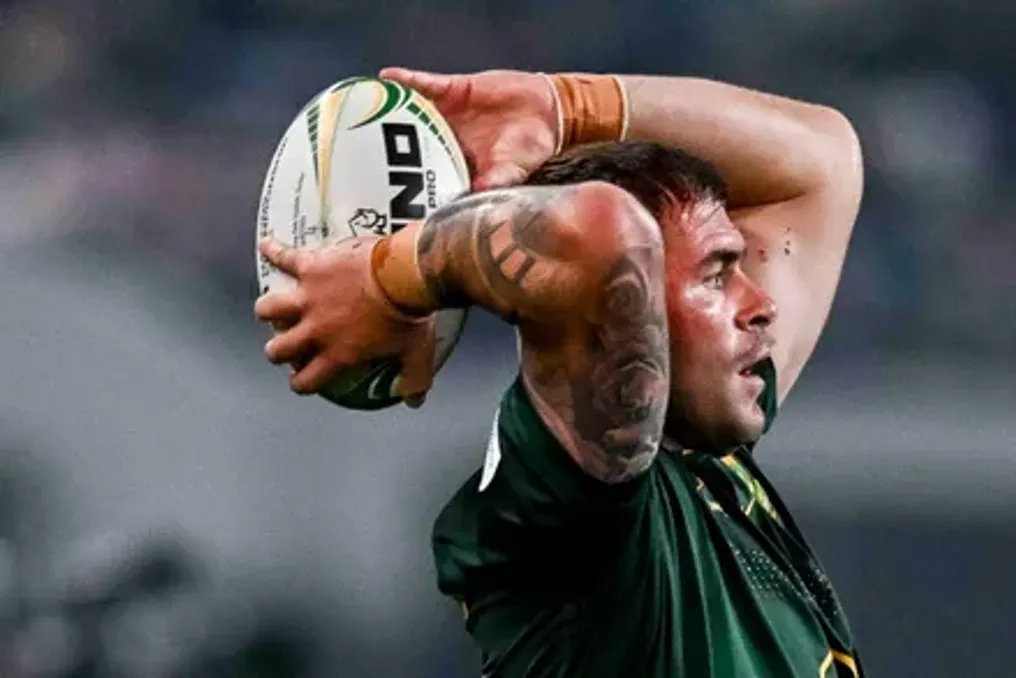
Siya Kolisi received 8 points. His perfectly calculated run for a close-range try was superb, as was his strong hit on teammate Ardie Save. This was invaluable contribution from the captain.

Ruan Nortje received 8 points. He was central to the Boks' physical mauls and demonstrated tireless energy.

Eben Ezebet received 8.5 points. He noticeably asserted his powerful presence throughout the match. He made a vital interception on the All Blacks' out-line near the Bok line, followed by another massive interception late in the game to stop a developing attack. It was Ezebet at his best.

Thomas du Toit received 7 points. He had several big carries, several strong tactical plays, and strong scores—exactly what you expect from a big player.

Deon Fourie received 7 points. He was the oldest person to play in green and gold in the test match, using his usual style. He made a key carry before the Boks' first try and did everything possible before being substituted after 35 minutes.

Gerhard Steenkamp received 7 points. He contributed significantly to the scoring during his 35 minutes and made several important carries.

Replacements

Malcolm Marx, who came on as a substitute (number 16), immediately made a huge impact in everything he participated in. A typical penalty kick for a lost ball earned his team three points, and he scored another one in the 70th minute, adding three crucial points. It was an exceptional performance.

Ox Nche (number 17) was caught offside at the ruck after several referee warnings to the front rows. He participated reasonably well in the scoring, but it was not his best match.

Wilko Lou (number 18) put significant pressure on the All Blacks' scrum when he came on in the second half. This pressure had a significant effect on how the Boks managed to drive the game to the line.

Cameron Hanekom (number 21) made a decisive interception late in the game that secured the Boks' victory. This had a big impact.

Morne van den Berg (number 22) was active and effective, helping his team finish the game. Mani Libbok (number 23) came on for the injured Willemse and performed excellently at the wingfield position, helping the team secure the win.

It is also noted that Siya Kolisi returned to the game, which was cause for celebration.
Similar stories

Rassie Erasmus's tactics and Cheslin Kolbe's mastery helped Springboks defeat All Blacks
Read more
iol.co.za

Rassie Erasmus's tactics and Cheslin Kolbe's mastery helped Springboks defeat All Blacks

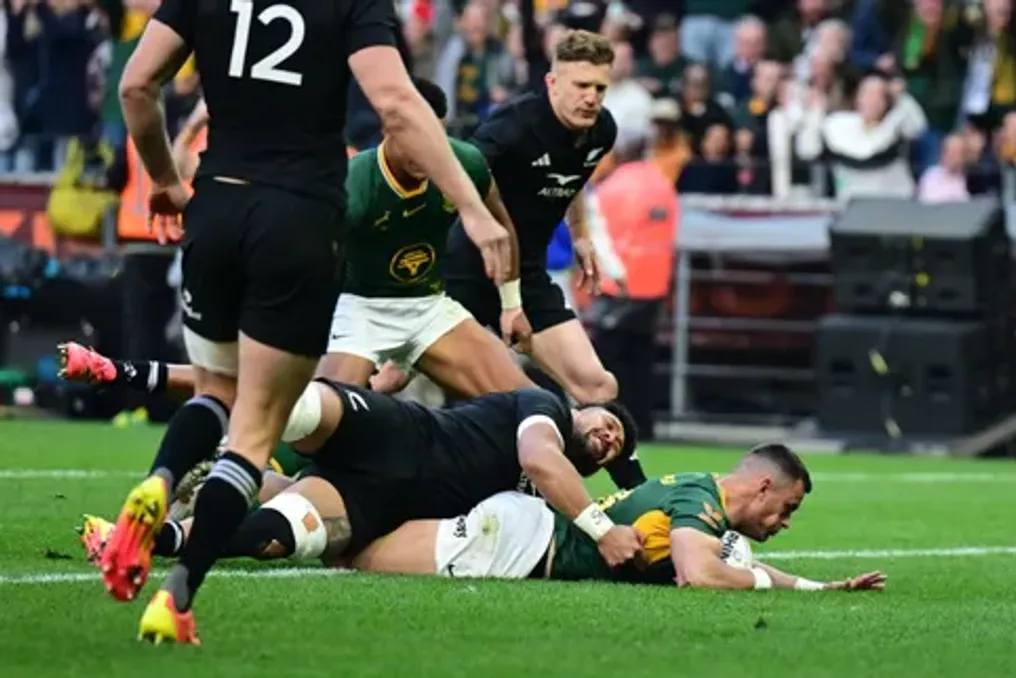
The Springboks resumed their campaign in the rivalry dubbed 'The Greatest Rugby Rivalry' in an exciting match at the DHL Stadium. They secured a convincing 33–26 victory over the All Blacks, leveling the four-match series at 1–1.

Recovering from a disappointing loss in Ellis Park, South Africa combined early physical intensity with refined tactical ingenuity to take control of the game from the visitors. This set the stage for the third test in Soweto.

This review presents five key moments from the memorable evening in Cape Town, including bold coaching decisions and individual outstanding performances.

Siya Kolisi's return restored attacking dominance

Siya Kolisi's return to the defensive line provided the Springboks with the necessary physical power and authority in the tackle contest in attack that they lacked in Ellis Park. His presence allowed them to neutralize New Zealand's destabilizing tactics, giving the hosts cleaner ball and a much stronger foundation.

The flanker captain demonstrated his impact by scoring the decisive try shortly before halftime, confirming that his leadership qualities and work rate are absolutely indispensable in high-stakes matches.

Rassie Erasmus's genius front-line plan

Rassie Erasmus once again demonstrated a masterful coaching move by starting the game with Deon Fourie, Gerhard Steenkamp, and Thomas du Toit to absorb the initial onslaught from the opposition. Then, in the 35th minute, he made the bold decision to bring Malcolm Marx and Ox Nche on before halftime. This gamble paid immediate dividends as the fresh, world-renowned pair won a penalty scrum inside the All Blacks' 22-meter zone, directly leading to Kolisi's try and decisively changing the momentum before the break.

Cheslin Kolbe's flawless kicking proved decisive

In a classic test match decided by narrow margins, Cheslin Kolbe's metronomic accuracy in goal-kicking became the determining factor. Playing as the primary goal-kicker playmaker, the winger proved to be man of the match, scoring three conversions and four penalties, totaling 18 points. His perfect percentage allowed the Springboks to punish New Zealand's errors and maintain the scoreline, reducing the significance of Handre Pollard's late absence.

Springbok defense was exposed in the wide areas

The experienced combination of centers Jesse Kriel and Damian de Allende showed immense strength, each scoring a crucial try in the first half. However, their play was not flawless. These two Springboks players conceded two tackles from Will Jordan, leading to an All Blacks attempt. The visitors enjoyed themselves on the flanks, overcoming the Bok defense's pressure and scoring points.

Slow start doomed resilient All Blacks

For the second week in a row, the pace of the game was dictated by an early start, but this time New Zealand found themselves trailing. A conceded try in the first two minutes forced the visitors into a chasing mode in Cape Town. Although goals in the second half from Leroy Carter and Ardie Savea demonstrated their relentless fighting spirit, the All Blacks ultimately set too high a bar against the determined defense of the Springboks.

Springboks must beat All Blacks in Cape Town to keep series chances alive
Read more
iol.co.za

Springboks must beat All Blacks in Cape Town to keep series chances alive

The Springboks team is under serious pressure as they need to defeat the All Blacks in Cape Town to maintain a chance of winning the series. History shows that the Springboks demonstrate the greatest danger when in a difficult position, and all attention is focused on Cape Town before the second match, which South Africa cannot afford to lose.

The All Blacks have gained an unexpected advantage, as they lead the four-match series after their impressive 33-16 victory at Ellis Park last Saturday, putting the Springboks in a position that requires a win to stay in contention.

In the upcoming clash, which will take place at DHL Stadium on Saturday, there will be a new referee—Angus Gardner from Australia, whose appointment was confirmed by World Rugby. Initially, Gardner was scheduled to officiate the third match in Johannesburg next week, but due to the illness of Nicky Amashukeli from Georgia, Amashukeli will now take over Gardner's initial duties in Johannesburg.

For the Springboks, the main focus is on actions between the lines. The team has repeatedly proven its ability to cope with setbacks, learn from them, and respond with play that can change the course of the series or tournament. They demonstrated this against the British Lions in 2021, recovering from a 22-17 loss in the first match and winning the series 2-1.

Past examples are also recalled: in the 2019 Rugby World Cup, they lost to New Zealand in the group stage but subsequently won the Webb Ellis Cup. Four years later, a loss to Ireland in France was replaced by a remarkable run towards a second consecutive World Cup title. Furthermore, last year, after losing to Australia 38-22 at Ellis Park, the Springboks managed to rally and retain the Rugby Championship title for the first time in history.

The ability to move on quickly will be tested again in Cape Town. Prop Thomas du Toit stated that the players deliberately left the Ellis Park defeat behind after careful analysis conducted on Monday. Du Toit noted: 'I think the most important thing for us was to postpone this game and learn lessons as quickly as possible.' He added that the team performed excellently over the last two years, placing each individual game in its own frame and not dwelling on mistakes.

Du Toit emphasized that the team embraced the positive aspects and worked on the worst aspects of the game, saying it was 'so simple'. Nevertheless, he acknowledged the significance of Saturday, noting: 'There is this undertone to what this event represents. However, the reality is that we want to win on Saturday, and what we do during the week will matter.'

The All Blacks team is also well aware of the challenges ahead. Coach Dave Rennie expects the injured Springboks team to play aggressively but warned that New Zealand must also improve its game to repeat the success at Ellis Park. Rennie stated: 'We know the Boks will come out to give their all for a possible comeback. They will obviously be very disappointed after last weekend.' He also mentioned that he is well aware of how the Springboks recovered last year after losing to them in Wellington.

However, Rennie insists that the All Blacks will not simply defend and maintain their 1-0 lead. He believes that the Springboks at peak form are difficult to beat anywhere, but they said they would be better than last weekend. 'We have to raise our level because we know the Boks will be better too. We will mainly focus on what we can bring, rather than entirely on what the Boks can bring.'

Victor Matfield names current Springboks team the best in history ahead of series against All Blacks
Read more
iol.co.za

Victor Matfield names current Springboks team the best in history ahead of series against All Blacks

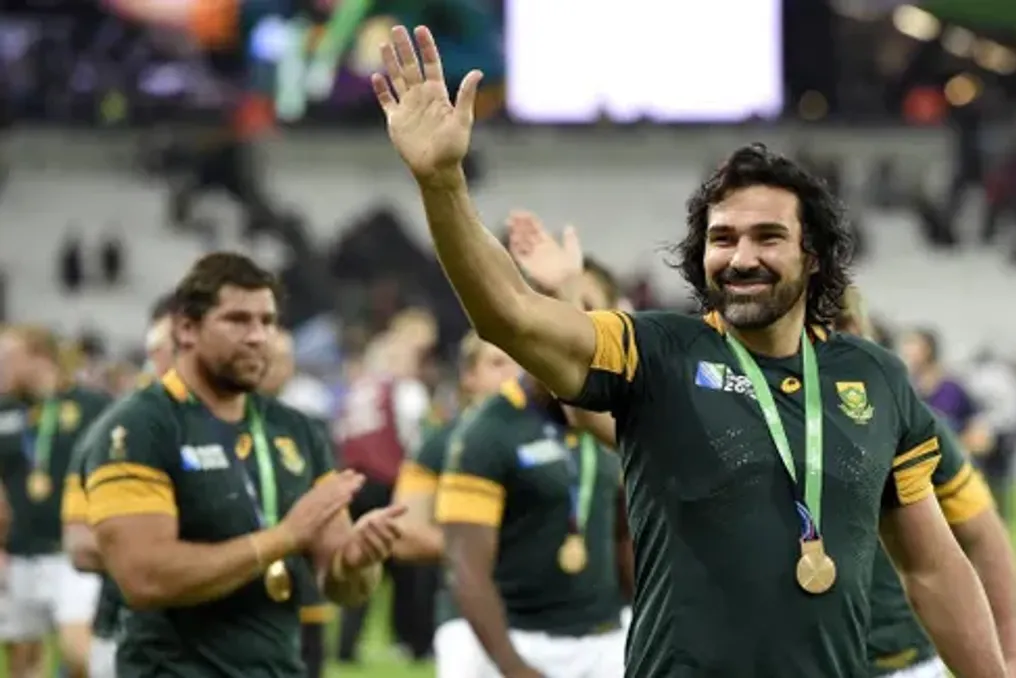
Springboks legend Victor Matfield believes that the current South African team is 'the greatest we have ever had.' His opinion will be tested over four consecutive weekends, starting Saturday, when the green and gold squad faces their main rivals, the New Zealand All Blacks.

The first and third international matches will take place at different stadiums in Johannesburg, the second in Cape Town, and the last in the American city of Baltimore. This clash of giants: South Africa won the last two Rugby World Cups, while New Zealand won the previous two. Between these teams, seven out of ten world tournaments have been secured.

Furthermore, South Africa won the last two editions of the Rugby World Cup, and New Zealand won nine out of eleven earlier ones. In total, 110 matches have taken place between them, dating back to the first meeting in Dunedin on the South Island of New Zealand in 1921: New Zealand won 63, South Africa won 43, and four matches ended in a draw.

Matfield, who helped South Africa win the 2007 World Cup, later formed a well-known partnership in the second row with the tough Bakkies Botha. The 49-year-old former star player, now a television analyst and podcaster, stated: 'The Springboks always find a way to win.'

Commenting on an uninspiring 17–10 victory in one match in Argentina this month, he noted: 'The Springboks didn't play very well; they made many mistakes, but they managed to win.'

The team facing New Zealand will include only two players from that match: midfielder Saccha Feinberg-Mngomezulu and second-row veteran Eben Etzebeth. Although Etzebeth was an obvious choice, head coach Rassie Erasmus acknowledged the difficulty of choosing between Feinberg-Mngomezulu, Manu Libbok, and Handre Pollard for the playmaker position.

Erasmus noted: 'It is always a difficult decision... Saccha did wonderful things when playing for us. He was a midfielder last year when we beat them.' Libbok is on the bench, and Pollard, a two-time World Cup winner, did not make the squad this time, despite being the most conservative of the trio in play, yet being a prolific goal-scorer.

Acknowledging the nervousness, Erasmus said: 'This is a huge series of matches, and how we start is very important. There is time to come back, but it is always better to win the first one.'

Peter-Steph du Toit, World Rugby Player of the Year award winner and flanker, will lead the Springboks alongside captain Siya Kolisi, who has been given more time to fully recover from a hamstring injury. New Zealand coach Dave Rennie replaced Scott Robertson in March and admits that he and his team are in a phase of intensive training, striving to dominate world rugby again.

Like Erasmus, Rennie admitted the need for deep self-analysis before naming his squad just two hours before the Springboks revealed theirs. He mentioned: 'There were many players in good form, huge competition for spots, and there were several positions that required a lot of discussion. I mean the second row especially.'

The only change in the team that convincingly won the Rugby World Cup against Ireland in Auckland last month was the replacement of Patrick Tuipulotu with Fabian Holland. Organizers called this series the 'Greatest Rivalry' and stated that it was a 'series unlike any other,' with a corresponding trophy presented mid-week. In case of a draw, the trophy, consisting of two magnetic halves, can be split and divided.

Popular