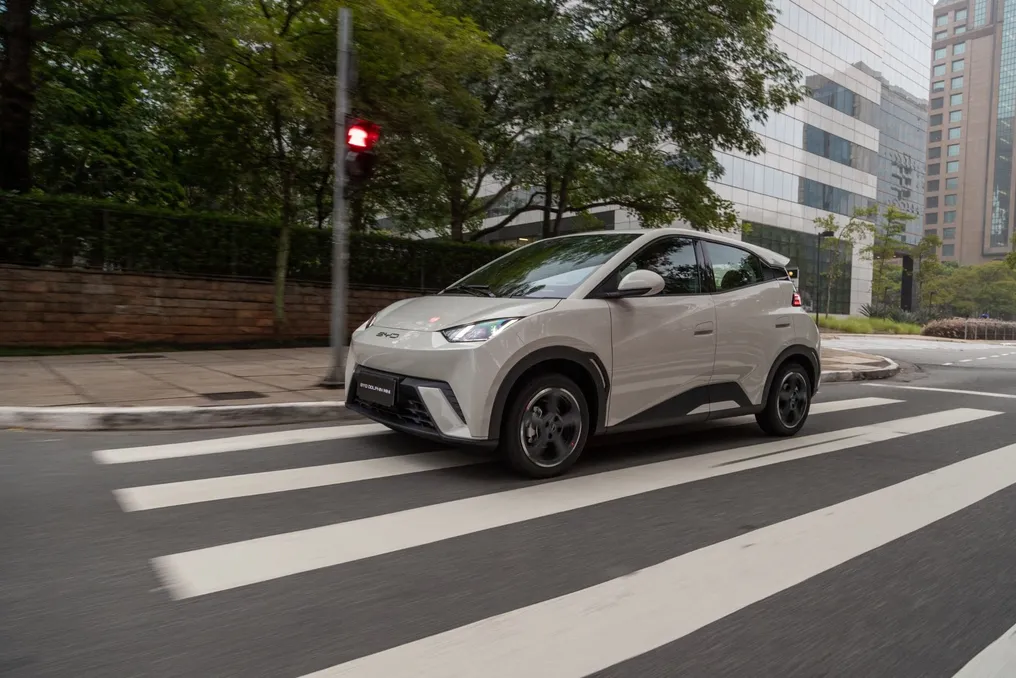
Interest in electric vehicles has grown significantly, largely driven by the attractiveness of their prices, which are often lower than those of combustion models. This price competitiveness is partly due to Chinese imports, where cars are manufactured with lower operating costs than those practiced in Brazil. Thanks to its competitive price and high technology, the electric car has established itself as a consumer desire for those looking to reduce transportation and maintenance expenses.
The electric car can be configured as a true 'China business' by combining certain elements that justify its choice, going beyond a mere consumption trend. One of the crucial benefits of the electric vehicle is its performance in urban environments with heavy traffic. In congested situations, the electric motor operates differently from a combustion engine. Additionally, the ability to recover energy during deceleration and braking allows for the utilization of some energy that would otherwise be wasted in a traditional car.
This scenario is particularly advantageous for those who face heavy traffic, traffic lights, and short trips daily. This type of use is classified as severe for combustion engines, as it implies more operating cycles, starts, and low-speed periods. In the case of electric vehicles, the simplicity of the powertrain reduces the number of parts subject to this wear. In other words, traffic jams benefit the electric car and harm the combustion engine.
Another determining factor in making the electric option economical is the possibility of recharging it overnight. The initial cost to install a residential charging station (wallbox) varies according to the property's electrical infrastructure and can be in the order of several thousand reais. In São Paulo, using an electric car with a consumption of 15 kWh/100 km and an average residential tariff of about R$ 0.85 per kWh, the energy expense approaches R$ 12.75 every 100 km, or R$ 0.13 per kilometer.
For comparison, a vehicle that consumes 12 km/l with gasoline at R$ 6.34 per liter costs approximately R$ 52.83 per 100 km. If ethanol at R$ 3.69 per liter is used, with a consumption of 8.5 km/l, the cost is around R$ 43.41 per 100 km. It is important to note that these values are merely references and may vary depending on the vehicle's consumption, energy tariff, fuel price, and traffic conditions. However, the disparity demonstrates the advantage of the electric car for those who travel long distances and perform most of their charging at home.
Even when installing a domestic charger is not feasible, large metropolitan areas, such as the capital of São Paulo, have charging points, whose rates per kilowatt reach R$ 2. Even so, this option remains cheaper than refueling at a gas station.
The electric motor has fewer mechanical components susceptible to wear. It eliminates engine oil, spark plugs, engine belts, exhaust system, clutch, or a complex conventional transmission. Regenerative braking also helps increase the lifespan of pads and discs, reducing the demand on conventional brakes. This does not imply a lack of maintenance; tires, suspension, brakes, cabin filters, and electronic components continue to wear out. Furthermore, it requires the replacement of cooling fluids according to the owner's manual. However, periodic inspections tend to require fewer procedures in a purely combustion automobile.
For residents or workers in the capital of São Paulo, which is the only city with circulation rotation, there is an additional benefit not listed in the price: the electric car is included among the vehicles that can circulate even during restricted hours, depending on the license plate. São Paulo legislation grants exemption from circulation rotation for vehicles powered by electric propulsion, hydrogen, or certain hybrid systems. In practice, this can optimize time and simplify the routine of those who use the car daily.
The last relevant point is the tax aspect, which can significantly alter the final cost depending on the registration location. In 2026, 17 states and the Federal District offer some type of incentive for electric or hybrid vehicles, although the rules differ among them. For fully electric vehicles, there is total exemption in certain locations, while others establish price limits, exemption only in the first year, or apply reduced rates.
In summary, the electric car presents greater financial viability when it meets at least two conditions: intensive urban use and the possibility of home charging. In states that offer full IPVA exemption, the calculation becomes even more favorable. However, before finalizing the purchase, the consumer must weigh the purchase price, insurance, depreciation, and the cost of charger installation, in addition to the rare risk of battery damage.