AMI extends psychological support mission in Venezuela for another two months after earthquake
Read more
Noticias ao Minuto
noticiasaominuto.com

AMI extends psychological support mission in Venezuela for another two months after earthquake

AMI has decided to extend its psychological support mission to those affected in Venezuela for another two months, extending operations until October 31. This decision was made internally, considering both the volume of services provided and the need to ensure the sustainability and responsibility of the service rendered.

Daniel Viegas Rocha, coordinator of the AMI mission, informed Lusa that even after more than two months since the double earthquake, and with the event moving out of media attention, suffering persists in people's daily lives, many of whom feel abandoned.

He explained that AMI sent a team immediately after the earthquake to begin an exploratory phase and provide psychological assistance to the earthquake victims. Initially, the mission, fully funded by the organization's budget, was scheduled to end at the end of August.

Rocha detailed that the team is close to conducting 1,500 psychological health interventions, including community care. The work focuses on trauma as a collective problem, given that communities experienced the same traumatic event.

The coordinator emphasized that the continuation on the ground is due to the fact that psychological health support is different from the distribution of material goods kits, which prevents defining an immediate departure date. He mentioned that while it would be possible to finish the work within a set timeframe with the delivery of a dialogue kit, the continuous follow-up conducted by psychologists in the communities of La Guaira established a bond of trust with the population.

Furthermore, the stay is seen as a matter of 'sustainability and responsibility,' ensuring that communities are prepared and capable for the organization's departure, following a defined methodology and strategy.

AMI is also promoting workshops to train the community itself and identify members who were not as affected, allowing them to help those most in need locally.

When asked whether the Portuguese origin facilitated the local mission's work, Daniel Viegas Rocha confirmed that it did. He emphasized that the promotion of the work of a Portuguese organization, with a Portuguese team, but which collaborates with Portuguese-speaking Venezuelan psychologists, has been of great help.

As an example, he cited a Lusophone descendant who approached AMI in Naiguatá (La Guaira) the previous Saturday because they received information from relatives in Portugal about the organization's support for the local population. Rocha clarified that the care does not discriminate between Portuguese and Venezuelans, but recognizes the presence of many Portuguese among the beneficiaries, and the fact that it is a Portuguese organization generates a lot of trust.

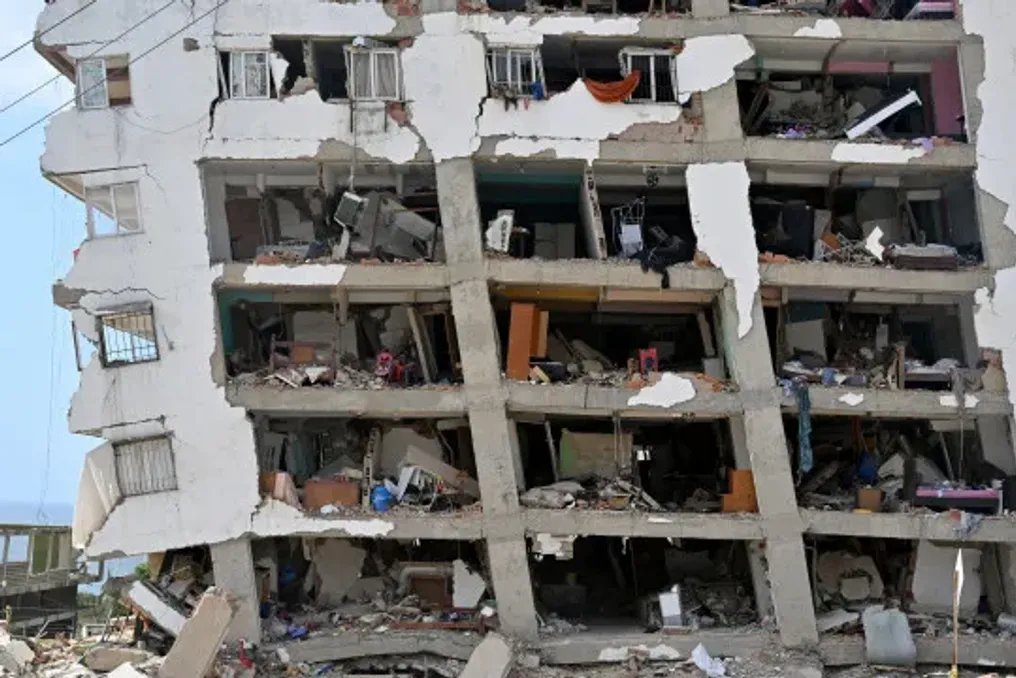
The double earthquake that occurred on June 24 caused serious damage to infrastructure, resulting in injuries and deaths in seven states of Venezuela: Caracas, Miranda, Aragua, Carabobo, Lara, Yaracuy, and La Guaira, the latter being the most impacted. According to the latest official balance, 6,509 people died and 226,696 were attended to in Venezuelan hospitals. Among the dead, there are at least 138 Portuguese and Lusophone descendants.

Additionally, about 190 buildings collapsed, and authorities inspected 60,785 residences, of which 11,001 were classified as 'high risk.' It is estimated that approximately 25,240 houses are uninhabitable, and 600,790 tons of debris have already been removed.
Similar stories

After Maduro, Venezuela is seen as Washington's testing ground for Latin America
Read more
www.tehrantimes.com

After Maduro, Venezuela is seen as Washington's testing ground for Latin America

Current changes in Venezuela have brought the country to a state situated between structural collapse and managed transition. This situation does not indicate either a complete breakdown of the former structure or the formation of national and independent sovereignty.

The departure of Nicolás Maduro did not lead to an immediate transfer of power to the opposition; instead, it placed Dilcy Rodríguez at the center of the new configuration. Alongside the return of transnational oil companies and the selective release of political prisoners, multi-level negotiations on institutional reengineering are underway. What is observed in Caracas appears less like an internal transformation and more like an externally directed project aimed at consolidating order under US supervision, where the center of key decision-making has shifted away from the Venezuelan capital.

This environment is the result of a long and exhausting process of escalating pressure tools from the US. This chain began with financial and structural sanctions in 2015 and 2017, intensified with the oil blockade in 2019, and peaked with the deployment of the US Navy in the Caribbean Sea, which started in August 2025. This strategic positioning directly created the operational basis for military aggression and the kidnapping of Maduro on January 3, 2026. Thus, the fundamental question in assessing Venezuela's future is whether the current agreements will lead to the restoration of national sovereignty and geopolitical independence, or if they will merely reproduce a model of foreign intervention in the form of a new legal and political mechanism—structured trusteeship.

Washington's recognition of Dilcy Rodríguez in March 2026 as the sole acting head of government was based on her role in maintaining the state apparatus. This demonstrated that the US priority was not a radical transfer of power to figures such as María Corina Machado. By retaining parts of the former executive structure, the White House promoted a model of controlled transition designed to serve as a buffer and minimize security costs. Nevertheless, Rodríguez's repeated concessions to Washington have not only failed to limit the scope of interference but, according to the strategic logic of hegemonic powers, have also paved the way for deeper influence and the imposition of increasingly extensive external demands.

The components of this trusteeship were clearly institutionalized within the country's economic and defense structure. The issuance of Executive Order 14373 marked a turning point in the stripping of Venezuela's national sovereignty—a legal document that transferred the country's oil revenues under the guardianship of the US Department of State and the management of the US Treasury. Simultaneously, the direct guidance of political processes by figures such as Marco Rubio and the announcement of Caracas's diplomatic programs through US officials indicate a clear shift in the locus of sovereignty. Washington implements its strategy through a three-stage roadmap, including 'stabilization,' 'economic recovery,' and 'structural transition'; a process that on paper moves toward building institutions without direct foreign presence, but in practice keeps vital levers of political economy dependent on the will of the White House.

In domestic policy, Washington defined its main channel of interaction around more moderate opposition figures, such as Dinora Figueroa, sidelining tougher opposition factions so that the electoral reform process could proceed within controlled parameters. However, limited and controlled measures, such as general amnesty and the release of prisoners, have not resolved the core problems of the structural dispute and mutual denial of legitimacy between Chavismo and its opponents. Alongside these events, Israel's entry under the guise of humanitarian missions following recent earthquakes is part of the process of readjusting Venezuela's geopolitical position in the Western Hemisphere; it is a tool for gradually normalizing influence in security and moving Venezuela out of the confrontation axis into an orbit of convergence with the Western security structure.

Venezuela's prospects do not lie in the complete destruction of its structures nor in achieving deep stability based on national sovereignty; rather, the most likely scenario is the establishment of a prolonged period of fragile and conditional stability. Within this system, political and economic reforms will be implemented under the direct control of transnational mechanisms, elections will take place in a controlled environment, and energy revenues will circulate through conditional licenses. Such a situation may help overcome the acute livelihood crisis, but as long as the core of strategic decision-making remains under foreign directives, the achieved stability will simply be another name for institutionalized trusteeship in Caribbean and South American geopolitics.

In short, in Venezuela after Maduro, the formal governmental structure is maintained, but a significant portion of the instruments of sovereignty has been removed from the control of the national government. This state can be called a 'government without instruments of sovereignty.' Conditional control over oil revenues, interference in institutional restructuring, and influence on the course of future elections demonstrate that the problem goes beyond a simple change of political elites, representing a limitation of the state's ability to make independent decisions in strategic areas. More broadly, this model may indicate a form of de-Sovietization in South America: the preservation of outwardly independent states while transferring real levers of power outside national borders. In this regard, Venezuela serves as the most serious testing ground for this model.

Popular