Indian Railways plans to lay four-lane tracks on seven busy routes
Read more
Aaj Tak
www.aajtak.in

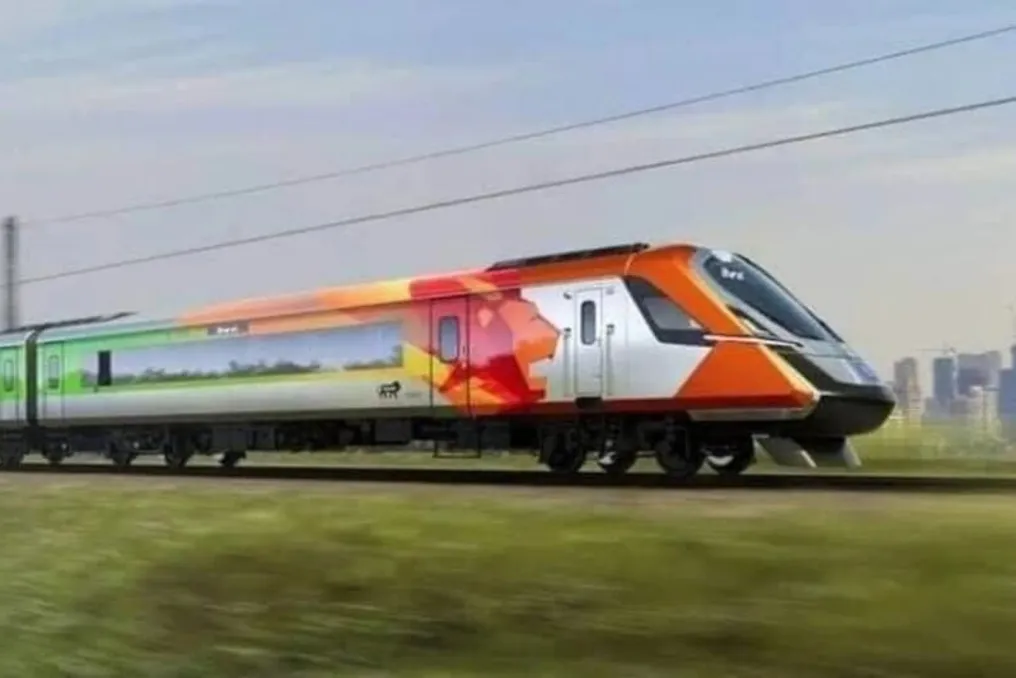
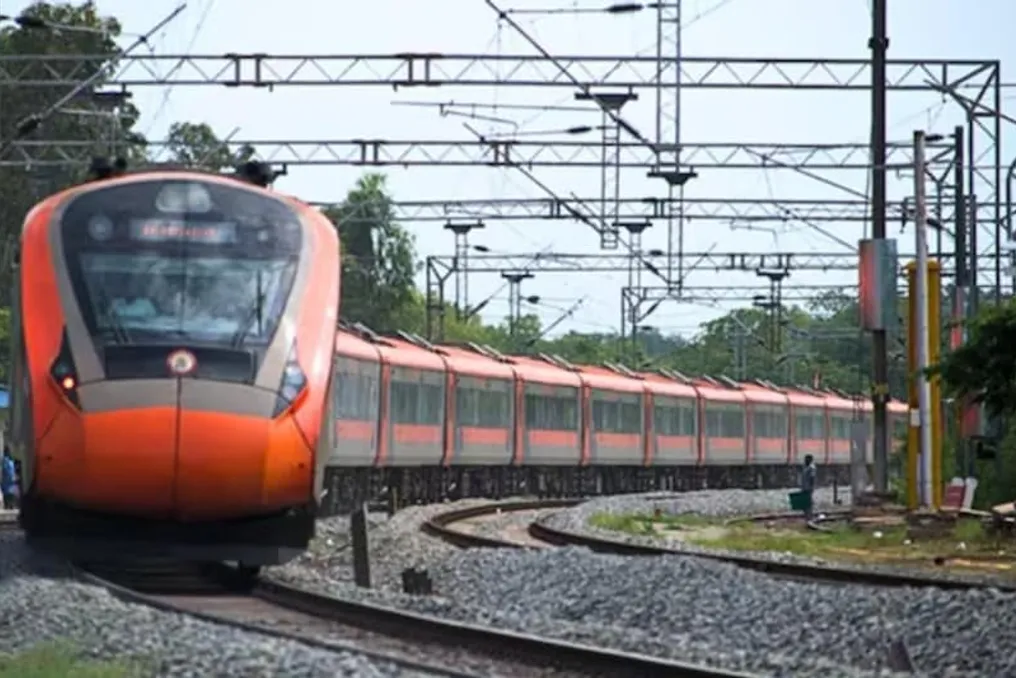
Indian Railways plans to lay four-lane tracks on seven busy routes

Indian Railways is preparing to convert seven of the busiest railway routes into four-lane lines, similar to highways. As part of this project, it is planned to lay such tracks with a length of about 11,000 kilometers along some of the country's most active railway corridors. The creation of four-lane lines will allow for an increase in the number of trains on these routes and facilitate the transport of passengers and goods.

These busy railway lines currently account for approximately 41 percent of all rail traffic in the country, while making up only 16 percent of the total railway network. These corridors connect major cities such as Delhi, Mumbai, Chennai, and Howrah, making them critically important for both passenger and freight transport.

Railway Minister Ashwini Vaishnaw stated that infrastructure development is underway to lay four railway lines on these routes. The goal of this expansion is to create additional capacity and support future growth in passenger and freight traffic. The Ministry of Railways also highlighted the economic and environmental benefits of rail transport, including reduced transportation costs and the transition to clean transport.

Among the busiest routes are the Delhi-Howrah and Delhi-Mumbai corridors. On both routes, express trains can travel at speeds of up to 160 km/h. More than 120 passenger trains and about 100 freight trains run daily on the Delhi-Howrah route; this corridor is approximately 1,400 kilometers long. The Delhi-Mumbai route serves over 90 passenger trains and about 80-85 freight trains daily, and its length reaches approximately 1,500 kilometers.

Following these are the Howrah-Chennai route, which is about 1,653 km long, and the Delhi-Chennai route, which is approximately 2,174 km long. The Chennai-Mumbai route is about 1,289 km long. In total, about 25,000 trains run across the entire network daily. During the 2025-26 period, Indian Railways provided transport services to more than 741 million passengers.
Similar stories

Mumbai-Ahmedabad High-Speed Train Section in Maharashtra Reaches Construction Pace Thanks to Bridges, Tunnels, and Pylons
Read more
www.aajtak.in

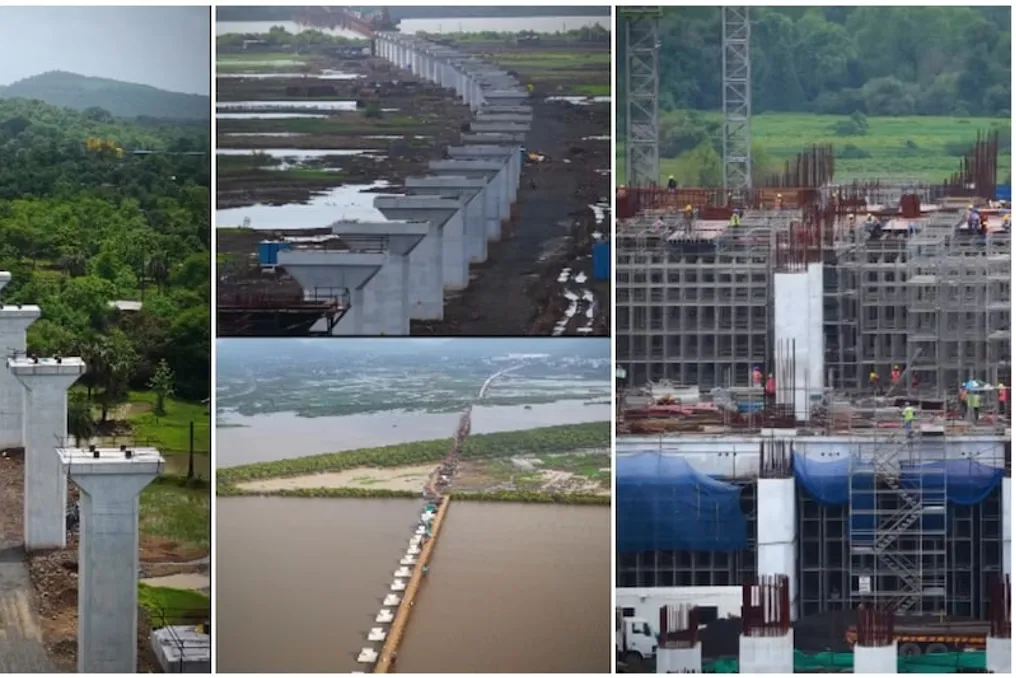
Mumbai-Ahmedabad High-Speed Train Section in Maharashtra Reaches Construction Pace Thanks to Bridges, Tunnels, and Pylons

The Mumbai-Ahmedabad high-speed train project is actively developing. Construction work is progressing on a section spanning approximately 135.45 kilometers from Thane to the border of Maharashtra and Gujarat. This section includes 124.027 kilometers of viaducts and bridges and is a crucial part of the country's first high-speed rail corridor, stretching from Shilphata to Jaroli village.

Union Minister of Railways Ashwini Vaishnaw shared fresh information about the progress on this section via his Instagram social media account. He provided a report on the advancement of engineering and civil works in various parts of Thane and Palghar. Last week, a significant breakthrough was achieved in tunnel construction at the Shilphata station in Thane.

Three elevated high-speed train stations are planned for construction within this section in Thane, Virar, and Boisar. The station in Thane is being built at an altitude of about 12 meters above ground level, necessitated by the need to preserve mangrove forests in an ecologically sensitive zone.

Pylon erection work has advanced over an area exceeding 100 kilometers. Approximately 74 kilometers of pylons are ready for the installation of viaduct girders. In Maharashtra, there are currently 9 concrete pouring construction sites, 7 full-span tower cranes, and 8 SBS cranes being utilized to accelerate the construction of viaducts and bridges.

There are a total of seven mountain tunnels on this section. A breakthrough has been achieved in three of these tunnels. In areas where earthworks are complete, work is underway on drainage, waterproofing, and tunnel lining.

Bridges are being constructed across several major rivers on this stretch of the Mumbai-Ahmedabad high-speed train corridor. Plans include the construction of a 460-meter bridge over the Ulhas River, a 232-meter bridge over the Vaihtarna River, and a 510-meter bridge over the Jagani River. In total, there will be 36 bridges and crossings across the entire section, including 12 steel bridges built over main railway lines, the Ulhas River, the Mumbai-Nashik highway, and other vital structures.

The recent tunnel breakthrough at Shilphata in Thane is also a major achievement for the project. This work was executed using the New Austrian Tunneling Method (NATM). With this technology, the surrounding rock and soil are used as natural support during excavation, and the excavated portion is reinforced by spraying concrete. The Shilphata tunnel is part of Package C2 of this high-speed rail corridor, and its construction is being carried out by Afcons Infrastructure Ltd. This breakthrough is expected to further accelerate construction activities on the Thane-Palghar section of the Mumbai-Ahmedabad corridor.

On this section, from Thane to the border of Maharashtra and Gujarat, construction is no longer limited solely to pylons or viaducts. Work is simultaneously underway on stations, tunnels, bridges, girders, and launching systems, indicating that this segment of the country's first high-speed rail corridor is rapidly taking physical shape. Future phases are expected to see even greater acceleration in tunneling, girder launching, station construction, and bridge works.

Construction of Indian Railways' high-speed test track worth ₹967.07 crore nears completion
Read more
www.aajtak.in

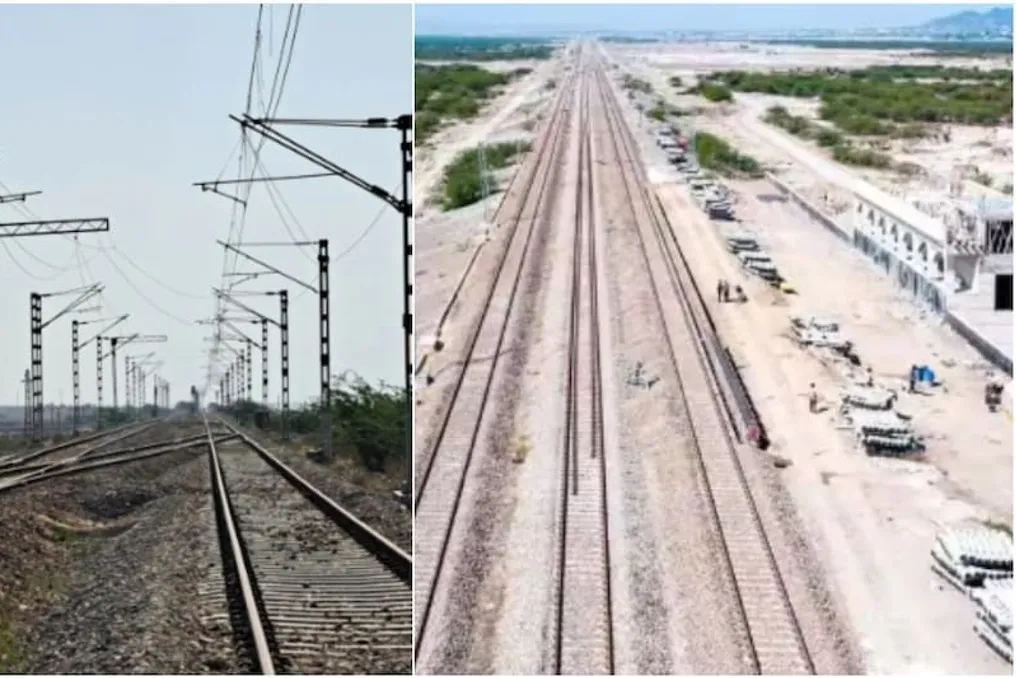
Construction of Indian Railways' high-speed test track worth ₹967.07 crore nears completion

The first specialized high-speed test track for Indian Railways is nearing completion. This track, spanning approximately 59 kilometers and located between Gudha and Tatana Mitri in Rajasthan, is being built with a total budget of ₹967.07 crore.

According to the railway, testing and trials of various types of rolling stock, including the Vande Bharat train, are expected to commence on this high-speed track between 2027 and 2028. The project is being developed by the Research Designs and Standards Organisation (RDSO), and the administrative responsibility lies with the North Western Railway (NWR).

This test track is being constructed in the Nava area, which falls under the Jodhpur division, and is situated about 70 kilometers from Jaipur. According to Amit Sudarshan, the Chief Public Relations Officer of NWR, this infrastructure will help the railway implement new technologies more quickly.

The specialized test track project was approved in two phases: the first phase received approval in December 2018, and the second phase in November 2021. The entire complex includes seven major bridges, 129 minor bridges, and four stations: Gudha, Jabdinagar, Nava, and Mitri.

Necessary modifications have been made at the Gudha station to integrate the test track into the existing railway network. The North Western Railway has modified the existing Kyosan electronic interlocking system to connect the specialized RDSO test track. Furthermore, adjustments have been made to the slot control scheme and the indication circuit of all 18 points on the Gudha end, aligning with new safety guidelines and aimed at enhancing operational safety.

This 59-kilometer test track is designed to accommodate several sections for conducting diverse tests. It comprises 23 kilometers of main line and a 13-kilometer high-speed loop at Gudha. A 3-kilometer accelerated testing loop is being built at Nava, and a 20-kilometer curve testing loop is being constructed at Mitri. Moreover, a 4.5-kilometer curved track for static rolling stock testing has already been completed and commissioned.

The railway reports that work on the 31.5-kilometer high-speed section and the 3-kilometer accelerated testing loop is nearly complete, with finalization planned by September 2026. Additionally, the 20-kilometer curve testing loop at Mitri is in an advanced stage, and its commissioning is expected by the end of 2026.

This new infrastructure is intended not only for checking the speed and performance of trains. It will also be used to test track materials, bridges, TRD equipment, signaling systems, and geotechnical parameters alongside rolling stock. Amit Sudarshan emphasized that the new 59-kilometer broad-gauge specialized track between Gudha and Tatana Mitri will be the first in India to possess comprehensive capabilities for testing rolling stock according to international standards such as UIC-518 and EN-14363.

Passenger shares impressions of the Vande Bharat coupe journey: 'It feels like a hotel, not a train'
Read more
www.aajtak.in

Passenger shares impressions of the Vande Bharat coupe journey: 'It feels like a hotel, not a train'

The demand for premium railway transport in the country is growing, and Vande Bharat trains play a significant role in meeting this demand. To strengthen long-distance connectivity, Indian Railways launched the Vande Bharat Sleeper service in January of this year, which makes a distinct impression on passengers.

Recently, one travel blogger shared his experience traveling on this train on social media, and his video went viral. A report by Business Today mentions the experience shared by travel blogger Sainyan Saivan.

In his review on Instagram, Sainyan noted that 'it did not feel like a train atmosphere.' He emphasized that the interior of the Vande Bharat Sleeper is so luxurious and modern that it resembles an airline or a hotel rather than a traditional railway carriage.

One of the strongest aspects highlighted by Sainyan in the review was the cleanliness of the train. He highly praised the sanitary condition, noting that the toilets significantly surpass the quality of ordinary railway restrooms.

Furthermore, the blogger complimented the food service. He mentioned that the personnel serving the meals were wearing gloves and head coverings, which contributes to raising the level of hygiene and service quality on the train.

In his video, the blogger demonstrated how the Vande Bharat Sleeper is designed to provide a higher level of comfort through its modern interior and advanced passenger features. Unlike ordinary Indian trains, where blue berths, metal elements, curtains, and crowded aisles are often found, the Vande Bharat Sleeper presents a completely different look.

Currently, 162 Vande Bharat services operate in the country, and high demand is stimulating the development of Vande Bharat programs in India. In January 2026, Vande Bharat Sleeper accommodated 1.21 lakh passengers in the first three months, while maintaining a load factor above 100%.

It should be noted that the first Vande Bharat Sleeper train was launched between Howrah and Guwahati. This train consists of 16 coaches, including one air-conditioned first-class coach, four air-conditioned second-class coaches, and 11 air-conditioned third-class coaches. The total capacity of the train is about 823 passengers. The train is equipped with automatic doors, emergency communication systems, and the Kavach safety technology.

Popular