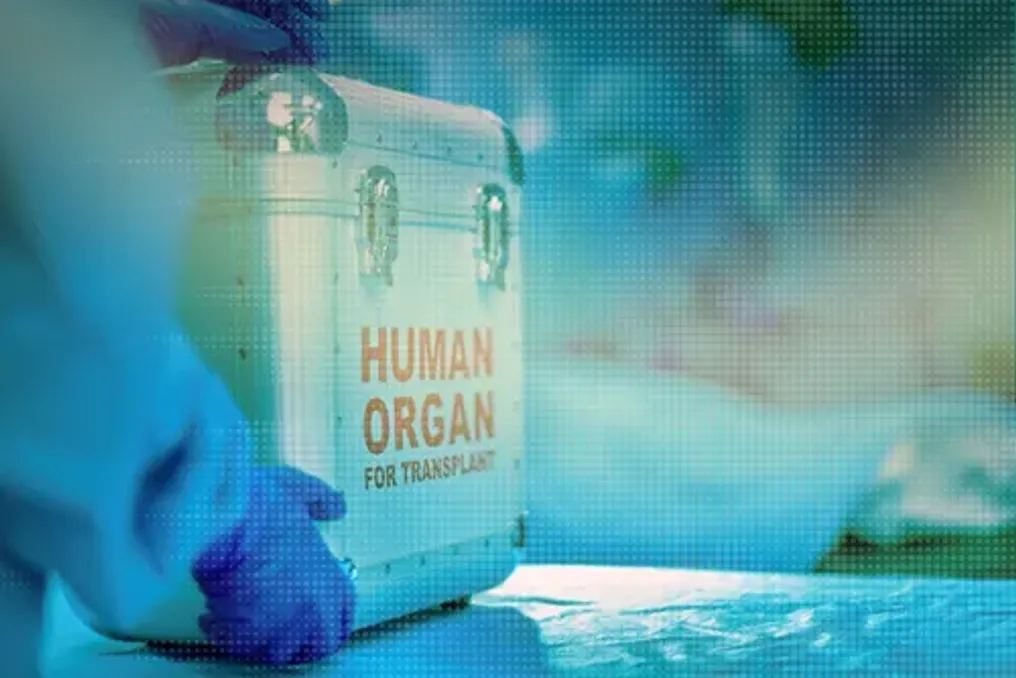
Despite significant achievements by South African doctors in the field of transplantation, including the ability to perform surgeries across blood group barriers and the use of Africa's first liver perfusion apparatus, the country registers fewer than 1.4 deceased donors per million people, leaving thousands of patients waiting for potentially life-saving transplants.
Organ donation is viewed as one of the last acts a person can perform to contribute to improving the world. One deceased donor can save up to seven lives, and tissue donation can improve the lives of more than 70 other people.
According to data from the non-profit organization Transplant Education for Living Legacies (TELL), founded by transplant recipients to educate the public, patients, and healthcare workers about organ and tissue donation, transplantation medicine in South Africa is rapidly developing, but donation rates remain low.
Transplant teams in South Africa are now able to perform surgeries that were impossible a decade ago. These include cross-blood-group transplants and, starting in June 2026, the use of the first liver perfusion machine in Africa.
In South Africa, surgeons can transplant kidneys and livers despite blood group incompatibility, which previously excluded a donor. There is also a kidney exchange program where two incompatible donor-recipient pairs are matched, allowing both to receive a compatible kidney during a simultaneous operation.
The new liver perfusion machine extends the viability of the donor liver outside the body, giving surgeons the opportunity to assess and even improve it before transplantation, sometimes allowing one liver to be divided between a child and an adult.
Fawn Kruger, co-founder of TELL and a twice-lung recipient, noted that transplantation achieves incredible results. However, she emphasized that every breakthrough still depends on the generosity of donors and their families.
An example of such a patient is Mohamed Zaid Hota, an eight-year-old resident of Lenasia in Gauteng. For over six years, he spent nights connected to a dialysis machine while other children slept. After years of hope and prayer, he underwent a kidney transplant from a living donor, incompatible by ABO system, in July 2025.
Mohamed Zaid Hota shared that he had been on the transplant waiting list for five years. He explained that he had been undergoing dialysis for six and a half years since the age of one year and nine months, and his mother helped him daily at home. He had to stay home constantly for dialysis, which prevented him from attending school. His dialysis lasted 16 hours at night, plus an additional two-hour session during the day. He needed to maintain strict hygiene and avoid germs to prevent infections.
He could not travel or play like other children his age, and during dialysis, he took 21 medications daily, in addition to receiving weekly injections. His days were strictly regulated for over six years.
Hota shared that he felt both excitement and fear upon learning about the availability of a donor. His family was also very happy about this, calling it the fulfillment of a long-awaited prayer.
Now, according to the eight-year-old boy, he has a new life. He was able to return to school, can drink as much water as he wants without worrying about restrictions, and can now swim and play with friends instead of watching the fun from afar. He can also enjoy trips and vacations, calling it a wonderful gift.
The young patient called on other people on the transplant waiting lists to stay positive and pray. He believes that the shortage of donors in South Africa is related to a lack of awareness and education. Hota noted that few people know about living donation because it needs to be explained that a person can lead a completely healthy life with one kidney and fully recover after partial liver donation. He called for educating youth on this important issue to increase the number of living donors.
TELL reports that patients with blood type O wait an average of 12 to 15 years for a kidney transplant, and many die before a match is found. This causes serious concern in a country that performed the world's first heart transplant in 1967. The global leader, Spain, has over 40 donors per million thanks to constant government education and support, and the presence of a transplant coordinator in every intensive care unit.
There are only 23 transplant coordinators in South Africa. Stella de Kok, CEO of TELL, who herself waited for a kidney transplant for 14 years, stated that no machine can fix a system that does not direct potential donors in time, or a family that never discussed the issue, or a myth preventing a person from agreeing.
Organ donation is a serious issue, and it is recommended that people discuss this option with their families. Those wishing to become organ donors can register online on the Organ Donor Foundation of SA website. Additional information on how to become a donor and what steps to take after the death of a loved one can be obtained by calling the free number of the Organ Donor Foundation of SA: 0800 22 66 11.