South Africa has always offered numerous reasons to travel, but over the past year, some of the country's most famous attractions have faced the need to close, undergo repairs for damage, or reconsider their approach to hosting guests.
Flooding consequences led to the destruction of roads and bridges, landslides interrupted access to sites, and outdated infrastructure required attention. Furthermore, many beloved hotels and landmarks temporarily disappeared from view for extensive renovations. Now, they are gradually returning.
The return is not always complete, nor is it always in its original form. Some sites are opening in phases while restoration work continues around them. Others reappear after months of closure with an updated look and a revitalized spirit. For travelers, this makes the coming months an interesting time to return. These destinations are not new; they are familiar places entering a new chapter.
Kruger National Park: Gradual Recovery
Few places in South Africa evoke a sense of return as significant as Kruger National Park. In January 2026, severe flooding caused extensive damage across the park. Roads, bridges, tourist facilities, and staff accommodation were affected, and some areas were temporarily inaccessible. SANParks continued to assess and address the damage throughout the year.
The recovery proceeded gradually. By March, several key camps and routes resumed operations: Shingwedzi, Olifants, and Mpani were functioning, while Letaba opened in stages. A gradual return of accommodation in Letaba was planned, with additional modules opening until August.
The northern part of the park showed particularly important progress. Shingwedzi, which was heavily impacted by the floods, began restoring visitor facilities as rehabilitation work advanced. By July, most of Kruger's road networks were reopened, although several roads remained closed. SANParks continues to warn visitors not to bypass closed sections, especially where infrastructure remains weakened.
Thus, it cannot be said that Kruger is simply 'reopened.' It is more accurate and interesting to state that Kruger is returning piece by piece. Despite a difficult season, the reason to visit has not changed. Kruger remains one of Africa's greatest natural areas, covering nearly two million hectares and offering the chance to encounter everything from elephants and lions to wild dogs, leopards, and incredible bird diversity.
A self-guided safari tour offers the freedom to explore at your own pace, while organized trips provide a deeper understanding of the wildlife and landscape. If you have visited the park before, this could be an especially good reason for a return visit. The park is still recovering, but this recovery is now part of its story.
Before You Go: Recommendations
Before traveling, check the latest updates on roads and facilities from SANParks, as conditions can change, and a route indicated in an old plan might still be closed.
Bontbok National Park
Bontbok National Park experienced a particularly challenging year. In June 2026, severe flooding caused by the Bried River damaged roads, hiking trails, viewpoints, and visitor facilities, forcing the park to close while rehabilitation work was underway.
Just two months later, visitors began to return. SANParks announced a phased resumption of operations starting August 1, 2026, with some accommodation areas, campsites, and trails returning to use, while other sections remain closed for restoration. This park is easily underestimated.
Near Stellenbosch, the reserve protects one of South Africa's most characteristic antelope species—the bontbok—as well as fynbos and riverine landscapes around the Bried River. Its history is closely tied to the survival of the species for which it was created. Bontbok populations were sharply declining, and conservation efforts ultimately led to the establishment of the reserve.
Bontbok is ideal for travelers who do not necessarily want to spend a full safari weekend. A visit can be combined with a stay in Stellenbosch, exploring the park's trails, spotting bontboks and other wildlife, having picnics by the river, and admiring the Langeberg mountains. Due to its smaller scale, the park is also appealing for a road trip. It does not require three days to experience; a morning or overnight stay can easily become an unexpected highlight of a longer trip through the Overberg.
There is something pleasant about visiting now while the park is still recovering. Not everything is open, but that is precisely why you should check accessibility before arriving.
Cango Caves
The Cango Caves have welcomed visitors for generations, but in 2026, the road to the caves became the issue. Flooding triggered landslides that made the R328 road inaccessible, disrupting access to one of the Little Karoo's most famous attractions. Additional severe weather conditions in June caused further erosion and damaged some preliminary stabilization work.
After extensive clearing and safety work, the road was reopened to traffic on July 10. The caves subsequently reopened to visitors, with the official reopening marked on July 24. Timing is crucial because the Cango Caves are not just another tourist attraction. They are one of South Africa's oldest and best-known natural heritage sites, featuring an extensive limestone cave system beneath the Swartberg mountains. The caves contain vast chambers, stalactites, and stalagmites, and they have a long history of human use and exploration.
Since the caves remain one of those places that photographs cannot fully convey, guided tours take visitors underground through massive chambers and passages, offering options from a more accessible standard tour to a significantly more adventurous Adventure Tour. Upon emerging, there are many other reasons to stay in the area. Oudtshoorn is easily accessible from the Swartberg Pass, the Cango Valley, and the wider Little Karoo, making a visit to the caves part of a much larger road trip. The resumption of operations is also significant beyond the caves themselves. The temporary road closure affected the tourism business in the vicinity of Matiesrivier, making the return of visitors important for the local economy as a whole.
Nature, Adventure, and Landscapes
Some discoveries happen because something was damaged. Others happen because something simply needs reinforcement. This is the story at Port River Mouth in Garden Route National Park.
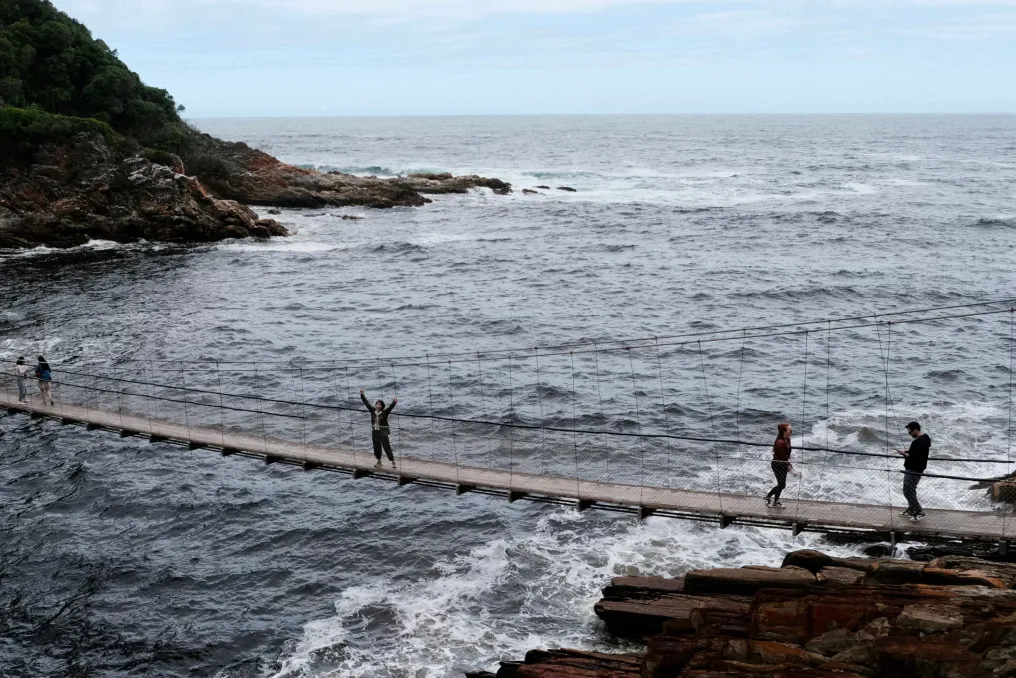
The famous suspension bridge underwent phased repairs to enhance long-term safety and durability. The final stage required a temporary closure of the bridge and access to all three suspension bridges from July 20 to July 31, 2026. They reopened on August 1. This may seem like a minor tourist update, but the bridge is one of the most recognizable landmarks in this section of the Garden Route. It is part of the Port River Mouth experience since 1969, suspended over a gorge where the Storms River meets the Indian Ocean.
Port River Mouth remains one of those places where the landscape speaks the loudest. The popular Mouth Trail winds through the local forest to the suspension bridges and the river-ocean confluence. There are viewpoints along the way, and bolder tourists can take longer routes into the adjacent Tsitsikamma area. This area is also part of the Garden Route National Park, where forest, fynbos, coast, and marine environments meet. If you postponed a trip to the Garden Route due to reports of closures near the bridge, the latest opening gives you another reason to go. Just don't make the mistake of thinking the bridge is the entire experience. Slow down. Walk through the forest. Listen to the river. Stand on the bridge and look at the ocean below. That is the essence.
Coastal Escape in Hermanus
Not every story of return is linked to floodwaters and damaged roads. Sometimes a place closes because it is time for a new chapter. In June 2026, The Marine in Hermanus reopened its ground-floor public areas after significant reconstruction. The work included the reception, cocktail bar, Pavilion restaurant, and connecting spaces, while preserving the hotel's historical architecture. The Marine has been part of Hermanus since 1902, making it one of the city's defining landmarks. Its location overlooking Walker Bay has always been part of its appeal, but the recent renovation brought the surrounding landscape inside through fynbos-style interiors, botanical art, and bay views.
This is not a hotel trying to become something else. The renovation intentionally preserved original elements, including historical photographs, terracotta floors, and architectural details, while giving the public spaces a softer, more modern feel. Hermanus is one of the easiest places in South Africa to turn a weekend into a complete getaway. Take a walk on the cliff trail. Explore the city's galleries and restaurants. Swim in the tidal pool. Drive to the Hemel-en-Aarde Valley for wine. Or, if you are there during whale season, simply find a good spot to watch the water. You don't need a complex plan; that is part of the appeal. The Marine provides a convenient base for exploring one of the most picturesque coastal towns in the Western Cape, and the updated spaces give returning visitors another reason to see the hotel with fresh eyes.
These returns deserve attention. In Kruger, recovery is happening gradually after devastating floods. In Bontbok, visitors are returning while rehabilitation continues. Cango Caves have welcomed visitors again after floods and landslides disrupted access. In Port River Mouth, a landmark was reinforced for years to come. And in Hermanus, The Marine used renovation to start a new chapter without losing its unique character.
None of these places require grand announcements of return. They just need us to go. Perhaps this is the most useful way to view travel in South Africa right now—not as a search for untouched places, but as an opportunity to return to beloved spots, support local communities and businesses, and see what has changed. Sometimes a destination becomes most interesting not when it is brand new, but when it has been through something, and these places have done so.