A study conducted by scientists from Rhodes University demonstrates that mere access to water resources is not enough to bring about transformations in South Africa's agricultural sector. Researchers Fengi Matherechera-Mitochi and Matthew Weaver explain how high initial costs, yield delays, and uneven distribution of power force many Black farmers to depend on white commercial partners.
South Africa's commercial agricultural sector continues to be shaped by the legacy of slavery, colonialism, and apartheid. Although Black South Africans constitute over 80% of the population, most commercial farms are still owned by a relatively small number of white farmers.
During apartheid, discriminatory land and water laws prevented Black farmers from owning productive land. Furthermore, they were denied access to irrigation water or participation in commercial agricultural markets. Many Black communities were forced to live in overcrowded areas known as Bantustans, where infrastructure was weak and opportunities for successful farming businesses were limited.
After the end of apartheid in 1994, South Africa took steps to ensure greater fairness in agriculture by changing land ownership and water access. One approach was granting water licenses to Black farmers and encouraging them to enter into joint ventures with existing commercial, predominantly white farmers.
Farmers using rivers, reservoirs, or groundwater for irrigation typically require a water use license. In such partnerships, Black farmers usually provide the land and water, while experienced commercial farmers provide financing, agricultural expertise, equipment, and market access. The idea is that both parties benefit: established farmers can continue producing crops, and Black farmers receive the necessary support to develop commercial agribusiness. Each such partnership is established individually on its own terms.
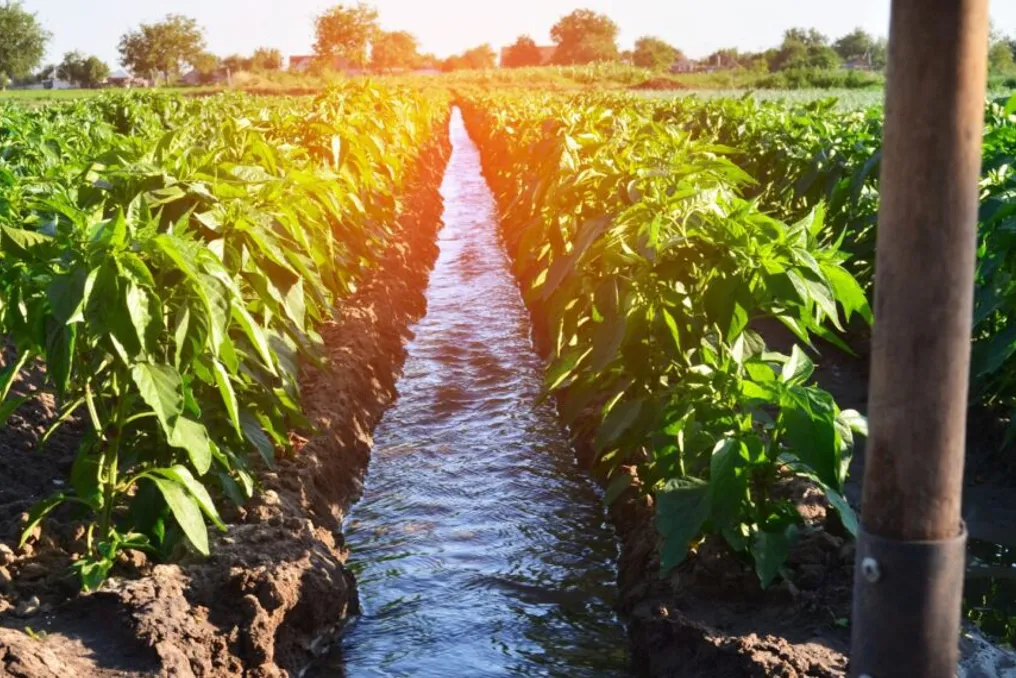
Commercial agriculture in South Africa is heavily reliant on irrigation using rivers, reservoirs, or underground sources. The researchers investigated who has access to water and land, and how the water is managed. Together with the research team, they found whether joint ventures help Black farmers gain equitable access to water and build successful agricultural businesses. They also examined what needs to change to improve these partnerships.
The study surveyed 34 commercial and emerging farmers involved in joint ventures in the Greater Fish and Lower Sundays River area in the Eastern Cape, South Africa. This region is home to numerous land reform projects and large commercial citrus farms exporting oranges and lemons, and it has a developed system of irrigation canals.
This area proved to be an ideal setting to study whether joint ventures contribute to creating successful commercial enterprises for emerging Black farmers. The goal was to understand how water access relates to other elements necessary for farmers to run a successful commercial business, including finance, agricultural skills, infrastructure, buyer access, and decision-making power.
The results showed that through partnerships, many emerging farmers gained access for the first time to irrigation infrastructure such as pumps, canals, and water from nearby reservoirs. However, these irrigation schemes were designed to support well-established commercial operations, and emerging farmers struggled to cover the costs.
It was also found that access to water alone is insufficient to create successful agricultural enterprises. The reason for this was the dependence of emerging farmers on commercial partners regarding financing, expertise, and market access for selling crops.
The study indicates that the redistribution of water resources must be accompanied by providing emerging farmers with financing, equipment, infrastructure, training, and real involvement in agricultural business management. Otherwise, agricultural transformation will remain unattainable.
Commercial farmers reported that running a farm is a highly complex and multifaceted business. Generations of farmers have acquired and continue to face numerous challenges in maintaining their operations. These include passing audits for compliance with laws and standards, rising labor costs, and sharp increases in diesel prices. Commercial farmers also described how their business suffered from fluctuations in international prices and the impact of the Covid-19 pandemic on export markets.
They noted that maintaining business profitability and keeping up with new technological advancements required most of their time, leaving little resource and time to invest in increasing the independence of emerging farmers.
Emerging farmers often had little influence on how the agricultural business operated. Commercial partners frequently controlled financial decisions, production planning, marketing, and investments. They became participants in the farming enterprises without developing the skills, financial autonomy, or decision-making authority needed to manage a successful business independently.
Another issue was that farmers were billed immediately upon starting to use water. This meant that many faced significant water bills even before harvesting or selling their first crop. The cost of water and compliance could reach 750,000 Rand ($46,300 USD) just to start, despite citrus requiring seven or more years to bear fruit. As a result, some eventually lost control of their allocated water rights due to inability to pay.
Emerging farmers also often lacked the necessary irrigation infrastructure and equipment for efficient use. In some cases, they had to rent equipment, such as tractors and sprayers, from commercial partners. This increased their expenses and intensified their dependence. Climate change and variable weather increased production risks. Rising costs for electricity, irrigation, fertilizers, and agricultural inputs reduced profitability. Many reported being unable to secure commercial loans without collateral or cash flow. Some emerging farmers had no choice but to rely on commercial farmer partners to cover these costs. This made independent investment in infrastructure or production expansion almost impossible for them.
Several emerging farmers stated that instead of gradually building independent enterprises, they remained dependent on their commercial partners for financing, technical expertise, and market access for extended periods even after the partnership began.
Since the start of the study, the government has implemented a new water pricing strategy that provides emerging farmers with some time to pay off water bills. This is a step in the right direction. Nevertheless, water redistribution is only one component of the support needed by farmers. Commercial success also depends on access to finance, infrastructure, technical knowledge, markets, and the ability to make sound business decisions.
The findings call into question the common assumption that public-private agricultural partnerships automatically empower disadvantaged farmers. Partnerships can create valuable opportunities, but they can also reproduce existing inequalities if power remains concentrated with one partner. True transformation requires more than just a joint venture agreement. Such agreements can only be successful if they deliberately build local capacity rather than fostering long-term dependency.
The government already supports emerging farmers through grants, infrastructure, and extension officers. However, many interviewed Black farmers found this support inconsistent and unevenly distributed. It is recommended that the government better coordinates this support, ensuring that emerging farmers have the necessary finance, infrastructure, skills, and other support to turn their water rights into viable farms.
The study also suggests that the price of irrigation water should account for the fact that new farmers do not generate significant income for the first seven years while remaining economically sustainable. Joint ventures must clearly define how emerging farmers will acquire the skills and experience to take on greater management responsibility.
Agricultural transformation is not just about redistributing natural resources. It is about creating conditions that allow people to successfully utilize those resources. Water remains vital, but if the reform does not also address finance, knowledge, infrastructure, and power, many emerging farmers will continue to hold water rights without achieving the commercial success in agriculture that these reforms aimed for.