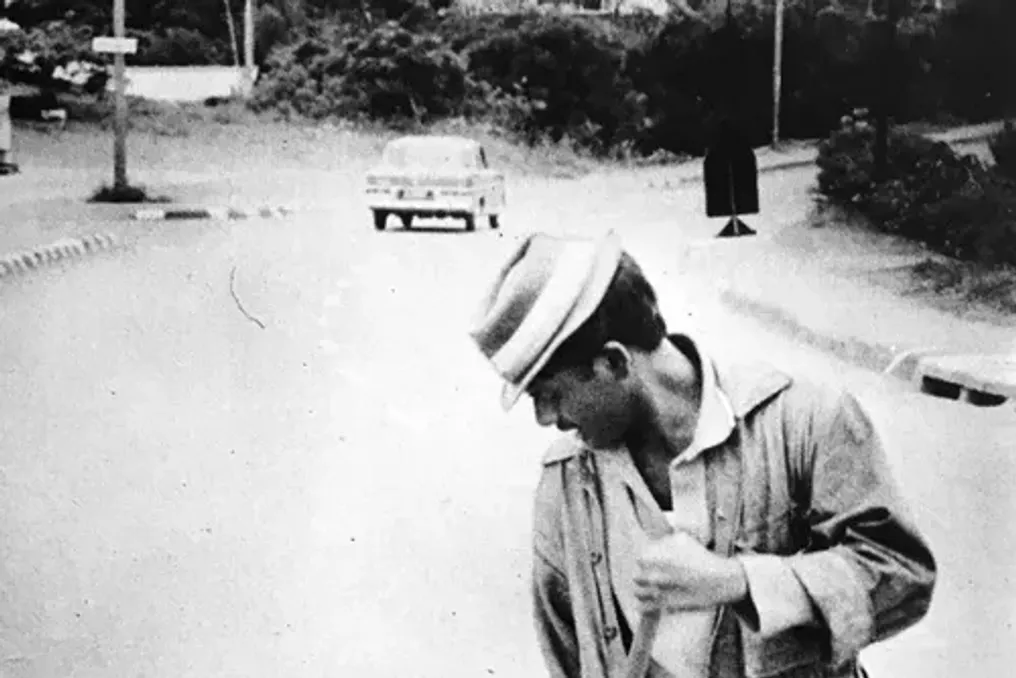
During a visit to Uncle Marnie's house, the narrator realized he was a chronic complainer. Even before the greeting, Uncle Marnie stated his grievance in a baritone voice, as if on stage: 'Pazer sweeps the pavement and leaves his dirt near my lamppost every morning.'
From the corner of his eye, the narrator noticed a grey-haired man on the neighbouring porch, calmly blowing foam from a mug while sitting in an old wicker chair. Uncle Marnie invited him inside, saying: 'Come in, sit down.'
On the tea table, decorated with decorative plates and snowflakes inscribed with Melbourne, Cape Town, London, and Mauritius, stood a tea tray overloaded with folders of documents. Uncle Marnie reported that for four years he had been writing to the relevant department, the corporation, and the councillor.
At this moment, a kind woman entered the hallway, whom the narrator assumed was Mrs. Marnie. She asked: 'Good morning, sir. May I offer you coffee, tea, or cocoa?'
Uncle Marnie furiously flipped through plastic bags filled with screaming red forms. He declared: 'Look, I even wrote to the president.'
The narrator listened silently while Uncle Marnie vented his emotions, nodding but not necessarily agreeing. The kettle probably boiled at the moment the narrator's car pulled up to the outskirts of their cozy cottage in Chatswood. The tea was served faster than the sweet milky drink served by waiters at Rank Cafe opposite Warwick Avenue Market in the old days. Instead of a plate of dal and butter or bhaji, Mrs. Marnie served a plate of lightly smeared fruit cake.
Uncle Marnie muttered, and the narrator continued listening. His next tirade was: 'And this useless councillor says it is a family matter.'
Mrs. Marnie helpfully first offered tea to the guest, and then to her husband. A spark flashed in her eyes, which was reflected in her husband's eyes. He seemed to soften, taking a sip, although the relief was fleeting. He continued listing the people he had written to, also mentioning the Society of Divine Life. It seemed only the SPCA did not receive a letter about Pazer.
He added: 'Your department was first-class, with one hundred and one references, but no action, nothing, zero.'
The narrator didn't need persuasion to eat the cake on the elegant porcelain plate. After refreshing himself, he decided to intervene. He asked his uncle: 'Uncle, I have worked in government for no more than five years, and besides, the task of the Department of Housing Construction is to build houses, not to interfere in neighbours' affairs.'
To this, Uncle Marnie replied sarcastically: 'You do good work there. Every corner is full of mess. Opposite, people are putting up housing for tenants. Where are the statutes? I don't know when I last saw a corporation worker sweeping our road.'
At this moment, the narrator noticed his polished English shifting into the colloquial style characteristic of Indians from Durban. Mrs. Marnie began refilling the narrator's plate and thanked him for the tray of Malaysian cookies, Issi, which he apparently brings to everyone he visits. Uncle Marnie finished the sentence as if the narrator had become his last resort: 'Can you talk to this guy to collect his dirt and put it in his own bin...?'
They both nodded. The narrator was grateful for the tea and cake, but this issue seemed more complicated to him than mediating the Iran-Iraq War. He suggested: 'It's better if I call Patrick. In Phoenix, he has a reputation for getting results. I saw him putting up posters on the highway.'
The narrator had to abandon the idea of calling his good friend Patrick. He dared to ask: 'Is there any chance we can all sit down and talk?' They replied that Pazer was like a brick wall.
Uncle Marnie objected with feigned innocence: 'You can try, but I don't like arguing with neighbours.'
The radio emitted a signal, and the announcer declared it was 10 o'clock. Uncle Marnie reached for the clock as if to wind it in the old-fashioned way, but immediately corrected himself, pulling his sweater sleeve over his wrist. The conversation died down when the news volume was turned up. The appearance of Kat Madlala on the Madlanga Commission was imminent. He was guaranteed a higher rating than 'Dallas' or 'Anupama'. The weather forecast advised people not to go see the snow. The narrator restrained himself, being a person prone to transgressions.
After exhausting his complaints, Uncle Marnie began showing his certificates, one of which was for fourth place in a medical ball race at Greville School during Michael's term. He also had a certificate of good payment from Model Furnishers from 1971.
When the fruit cake ran out, the narrator had no strong incentive to stay, other than the hint of an unscheduled inspection and a quiet chat with the neighbour. On the roadside outside, Mr. Pazer was watering with a watering can water collected from a burst pipe nearby. Near the lamppost, there was a hole that he was methodically filling with dry leaves. As spring approached, beautiful dahlias and daisies began to sprout. The area in front of his fence was swept, like in Japanese Zen stone gardens.
Uncle Marnie should write a congratulatory letter to him for improving the neighbourhood. Kiru Naidu wrote this piece from the lounge of King Shah International Airport, reflecting on his next trip to Cape.