In response to Washington's new plan to undermine the Iranian economy, the Islamic Republic has declared its readiness for a regional and global response designed to raise the stakes for the United States and the international community.
During a press conference on Monday, Finance Minister Scott Bessent announced that the US is targeting the complex network created by Iran over many years, which allowed its structures to circumvent extensive Washington sanctions. This move followed a six-month war initiated by the US and Israel, which reached an impasse due to the lack of a diplomatic solution.
The large-scale secondary sanctions presented by Bessent include penalties for Iran's trading partners in sectors that the Islamic Republic uses to sustain its economy, such as digital assets, technology, and shipping. However, the long-awaited announcement of Trump's 'Economic Day D' measures caused disappointment, as Washington decided to refrain from imposing major new measures, focusing mainly on expanding and strengthening control over existing sanctions, while warning of possible stricter penalties for countries that do not sever ties.
Instead of submitting to threats, Iran is demonstrating its ability to inflict mutual damage, warning of expanded strikes against regional oil producers and European countries, and hinting at the militarization of its nuclear program.
Iranian Foreign Ministry representative Esmail Baghai told reporters on Monday: 'We have played chess for a long time... we have also learned to play poker. Now we are playing a combination of both for some time.'
Here is how Iran might respond to economic escalation from the US:
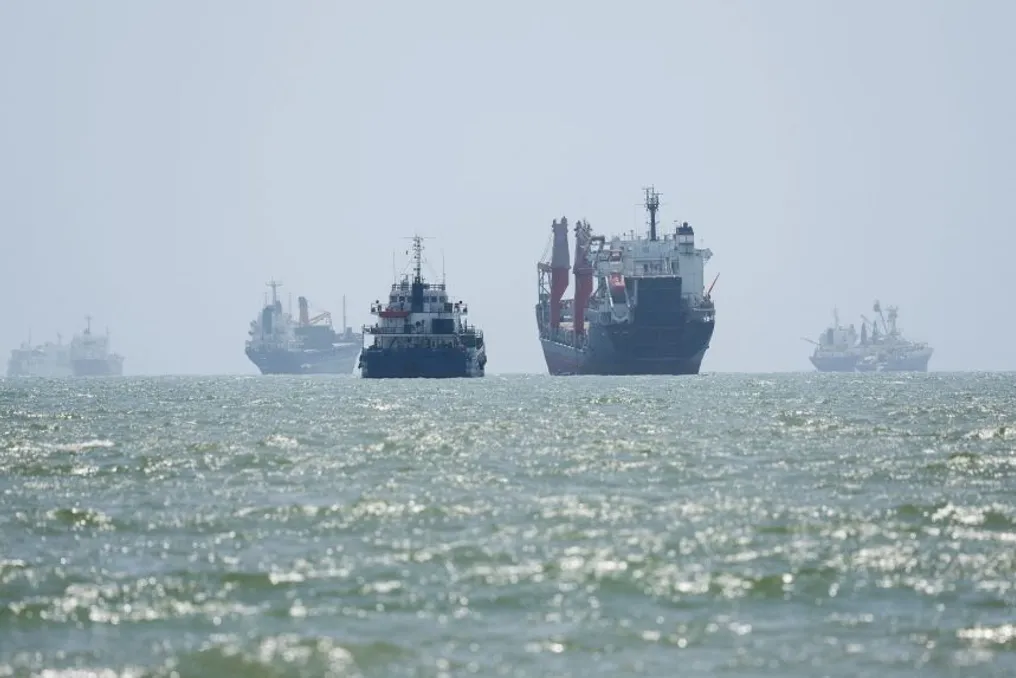
For months, Iran blocked ships in the Strait of Hormuz, preventing regional countries from exporting oil and gas through a route that provided one-fifth of global supplies before the war. Iranian proxy forces in Yemen, the Houthis, recently opened a new front in the Red Sea, striking Saudi oil exports and infrastructure.
Now, senior military officials of the Islamic Republic are threatening to attack energy facilities outside the Strait of Hormuz, potentially hitting some new oil transport routes that bypass this waterway.
Mohsen Rezaei, head of Iran's Supreme National Security Council, wrote on X: 'If the economic war continues, not a drop of oil will be exported, neither through the Strait of Hormuz nor from anywhere in the Persian Gulf.' He later stated in a television interview: 'We will respond like an earthquake.'
Any subsequent attacks or disruptions to shipping could lead to a rise in global oil prices, which would likely drive up gasoline prices at American pumps.
With support from the US Navy, oil companies from Saudi Arabia, Kuwait, Qatar, and the UAE began disabling transponders on their tankers to avoid detection by Iranian authorities, achieving some success in oil exports, although crossings are significantly lower than pre-war levels.
Saudi Arabia rerouted about 5 million barrels of oil per day through its east-to-west pipeline, allowing it to export via the Red Sea instead of Hormuz. Other Middle Eastern oil producers rerouted another 2 million barrels per day around the strait.
Iran made it clear that it has these tankers in its sights, publishing a list of 45 vessels that, according to it, do not comply with the rules it seeks to impose on shipping in Hormuz, and warning that vessels violating its protocols will face restrictions on future passages, including 'fines, detention, or confiscation.'
Tehran may also target more distant facilities with its missiles.
On Monday, the Iranian Foreign Ministry pointed to US refueling aircraft flying from Bulgarian territory, warning that Tehran could target the European Union country, which is also a NATO member.
Baghai told reporters on Monday: 'Iran has the legal right to target the point of origin and source of any act of aggression,' adding that Tehran 'has made it clear that any action considered support for US and Israeli military aggression against Iran constitutes, under international law, participation in an act of aggression.'
During the war, Iran attacked 11 countries, mainly in the Gulf region. But it is also believed that it attacked a base used by British forces in Cyprus and seemingly demonstrated the ability to reach islands used by US forces deep in the Indian Ocean, hundreds of miles away.
An attack on an EU ally and NATO member, such as Bulgaria, would mark a significant escalation.
Rezaei stated: 'Iran will consider the involvement of any country or its support of America's economic war against the Iranian people as an act of war.'
Iran has repeatedly stated that its nuclear program is peaceful and that it does not seek to build a bomb, despite statements from Israel and the US, which have led to numerous attacks on Iranian nuclear facilities.
After the assassination of Supreme Leader Ayatollah Ali Khamenei, who prohibited nuclear weapons, the narrative among some official circles in Iran is gradually shifting towards withdrawal from the Nuclear Non-Proliferation Treaty (NPT), which obligates members never to build a bomb.
About half a ton of highly enriched uranium, which can be used to create weapons, remains buried in Iran, with US intelligence estimating that Tehran has intensified efforts to seal this reserve.
The Iranian parliament is discussing a bill to withdraw from the NPT, according to Iranian legislators. On Sunday, Rezaei made a rare statement emphasizing the possibility of the country developing nuclear weapons.
He told state broadcaster during an interview: 'The whole world says: 'So the NPT doesn't matter?'', adding: 'when America wages such a war, people ask: why shouldn't we strive for nuclear weapons ourselves?'
Experts believe that Washington's collective measures—blockade, sanctions, and military actions—are unlikely to lead Iran to abandon its main negotiating positions on economic relief and recognition of its control over the Strait of Hormuz.
Sinan Tusi, a senior fellow at the Center for International Policy in Washington, D.C., told CNN: 'Iran retains the ability to regionalize the costs imposed on it by threatening energy flows, infrastructure, and regional trade.' He continued: 'The more comprehensive Washington tries to make the economic blockade, the more countries it needs to cooperate with, and potentially the more actors Tehran will exert pressure on in response.'
Currently, according to Tusi, Iran's response will be a combination of economic adaptation and deterrence of escalation.
'Building alternative lifelines where possible, while making it clear that an attempt at complete economic strangulation will not come free to the region.'