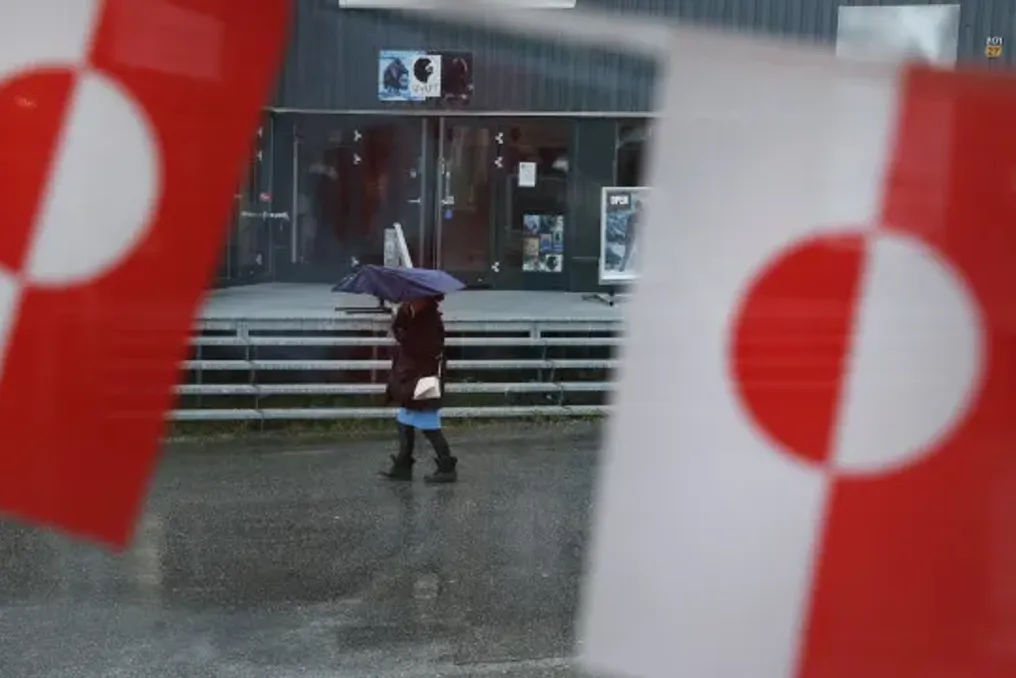
The Minister of Justice of the autonomous region of the Kingdom of Denmark, Marianne Paviasen, stated at a press conference on Friday that while genocide cannot be asserted, the issue remains a subject of discussion. According to her, 'We cannot say that genocide occurred on behalf of Naalakkersuisut [the Greenlandic government]. This is something we can continue to discuss.'
For the head of the executive branch of Greenland, Jens-Frederik Nielsen, the situation requires 'the beginning of a healing process.' He added that they intend to establish a reconciliation commission and expressed a desire to cooperate with Copenhagen on this matter.
The First Minister of Denmark, Mette Frederiksen, welcomed this initiative. In her statement, she noted that 'the reconciliation commission gives us an opportunity to review the dark pages of our shared history, look at them critically, and acknowledge the suffering they may have caused.'
The expert commission, which was supposed to determine the legal consequences of this forced contraception, did not reach a consensus. Nevertheless, its members agreed that this campaign could represent various violations of human rights and indigenous rights.
Two reports were presented on Friday, both lagging nearly six months behind schedule. Minister Paviasen reported: 'Both reports differ so much that one claims there was no genocide at all, while the other says it might have taken place.'
Between 1960 and 1990, over 4000 Greenlandic women received intrauterine devices, often without their consent or the consent of their parents if they were minors.
For Henriette Berthelsen, one of the victims, the findings of the reports are distorted by the absence of Greenlandic Inuit among the experts. This woman expressed regret, stating that 'for me this is not just history or politics, it is my body, my life, and my right to self-determination. And I see again that others will investigate and determine what was done to me and what was done to other Inuit women' during a speech to the French news agency AFP.'
The campaign, known in Greenland as the 'anti-contraception' case, mainly affected adolescents aged 12, some of whom could never have children again.
While the vast Arctic island is an object of interest for the United States, Nuuk and Copenhagen are resolving their relationship by clarifying various episodes of the past, including the adoption of children without parental consent or their forced removal from families, as well as forced contraception.
On Thursday, the Danish parliament approved compensation for the victims of these forced contraceptives, aligning with the wishes of the Danish Prime Minister. Last year, Frederiksen officially apologized to the victims on behalf of Denmark.
However, media coverage of this issue has reawakened traumas buried decades ago. Kirstin Najarak Berthelsen shared: 'I understood how much it cost me, all the hospitalizations, operations, lost activities, and above all, these pains that I never associated with the black navy.'
She added: 'It was so well hidden in my subconscious. (...) Everything that happened to others exceeds imagination if you haven't experienced it personally.'
According to a survey presented in September 2025, in the late 1970s, one of two Greenlandic women of reproductive age, meaning at least 4070 women, received an IUD. This campaign became public knowledge after the testimony of a victim and a series of podcasts in 2022.