Political tension in Zambia is intensifying, raising serious questions about the conduct of security forces and the integrity of democratic processes. The situation remains highly uncertain following the elections, as citizens and the international community doubt the fairness of the electoral campaign.
Although Zambian voters participated in the August 13th vote, it occurred under conditions shaped by the actions of the government led by Hakainde Hichilema. This government has faced intense criticism from journalists, social activists, civil society organizations, political parties, and international human rights organizations over the past three years.
Since Hichilema took office as Head of State on August 24, 2021, there have been numerous opinions regarding his intentions to establish a 'one-party system' in the republic to monopolize power for the clans and factions seeking to implement it.
An example of this pressure was the start in March 2022 of the process to obstruct the institutional and social activities of political opponents, leading to their exclusion from media, legal, and parliamentary channels. As a result, during the first year and a half of Hichilema's rule, 75% of the opposition party 'Patriotic Front' was suspended in the National Assembly.
Freedom House, based in Washington, noted in its 2024 and 2026 reports on freedom in this Southern African country that opposition figures regularly become targets of persecution and constitutional restrictions by state structures controlled by the United Party for National Development (UPND) and President Hichilema's office.
This American organization also reported that there has been a constant change in freedom of expression in the country over two years, and coercive measures have been applied against bloggers and journalists engaged in professional activities.
The European Union Election Observation Mission in Zambia in 2026, commenting on the prospects of the '2026 elections', stated that 'the advantages of re-electing Hichilema have blurred the line between state and party, while campaign-related violence and uneven law enforcement response contributed to a situation of inequality.' The mission also noted that although the media operated relatively freely, the introduction and application of new cyber laws caused concern among journalists and internet users, and coverage in state media was heavily biased.
It is clear that a systemic restructuring of power was taking place within central state organs, where the clans and factions comprising Hichilema and those around him gained 'absolute power' at the expense of the sovereign interests of the Zambian people.
Ugandan political commentator King Norma Otim, who specializes in African affairs, opined that the current President of Zambia has 'captured the judicial system by appointing judges and using them to destroy opposition political parties and players through legal pressure. This step has led to the imprisonment of several opposition politicians on politically motivated charges and the simultaneous hostile takeover of their political parties through proxies within his state. And, of course, ultimately, these appointed judges would reject any election appeal filed against Hichilema.'
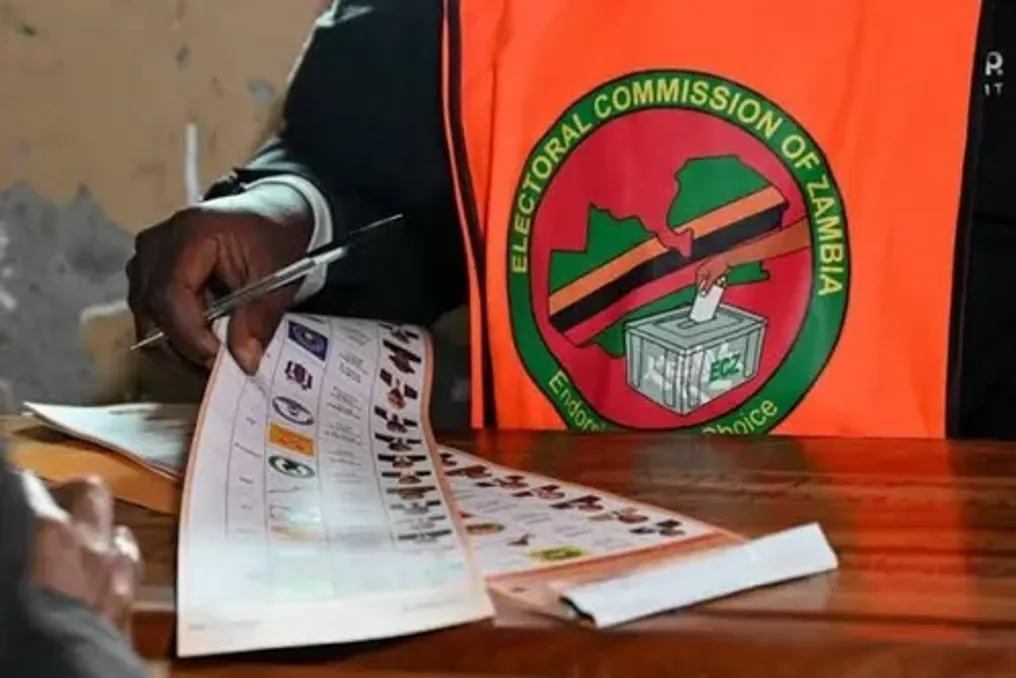
He also stated that Hichilema seized control of the Electoral Commission of Zambia (ECZ) by appointing his former personal lawyer as the head of the national election management body. As expected, sensing that Hichilema had lost significantly in the recently concluded elections across Zambia, the ECZ chairperson suspended the announcement of any counted results and secretly facilitated electoral fraud in favor of Hichilema.
For this reason, as part of the 'total dominance plan for the 2026 elections', the ruling elite utilized all its previous tactics, expanding them both qualitatively and quantitatively. Sieges, detentions, illegal deprivation of liberty of individuals, confiscation of legally obtained funds, invasions of party premises, and other dark deeds were carried out against members of the opposition alliance Tonse Alliance.
A week before the presidential elections on August 13th, authorities arrested 34 members of Brian Mundubile's campaign team in a clear attempt to leave him without protection. Simultaneously, other figures from the opposition alliance, such as businessman Harry Walden Findlay, who was illegally detained by the police on August 4th, were also arrested, and thirteen days later his family still cannot contact him, while his defense reports that the client is not receiving due constitutional guarantees, and they still do not know his actual health status or procedural standing.
Furthermore, the government is holding other prominent figures in custody, such as George Kangwa Musole Chisanga, former president of the Zambian Bar Association, George Chisanga, spokesperson for the National Party for Reconciliation, Unity and Prosperity, Patrick Mwansa, son-in-law of former President Edgar Lungu, and experienced diplomat Martha Lungu-Mvitumwa, among other citizens arrested by security services simply for participating in forces opposing Hichilema's government.
In this context, vulnerabilities for government opponents also included crimes, such as the murder of businessman Stelios Shula Sardanis. As a result, Mundubile was forced to postpone some events of his election program due to serious threats of assassination, according to reports from his communications staff.
The day after the general elections, specifically August 14th, the Electoral Commission of Zambia, whose most prominent members, according to numerous reports from the center of Zambia, were linked to the presidential office of the state, suspended vote counting for six hours, citing violent incidents that hindered the normal functioning of the process. This decision, naturally, caused outrage among the opposition and the public at large, and some international press and members of international organizations viewed this measure with veiled distrust and obvious suspicion.
In response, the Executive Director of LSK Freedom Foundation, Linda Kasonde, stated on Friday, August 16th, that her organization and other human rights organizations that carefully and jointly monitor the electoral process and its consequences believe that there are observable factors indicating that the elections 'were not free or fair,' and warned of the possibility of ballot stuffing during the suspension of official counting.
Regarding this controversial situation, the Tonse Alliance, in a statement released on Sunday, August 16th, outlined its position, stating: 'The reports we receive indicate an alarming and growing pattern related to interference in the work of electoral officials, threats against staff, disappearances, and alleged theft of Gen 20 forms, questionable changes to voter registers, interference by security services, intimidation of accredited political agents, and suppression of opposition leaders and figures playing a key role in these elections.'
Explaining his view on the role of counting protocols and the official announcement of results (Gen 20 Form) and the officials of the Local Government Service Commission (LGSC) in the irregular scheme condemned by many Zambians, renowned Zambian historian and political analyst Sisuhwa Sisuhwa wrote: 'According to information provided by one of the LGSC commissioners, Hichilema ordered the alteration of election results nationwide, using the infrastructure of city secretaries and councilors. The critical Gen 20 forms, into which results are entered at the polling station level before party agents sign them, were supposed to be destroyed and replaced with new ones containing forged signatures of electoral agents. To avoid distorting the commissioner's position, it is important to quote his words verbatim to understand how Hichilema applied industrial-scale vote rigging to undermine the will of the people: 'On the morning of August 14th, seeing that the incumbent president was losing, city secretaries and councilors received instructions... to collect all Gen 20 forms for the presidential elections from the districts. They want to change the results and destroy what was published so there would be no evidence when filing petitions, since only DEO/RO staff would have the original Gen 20 forms. Interested parties have copies, but the problem is that they want to declare a winner using forged Gen 20 forms, so when a petition is filed, what form will the DEO present as evidence in court, since the original that was published (which interested parties have) [would be]... destroyed.' He added: 'Note that Gen 20 form is the actual election. The practice has always been that the Gen 20 form and other materials constituting the announcement of results are presented in Lusaka by authorized district heads after verification (all interested parties come to verify the results within 7 or 10 days), and only then do they take the documents in Lusaka. So why should DEOs hand these documents to someone who is not authorized?'
Sisuhwa Sisuhwa's detailed testimony also includes another important aspect in this expert's analysis. 'The LGSC commissioner revealed that many who refuse to hand over or submit Gen 20 forms for destruction are arrested and held in detention centers across the country. Others are brutally beaten by security services. The second development, which occurred during the four-hour period of the vote count suspension, was Hichilema's and Ziele's decision to use military tankers on the streets, send soldiers to district counting centers to assist in collecting and destroying Gen 20 forms, and dispatch military officials to invade polling stations in several places across the country, persecuting electoral agents and clearing the way for result substitution. This seizure of polling stations by state security forces was aimed at allowing the authorities to inflate turnout in areas with low turnout, such as Southern Province, facilitate ballot filling, and ensure result changes at the district level in order to reverse the overall outcome,' detailed this prominent Zambian intellectual.
Regarding the role of the army in this environment, activist and communicator Tandive Ketis Ngoma points to undeniable details for a better understanding of the situation. According to him, 'reports from inside the ranks confirm widespread discontent among servicemen regarding...'