Predictions from 'Bhavishyamalika': Analyzing the Correspondence of Ancient Prophecies with Modern Events
Read more
Aaj Tak
www.aajtak.in

Predictions from 'Bhavishyamalika': Analyzing the Correspondence of Ancient Prophecies with Modern Events

There are claims that ancient prophecies, written hundreds of years ago, may point to events in the modern period. The 'Bhavishyamalika,' associated with the great saint Achyutananda Das of Odisha and Panchasakha, is often discussed. It is believed that these texts, inscribed on palm leaves approximately 500–600 years ago, contain numerous mysterious predictions about the future.

Followers and some researchers assert that many of the signs described in these texts have proven true and correlate with historical and current events. Nevertheless, there are varying opinions regarding the Bhavishyamalika prophecies themselves and their interpretations, raising questions about whether they contain genuine foresight.

When the Kalpavriksha Tree Fell in the Jagannath Temple

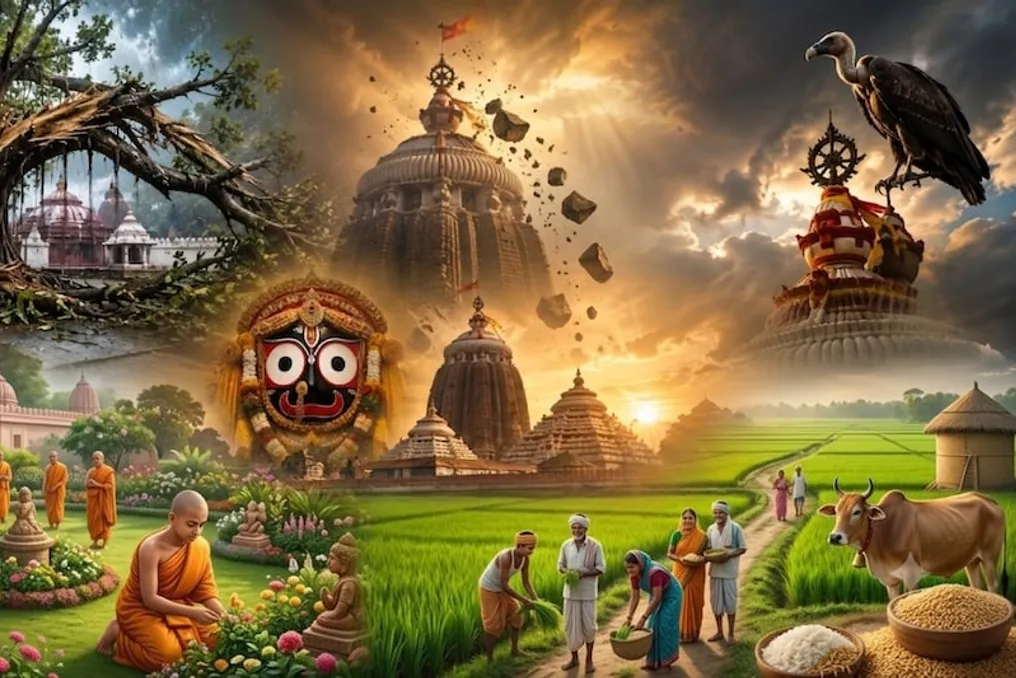
One well-known prophecy linked to the 'Bhavishyamalika' states that the first signs of the end of Kali Yuga will appear, and one such sign will involve the sacred Kalpavriksha tree located within the Jagannath Temple premises in Puri. According to belief, when this ancient banyan tree begins to break and fall, it will be interpreted as an omen of impending serious changes and crises.

This prediction is often connected to the super cyclone in Odisha in 1999. During this devastating hurricane, many large branches of the Kalpavriksha broke and fell. Following this, followers of the 'Bhavishyamalika' began correlating this with the signs mentioned in the text. Although opinions on the link between this event and the prophecy differ, this incident remains an important part of discussions about the mysteries surrounding this 'Malika.'

Falling Stones from the Temple Top

Another prophecy in the 'Bhavishyamalika' concerns the upper part of the Lord Jagannath temple. It is believed that instances of heavy stones falling from the roof or near the Nilachakra can signal a major crisis or difficult times. In previous years, incidents of stones falling from the upper tiers of the Jagannath temple occurred, causing concerns about the structure and its preservation. These events were viewed through the lens of the signs described in the 'Bhavishyamalika,' generating numerous social media posts. However, it is difficult to state definitively whether these events happened according to the prophecy or if they were subsequently interpreted in line with the 'Malika's' assertions. This uncertainty adds an extra layer of mystery to the 'Bhavishyamalika.'

Spread of Deadly Epidemics

'Bhavishyamalika' contains a prediction about a time when the world will face suddenly spreading, severe, and mysterious diseases. It is claimed that these illnesses will be so aggressive that the medical community may be powerless in the initial stages, putting many lives at risk. Followers of the 'Malika' relate this assertion to the coronavirus pandemic that swept the globe in 2020. COVID-19 rapidly affected the planet, and anxiety persisted afterward regarding various viruses and infectious diseases. Nevertheless, it is hard to determine if the signs in the 'Malika' specifically pointed to the coronavirus pandemic or if they were interpreted retrospectively based on subsequent events.

Decline in Moral Values and Emotional Distance

'Bhavishyamalika' also addresses changes in social and family structures. There is a conviction that a time will come when people become more prone to anger, greed, and selfishness. Closeness in relationships will decrease, and family members will begin to drift apart. It also speaks of increased disagreements and conflicts between parents and children. Modern trends, such as rising family disputes, relationship tension, and elderly loneliness, are linked by some people to this prophecy. The increasing need for nursing homes and changing family structures are also cited as examples. However, it is easy not to consider social changes as proof of any single prophecy, as societal and relational structures have changed in every era.

Lack of Taste and Nutrition in Grains

'Bhavishyamalika' contains a warning about the changing state of the earth and the quality of agricultural products. It is believed that soil fertility will suffer over time, and grains, even if they look good, will lose their natural taste and nutritional value. Signs of changes in animal husbandry and agricultural production are also mentioned. Today, constant debates revolve around the use of chemical fertilizers and pesticides in modern agriculture, as well as soil quality and food nutritional value. Some followers of the 'Bhavishyamalika' connect these changes to the signs mentioned in the text. However, it is scientifically inaccurate to claim that all modern food has lost its nutrition or become entirely harmful. Therefore, statements made regarding this prophecy are viewed from various perspectives.
Similar stories

Unsolved Mysteries of the Mahabharata That Science Has Yet to Explain
Read more
www.aajtak.in

Unsolved Mysteries of the Mahabharata That Science Has Yet to Explain

In Hinduism, the Mahabharata is considered the fifth Veda and is one of the world's largest epics. The knowledge presented in the Mahabharata remains relevant today, but there are mysteries associated with this epic that have yet to be revealed.

The attempt to understand such secrets, about which few people know, begins by examining the number 18. Although thousands of years have passed since the war described in the Mahabharata, interest in it persists. The number 18 holds special significance in the Mahabharata. The war lasted 18 days, during which millions of warriors died. Furthermore, the Kauravas and Pandavas each had 18 armies (akshauhi), with the Kauravas having 11 and the Pandavas having 7.

Moreover, the Mahabharata, written by Rishi Vedavyasa, describes 18 parvas. In Hinduism, 18 puranas also hold great significance. During the battle, Krishna imparted knowledge from the Gita to Arjuna, which contains 18 chapters. It is also said that 18 main warriors survived after the war. Thus, there is an obvious deep connection between the Mahabharata and the number 18, although the reason for this connection remains a mystery.

Is Ashwatthama Alive Today?

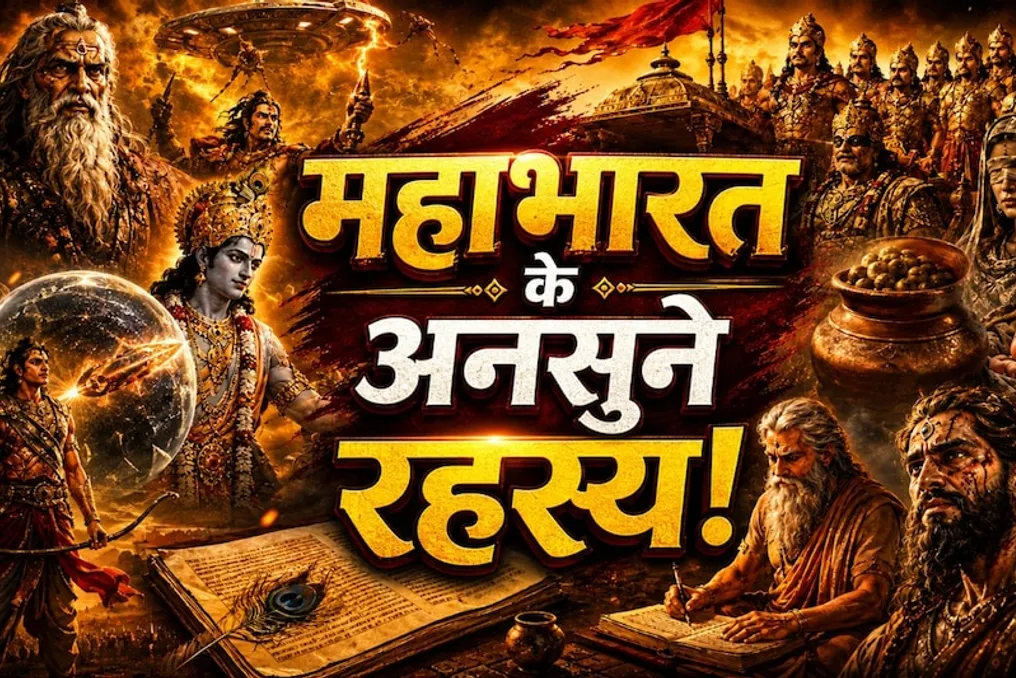
There is a belief that Ashwatthama, a character from the Mahabharata era, is still alive. He was the son of Dronacharya, the teacher of the Kauravas and Pandavas, and fought on the side of the Kauravas during the war. However, due to actions committed at the end of the war, he received a curse. According to mythological beliefs, Ashwatthama misused the Brahmastra. As a result, Lord Krishna became enraged and cursed him, condemning him to wander the earth for thousands of years, bearing the burden of his sins. It is said that it is because of this curse that Ashwatthama is still alive and wanders in desolate places. Although there are occasional reports of Ashwatthama being seen in different places, there is no credible evidence to support these claims.

Use of Aircraft and Nuclear Weapons

It is common opinion that powerful weapons, such as aircraft and nuclear charges, were used during the Mahabharata era. Nevertheless, historians and scientists disagree on these claims. Statements have been made about the discovery of skeletons during excavations in Mohenjo-Daro that allegedly showed signs of radiation exposure. Some link this to the Brahmastra mentioned in the Mahabharata. It is said that the Brahmastra, similar to the world's first atomic bomb, was launched by Ashwatthama. Furthermore, the Sauptika Parva of the Mahabharata contains episodes related to the Brahmastra and its consequences. However, whether such modern weapons as aircraft or atomic bombs were actually used during the Mahabharata period remains a mystery and a subject of debate.

The Mystery of Gandhari's 100 Sons and One Daughter

The Mahabharata mentions 100 sons and one daughter of Gandhari. Many wonder how Gandhari could have given birth to so many sons. According to the history of the Mahabharata, Gandhari served Rishi Vedavyasa in the palace. The joy of her service prompted Vedavyasa to bestow upon her a blessing in the form of 100 sons. But when the time came, Gandhari remained pregnant for a long time and eventually gave birth to a large piece of meat. Seeing this, Gandhari was very upset and intended to dispose of it. Then Vedavyasa stopped her and asked her to divide this piece of meat into 100 parts and place them in different pots. Gandhari also wished to have one daughter, so the pieces were divided into 101. After some time, 100 Kaurava princes and one daughter were born from these pots. In the Mahabharata, the Kauravas' sister was named Dussala, who later married King Sindhu Jayadrita.

Did Warriors from Foreign Lands Participate?

It is also claimed that not only Indian warriors but also those from other regions participated in the Mahabharata war. The Mahabharata mentions warriors and kings who arrived from various principalities and distant lands. However, it has not been historically confirmed that warriors from modern countries such as Greece, Rome, or America participated in the Mahabharata war. Because of this, there is an assertion that the Mahabharata was a kind of world war, but there is no solid historical evidence to confirm this.

The Mahabharata Written in Three Stages

The Mahabharata is a vast epic, the creation of which took a long time. According to tradition and the opinion of some scholars, the development of the Mahabharata can be viewed in several stages. It is said that in its original form, it contained 8800 verses called 'Jaya'. It was then expanded to the 'Bharata' form, containing about 24,000 verses. Finally, it became the detailed version of the 'Mahabharata', consisting of about one hundred thousand verses. This is why the Mahabharata is considered one of the most extensive epics in the world.

Popular