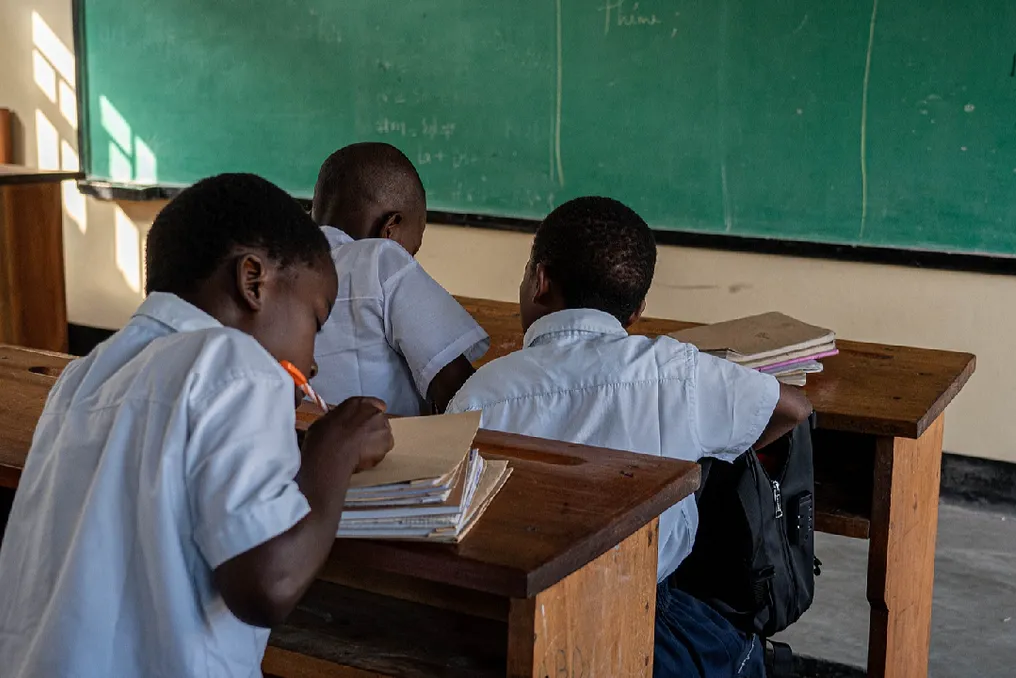
Several days before the official start of the academic year across the Democratic Republic of Congo (DRC), teachers and parents in eastern provinces affected by Ebola are expressing concerns about the readiness of classrooms for the safe reception of students.
According to the official school calendar, classes are set to resume nationwide on September 1st. However, in areas impacted by the Ebola outbreak, which has resulted in 5,713 confirmed cases and 2,744 deaths, the resumption is expected to depend on local risks of virus transmission.
The DRC Ministry of National Education has implemented a three-tiered system—green, orange, and red—based on the intensity of Ebola spread. According to authorities, approximately 2,890 schools are considered to be in high-risk zones.
In green and orange zones, in-person lessons will continue with the application of appropriate preventive measures. In red zones, where viral transmission remains active, regular classroom instruction is temporarily replaced by home learning using educational materials broadcast via radio and television.
Nevertheless, an inter-union group of teachers in Ituri, the epicenter of the outbreak, stated that classes should not resume under current conditions. They warn that insufficient preventive measures could put students, teachers, and their families at risk of infection.
Patrick Urunga, president of the local inter-union group of teachers in Bunia, stated: 'Resuming classes without sufficient health guarantees could increase the risk of infection among students, teaching staff, and consequently, their families.'
Teachers are demanding enhanced epidemiological control measures, as well as adequate supplies for handwashing, protective gear, and other preventative actions before students return.
In several schools visited by Xinhua reporters in Bunia, no significant health provisions were visible ahead of the planned resumption.
The Africa Centres for Disease Control and Prevention (Africa CDC) reported on Thursday that authorities decided to maintain the class resumption schedule after discussing a possible postponement, and preparations in Ituri are being accelerated.
Yap Bum II, head of emergency preparedness and response at Africa CDC, reported that teachers are undergoing Ebola prevention training, and infection prevention and control measures are being prepared for about 3,000 schools in the province. He added that where water access is difficult, schools plan to use alcohol-based hand sanitizers, and students will undergo temperature checks before entering classrooms. Authorities are also considering staggering classes in overcrowded schools, although Bum noted that discussions on this matter are ongoing.
At the central market in Bunia on Thursday, some families were purchasing school supplies, remaining unaware of whether they would send their children back on September 1st. Giselle Uchima, a mother of two, expressed concern about the risk of infection but was also worried that children could not stay out of school indefinitely. She said: 'We cannot wish for children to stay home from school for too long, but at the same time, no one wants to lose a child or have a child bring the disease home.'
Mugisa Sharite, a father of three in Bunia, reported that he plans to keep his children at home for observation before deciding whether to send them back to school.
Similar uncertainty is felt in North Kivu province. The municipal government of Butembo reported on Thursday that the city is still awaiting directives from the central government regarding the resumption of educational activities. Butembo and nearby Beni are cities severely affected by the outbreak in North Kivu, where response efforts are complicated by community resistance and attacks on healthcare workers.
Children have been particularly affected by the epidemic. The United Nations Children's Fund reported last week that children accounted for about 21% of confirmed cases, but nearly a third of registered deaths since the outbreak was declared.
The outbreak, caused by the Bundibugyo Ebola virus, has spread across six provinces: Ituri, North Kivu, South Kivu, Bas-Uele, Haut-Uele, and Tshopo. Currently, there is no licensed vaccine specifically targeting the Bundibugyo Ebola virus, although clinical trials are underway.