An investigation conducted by Castrol in the United Kingdom sought to understand what occurs in the body and brain when driving transcends a mere task and becomes an exciting experience. The study concluded that the feeling of satisfaction while driving is linked to the combination of concentration, control, and the inherent excitement of the situation.
The research was carried out by the neuroscience company Brainbox and involved monitoring participants in five distinct driving scenarios. All tests took place at the PalmerSport facilities, located in Bedfordshire, England. Volunteers piloted or were driven in vehicles such as a Land Rover Defender, karts, a McLaren Artura GT4, and a JPLM race car.
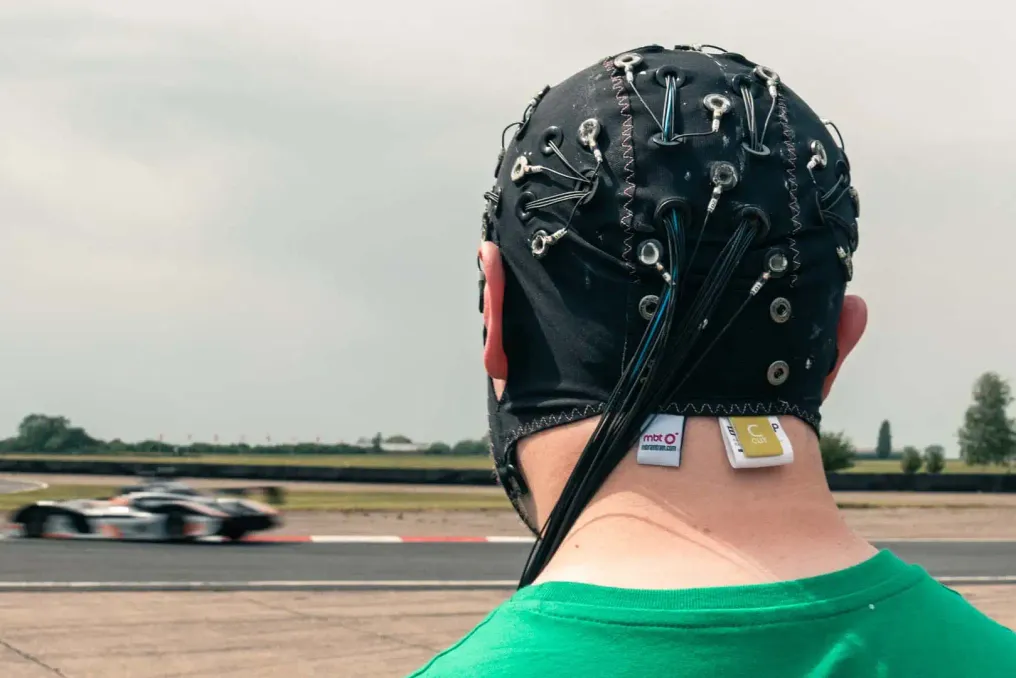
During the procedures, researchers monitored various vital and brain signals, including brain activity via electroencephalography (EEG), heart rate, galvanic skin response, and eye movements. The collected data allowed the study to distinguish experiences of high excitement and pleasure from those marked by feelings of fear or anxiety.
According to the analysis, the emotion while driving emerges when three components reach high levels and are maintained under control: the physical and mental stimulus, cognitive engagement with the activity, and the emotional balance between excitement and apprehension. If any of these elements exceed the limit the driver can manage, the experience risks becoming stressful instead of pleasant.
In the test conducted with the McLaren Artura GT4, even considering high speed, participants demonstrated the highest levels of control and concentration. The results pointed to a state of 'flow,' characterized by the driver's total immersion in the task, operating very close to their capacity limits.
When driving the McLaren, participants maintained visual focus on the trajectory and blinked, on average, only 2.5 times per minute, compared to the 15 to 20 blinks observed during rest periods. Brain activity also signaled strong concentration, evidenced by an increase in theta waves, linked to deep focus, along with alpha activity associated with the alert state.
The karts produced similar results, even though they had lower speeds. This finding corroborates the idea that speed alone is not the decisive factor for the sensation of emotion.
The distinction became even clearer when participants stopped driving and became passengers in a JPLM race car, driven by a professional. Despite the high speeds and intense physical activation, the indicators revealed an experience closer to fear than emotional pleasure. In this scenario, participants exhibited more disordered eye movements and blinked about 40 times per minute, registering approximately 190 distinct eye fixations during turns. At the brain level, there was an increase in beta waves, correlated with stress and anxiety, accompanied by a decrease in the theta and alpha waves seen in situations of control and concentration.
The study also showed that a high heart rate is not enough to define whether an experience is pleasurable or frightening. Both emotion and fear can elevate physiological activation, but other indicators help determine whether the driver is focused and in command or overwhelmed by the situation.
Off-road driving reinforced this conclusion. Even with modest average speeds of only 8 km/h, the test managed to generate significant levels of emotion by combining technical challenges, control, and concentration in the vehicle.
For Dan Phillips, co-founder and director of Brainbox, the emotion while driving derives from the convergence of various physiological responses, with concentration and the perception of vehicle control being the main factors. Thus, scientifically, Lightning McQueen from the Cars movie was correct in stating that he represents speed.