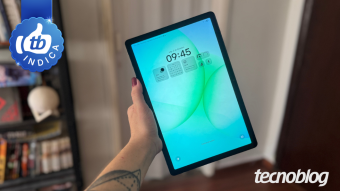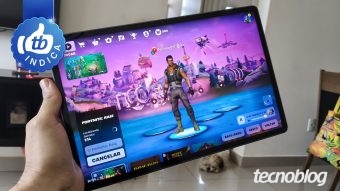
Analysis of 9 recommended tablets for gaming in 2026, covering different performance ranges
Read more
Tecnoblog
tecnoblog.net

Analysis of 9 recommended tablets for gaming in 2026, covering different performance ranges

Choosing a gaming-focused tablet in 2026 requires considering factors beyond the most powerful processor, such as screen refresh rate, RAM capacity, cooling system, battery life, and game compatibility. Tecnoblog compiled a selection of nine models, ranging from mid-range options to ultra-high-performance devices, some specifically designed for gamers, detailing their pros and cons.

RedMagic Astra

The RedMagic Astra is presented as the dedicated gaming tablet in this list. Equipped with Snapdragon 8 Elite, an Oryon CPU up to 4.32 GHz, up to 24 GB of RAM, and UFS 4.1 Pro storage up to 1 TB, it concentrates robust hardware to run heavy titles while maintaining the ability to run other background applications.

Its 9.06-inch OLED screen features 2K resolution and a refresh rate of up to 165 Hz, ensuring greater fluidity in compatible games. In specific scenarios, touch sampling can reach 2,000 Hz, and multi-touch reaches 240 Hz, helping to reduce latency in competitions.

A notable feature of the Astra is its cooling system, which integrates a vapor chamber, graphene, copper, liquid metal, and a fan capable of spinning up to 20,000 rpm to manage temperature during long sessions. Furthermore, the tablet has Game Space, a software feature activated by a side button.

Galaxy Tab S11

The Galaxy Tab S11 combines the 3nm MediaTek Dimensity 9400+ with the Immortalis-G925 GPU and 12 GB of RAM. This configuration provides advanced performance for demanding games, along with sufficient memory for multitasking. The GPU also supports modern graphical features, such as ray tracing.

It features an 11-inch Dynamic AMOLED 2X screen with a resolution of 2560 x 1600 pixels and a refresh rate of up to 120 Hz. This combination ensures rich detail images and smooth motion in games that support high frame rates. The maximum brightness of 1,600 nits facilitates gameplay even under intense light.

Samsung implements its own thermal management system and provides Game Booster features. This software allows the user to control notifications and certain device behaviors during gameplay.

The iPad Pro uses the M5 chip, which includes a 10-core GPU, neural accelerators, and hardware-accelerated ray tracing. In the 256 GB and 512 GB models, it has a 9-core CPU and 12 GB of unified memory; in the 1 TB and 2 TB versions, it has a 10-core CPU and 16 GB, positioning it among the tablets with the highest processing power in this guide.

Both the 11-inch and 13-inch versions use the Ultra Retina XDR display with OLED and ProMotion up to 120 Hz. The resolutions are 2420 x 1668 pixels and 2752 x 2064 pixels, respectively, offering high definition, while the brightness of up to 1,600 nits in HDR benefits games in well-lit environments. However, the iPad Pro lacks an integrated fan, physical buttons, or dedicated controls; its strength lies in high performance, sophisticated display, and professional features. Support for external monitors expands possibilities, allowing users to play or use apps on larger screens.

Xiaomi Pad 8

The Xiaomi Pad 8 uses the Snapdragon 8s Gen 4, with a CPU up to 3.21 GHz and Adreno 825 GPU, offered with 8 GB or 12 GB of RAM depending on the variant, ensuring adequate performance for a vast collection of games.

Its 11.2-inch screen displays a resolution of 3200 x 2136 pixels and a refresh rate of up to 144 Hz. This high frequency favors games with frame rates above 60 fps, and the 3.2K resolution provides detailed images. However, the LCD technology, with a maximum brightness of 800 nits, may hinder the viewing of details in very bright locations.

The Xiaomi Pad 8 has a 9,200 mAh battery, with an estimated autonomy of about 18 hours of continuous video playback.

The second-generation Idea Tab Pro also uses the Snapdragon 8s Gen 4 processor, along with the Adreno 825 GPU and up to 12 GB of RAM. It offers storage up to 512 GB, using UFS 3.1 in the 128 GB version and UFS 4.0 in larger capacities, plus support for a microSD card up to 2 TB. This setup provides good gaming performance and ample space to install various titles. Its 13-inch screen is LCD, with a resolution of 3504 x 2190 pixels and a refresh rate of up to 144 Hz for high frame rates in compatible games.

This model has a larger battery than the Xiaomi's, with 10,200 mAh and 45W charging (although it comes with a 20W charger in the box), ideal for prolonged use. The four JBL speakers with Dolby Atmos enrich the sound experience. Its thermal system is passive, without a dedicated fan, meaning sustained performance depends on the tablet's inherent dissipation capacity.

Galaxy Tab S10 FE

The Galaxy Tab S10 FE operates with the Exynos 1580, which features an eight-core CPU and an AMD RDNA-based Xclipse 540 GPU. It comes equipped with 8 GB of RAM, which is sufficient for less demanding games and multitasking. Despite this, this configuration falls into a lower performance category than the premium tablets listed.

The 10.9-inch LCD screen has a resolution of 2304 x 1440 pixels and a refresh rate of up to 90 Hz. Although this frequency is higher than conventional 60 Hz, it is lower than models reaching 120 Hz or 144 Hz. The 8,000 mAh battery offers adequate capacity for daily use, and microSD support up to 2 TB allows storing a large library of games.

The HUAWEI MatePad Mini uses the Kirin 9010B, with a six-core CPU, 8 GB or 12 GB of RAM, and 256 GB of storage. It can run mobile games but does not match the performance of tablets equipped with Snapdragon 8 Elite, Snapdragon 8s Gen 4, or Dimensity 9400+. Its main appeal is its compact form factor rather than raw power. The reduced size of 8.8 inches makes it easy to hold during gaming, and the 120 Hz screen provides a superior visual experience compared to 60 Hz models. The main point of attention lies in HarmonyOS and Huawei's application ecosystem, as the availability of certain games and services may differ compared to traditional Android with Google.
Similar stories

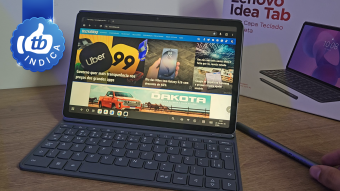
Six tablet models with keyboard included in the box planned for 2026
Read more
tecnoblog.net

Six tablet models with keyboard included in the box planned for 2026

Choosing a tablet that comes with a keyboard is an advantageous option for those who need mobility without sacrificing functionality when working or studying. Certain models can meet daily demands, such as document creation, web browsing, and multitasking, and can even replace notebooks on occasion.

Tecnoblog has prepared a detailed guide presenting six tablets that already come with the keyboard accessory included, ranging from more basic options to more sophisticated models. In this guide, the pros and cons of each device are analyzed.

Galaxy Tab S11

The Galaxy Tab S11 features 12 GB of RAM and 256 GB of storage, with the capacity to expand space up to 2 TB via a microSD card. Equipped with the MediaTek Dimensity 9400+ processor, it provides high performance for both browsing and multitasking, in addition to supporting heavy editing applications.

Samsung includes the keyboard case and S Pen in the box, which allows access to Samsung DeX mode, enabling the tablet to function like a notebook. This feature offers up to 18 hours of autonomy and converts the Android system into a work environment with productivity-optimized features, such as multiple resizable windows and shortcuts.

Compared to the other listed tablets, the Samsung model presents a more refined software ecosystem for productivity purposes and greater processing power. However, its cost is higher than that of the other mentioned brands.

Huawei MatePad 11.5

The Huawei MatePad 11.5 has 6 GB of RAM and 128 GB of storage. Its 11.5-inch screen displays 2K resolution and an update rate of up to 120 Hz, ensuring excellent sharpness when watching videos and fluidity during browsing.

This device comes with a smart keyboard, which facilitates the transition between use as a tablet and an experience similar to a notebook. Furthermore, it offers the WPS Office package as a native alternative to Microsoft Office, integrating productivity features directly into HarmonyOS.

Overall, the Huawei tablet boasts a metallic finish and a battery that lasts up to 10 hours of video playback. A notable drawback of the brand is the absence of native Google services, which forces the user to seek alternative solutions to access certain applications.

Lenovo Idea Tab

The Lenovo Idea Tab is configured with 8 GB of RAM and 128 GB of storage, with the possibility of increasing space with a microSD card up to 1 TB. Its MediaTek Dimensity 6300 processor is suitable for daily tasks, such as social media and internet browsing.

However, according to tests conducted by Tecnoblog, the Idea Tab shows difficulties running very heavy games or video editing software, such as CapCut.

The great differential of this tablet is the inclusion of a case, magnetic keyboard, and the Lenovo Tab Pen, forming a complete set for notes, typing, and increased productivity, serving as a substitute for notebooks. The 11-inch screen has a 2.5K (2560 × 1600) resolution and a 90 Hz refresh rate, providing good color saturation and high quality in movies and series. Despite this, its maximum brightness is only 500 nits, which can hinder visibility in brighter environments.

Vaio TL12

The Vaio TL12 focuses on configurations with 8 GB of RAM and up to 256 GB of storage, using the mid-range UniSOC T820 processor with integrated 5G connectivity, allowing for efficient multitasking execution.

The kit includes the protective case with keyboard and the VAIO Pen, ideal for professional use, whether in document editing or design activities. It stands out with its 12.6-inch AMOLED screen with a resolution of 2560 × 1600 pixels (2.5K), offering ample space to simultaneously work with spreadsheets and applications.

Vaio TL10

In direct comparison with its predecessor, the Vaio TL12 improved screen quality by switching from IPS LCD to AMOLED, gained processing improvements, and began supporting 5G networks. A disadvantage, however, is the total weight of the unit, which reaches 617 grams.

Vaio TL10

The Vaio TL10 offers 8 GB of RAM and 128 GB of internal storage, powered by the octa-core UniSOC T616 processor. The factory kit contains the magnetic keyboard, which uses physical pin connections, but does not include the pen. This feature transforms the system into an environment suitable for text production and quick file editing, featuring a 10.4-inch IPS screen (1200 × 2000 pixels, 2K) and a 7,000 mAh battery.

When compared to the Positivo Vision Tab 10, the Vaio model features a higher definition screen and double the RAM for application switching. The weak point lies in the lack of 5G connectivity and the moderate performance of the chipset in media rendering and heavy gaming tasks.

The Positivo Vision Tab 10 is aimed at basic consumption and less demanding office tasks. It comes with 4 GB of RAM and 128 GB of expandable storage via microSD. This model allows access to emails, online documents, and note-taking apps with a case that includes a keyboard, but uses a basic processor (Unisoc T606). Although it allows multitasking, this may be limited due to the low amount of RAM.

The Positivo Vision Tab 10 incorporates 4G mobile connectivity and a 10.1-inch HD IPS screen with a resolution of 1280 × 800 pixels. Compared to the other models, the Positivo option prioritizes accessible cost-benefit, sacrificing features to reduce the final price.

It is essential to check the technical specifications of each model before purchasing, as the cited devices cater to different usage profiles. The Lenovo Idea Tab is presented as an economical alternative that already comes with a keyboard and pen, offering 8 GB of RAM and the Dimensity 6300 processor for multitasking, in addition to a high-resolution screen. It is recommended for studies, browsing, and document work, although hardware limitations affect gaming and video editing.

It should be noted that iPads are not supplied with a keyboard in the box; Apple sells compatible keyboards, such as the Magic Keyboard, separately.

Using a tablet with a keyboard brings significant benefits, especially in activities such as writing articles, sending emails, browsing, video conferencing, and document editing, depending, however, on the operating system and available applications.

In the case of the Galaxy Tab S11, for example, Samsung DeX provides an interface focused on multitasking and use with a keyboard and touchpad, bringing the experience closer to that of a computer.

It is possible to use Bluetooth keyboards on most tablets. There are also models with USB-C connection. The main distinction is that manufacturer-specific keyboards may offer better integration with the system, including fitting, shortcuts, and touchpad.

Suitability depends on the user profile. The keyboard is more indicated for tasks such as spreadsheets, emails, and text, while the pen is more useful for notes, drawings, and markings in documents. For students or professionals, a model that offers both accessories may be more versatile in daily life.

Comparison of the 10 best reading tablets available in 2026
Read more
tecnoblog.net

Comparison of the 10 best reading tablets available in 2026

When selecting the ideal tablet for reading, it is essential to analyze features such as pixel density and peak brightness, as these factors directly influence the ease of reading books and other materials. Furthermore, battery life and device weight are relevant aspects; lighter devices with greater autonomy provide a superior experience during long reading periods.

Tecnoblog compiled a list of ten tablets focused on reading, detailing the pros and cons of models manufactured by Huawei, TCL, Apple, Samsung, Xiaomi, Positivo, and Lenovo.

Huawei MatePad Mini PaperMatte

The Huawei MatePad Mini PaperMatte features an 8.8-inch OLED screen with 2.5K resolution, specifically developed for reading enthusiasts. This model was designed to minimize visual discomfort caused by natural light and other light sources. With a peak brightness of 1,800 nits, it ensures good visibility even under strong sunlight.

Additionally, the screen has 343 PPI and includes certifications aimed at reducing eye strain and preventing flickering. A distinguishing feature is the eBook mode, which replicates the tactile sensation and comfort of physical paper while reading. In terms of ergonomics, the device is quite compact, measuring only 5.2 mm thick and weighing 260 g, making it easy to handle. Its 6,400 mAh battery offers good off-grid resistance, complemented by support for 66W fast charging.

TCL Nxtpaper 11

The TCL Nxtpaper 11 features an 11-inch LCD screen with 2K resolution and a 60 Hz refresh rate, simulating the texture and lightness of paper. However, its pixel density, limited to 212 PPI, may be a limiting factor for the definition of edges and curves in large character texts. The peak brightness of 500 nits might present visibility difficulties under direct sunlight.

As compensation, the screen system uses artificial intelligence to automatically adjust the color temperature, adapting to indoor or outdoor environments. It also has blue light reduction certification to decrease eye strain. A significant highlight is the robust 8,000 mAh battery, which provides long duration for extensive reading sessions. Despite this, this battery contributes to a weight of 462 g, although it is still considered one of the lightest on the list.

The iPad (A16 Bionic) offers good definition quality for reading through its 11-inch Liquid Retina display and 264 PPI. The True Tone functionality automatically adjusts brightness and color temperature according to ambient lighting, but its maximum brightness of 500 nits favors indoor environments. The display operates at a 60 Hz refresh rate, a more basic standard that may result in less smooth scrolling, although this does not drastically affect static text reading.

Regarding power, this model's battery has a capacity of 28.93 Wh and estimates up to 10 hours of use with Wi-Fi. The Wi-Fi + Cellular version, weighing 481 g, includes 5G support, being slightly heavier than the basic version (477 g).

The iPad mini (A17 Pro) also features a display that reaches 500 nits of peak brightness and is compatible with True Tone. However, its LCD screen has a smaller size, 8.3 inches, but offers higher reading sharpness thanks to a pixel density of 327 PPI. Another notable advantage is the anti-reflective coating, which minimizes interference from ambient light, especially in open areas. Like the previous model, the refresh rate remains at 60 Hz. Due to its reduced size, the iPad mini is lighter (293 g) and provides greater comfort during prolonged reading. Its 5,078 mAh Li-Ion battery can last a full day without needing a recharge.

Galaxy Tab S10 FE

The Galaxy Tab S10 FE positions itself as a mid-to-premium tablet, presenting an excellent cost-benefit ratio. It is equipped with a 10.9-inch LCD screen (WUXGA+), which displays crisp text (249 PPI) and improves outdoor visibility thanks to a peak brightness of 800 nits. The screen also supports a 90 Hz refresh rate, making page and book scrolling smoother. Additionally, the device includes an eye protection mode with a blue light filter and IP68 certification for greater resistance in humid environments, such as pools. The 8,000 mAh battery supports charging up to 45W and ensures good autonomy for extended reading. The only negative point mentioned is the weight of 497 g, which can cause arm fatigue when held for many hours.

Huawei MatePad SE

The Huawei MatePad SE has an 11-inch FHD+ display, ensuring a comfortable viewing area. The LCD screen reaches a peak brightness of 400 nits and has a pixel density of 206 PPI, making it more suitable for reading in indoor environments or for those who prefer enlarged text. This model includes TÜV Rheinland certifications to mitigate blue light emission and flickering. It also incorporates an eBook mode to reduce eye strain and a multi-window function that allows for simultaneous note-taking while reading. The tablet weighs 475 g and is powered by a 7,700 mAh battery, with support for 22.5W fast charging.

Galaxy Tab A11+ 5G

The Galaxy Tab A11+ 5G is presented as a tablet with great cost-benefit. It comes with an 11-inch LCD screen (WUXGA), which, despite having a large area, has a maximum brightness of 480 nits, which can compromise content visibility under direct sunlight. The 206 PPI density also reduces clarity in smaller texts. In contrast, the 90 Hz refresh rate provides significantly smoother page and document scrolling. The device also offers eye protection features, limiting blue light and using warmer tones to reduce visual fatigue. The battery has a capacity of 7,040 mAh and lasted over 11 hours of video playback in tests. Its weight of 482 g facilitates portability, although it may cause discomfort if held in the hands for long periods.

Tecnoblog reviews 10 affordable tablet models for those seeking savings in 2026
Read more
tecnoblog.net

Tecnoblog reviews 10 affordable tablet models for those seeking savings in 2026

An economical tablet is the perfect solution for simple daily activities, such as watching videos, taking notes, reading PDF documents, browsing the internet, and using social media. These devices are also often suggested for children's use, as they support light games and parental control applications.

When making a purchase, it is essential to analyze technical characteristics such as the processor, battery life, and screen quality, allowing you to select the device best suited to the consumer's usage profile.

Tecnoblog compiled a list of ten affordable tablet options for purchase in 2026, detailing the pros and cons of models manufactured by Samsung, Xiaomi, Vaio, Lenovo, and Positivo.

Galaxy Tab A11 + 5G

This model is considered the most complete in the selection and has been previously analyzed by Tecnoblog. It integrates 6 GB of RAM with the Mediatek Dimensity 7300 (4 nm) processor, providing balanced performance for browsing, streaming, and low-complexity gaming.

It features an 11-inch LCD screen with a 90 Hz refresh rate, aiming for greater content fluidity, and comes equipped with a 5 MP front camera (f/2.2) and an 8 MP rear camera (f/2.0) with autofocus. Both cameras record in Full HD at 30 frames per second.

Additionally, the tablet has a 7,040 mAh battery, which guarantees up to 15 hours of video playback. Other notable features include 5G support (via physical SIM) and IP52 protection certification.

Redmi Pad 2

The Redmi Pad 2 uses the MediaTek Helio G100-Ultra (6 nm) chipset, accompanied by 4 GB of RAM and storage options of 128 GB or 256 GB. Although it may experience slowness in heavy tasks like video editing or gaming, it is a viable alternative for checking emails, accessing social networks, and streaming.

Its 11-inch LCD display operates at a 90 Hz refresh rate and has TÜV Rheinland certifications, designed to reduce eye strain. Both the 5 MP front camera (f/2.2) and the 8 MP rear camera (f/2.0) record in Full HD at 30 fps.

One of the great attractions of this tablet is its robust 9,000 mAh battery, capable of sustaining up to 19 hours of continuous video. There is also a version available with 4G support (Nano SIM) for users who require greater mobility while browsing.

Galaxy Tab A11

This version of the Galaxy Tab A11 is more simplified compared to the Plus variant, featuring the Mediatek Helio G99 (6 nm) SoC, 4 GB of RAM, and only 64 GB of storage. Consequently, this tablet is better suited for more elementary daily tasks.

A distinction lies in the 8.7-inch LCD screen, which, despite being smaller, maintains a 90 Hz refresh rate. The rear (8 MP) and front (5 MP) cameras also record in 1080p at 30 fps.

The specifications are complemented by a 5,100 mAh battery and stereo audio with Dolby Atmos technology.

Redmi Pad SE

The Redmi Pad SE is equipped with the Snapdragon 680 (6 nm) processor and is more recommended for study and streaming activities. The basic configuration comes with 4 GB of RAM, but it is recommended to opt for the 6 GB or 8 GB versions to prevent interruptions during simultaneous use of multiple applications.

The 11-inch FHD+ LCD display has a refresh rate of up to 90 Hz and incorporates a blue light filter. The tablet also features an 8 MP rear camera (f/2.0) and a 5 MP front lens (f/2.0), both capable of recording in Full HD at 30 fps.

Similar to the Redmi Pad 2, the Redmi Pad SE stands out for its large 8,000 mAh battery capacity, with autonomy of up to 43 days in standby mode. The four speakers located on the sides are compatible with Dolby Atmos, providing a more immersive sound experience.

Vaio TL 10

The Vaio TL 10 represents another basic tablet alternative, ideal for simple tasks such as watching videos and browsing social media. For processing, it combines 8 GB of RAM with the Unisoc T616 (12 nm) chip, reaching speeds of up to 2 GHz.

The 10.4-inch LCD screen offers 2K resolution, but its fluidity is limited by the 60 Hz refresh rate. The front (5 MP) and rear (8 MP) cameras can record up to 1080p at 30 fps.

A strong point of this tablet is its 7,000 mAh battery, which promises to meet the needs of a full day of use. Furthermore, the Vaio TL 10 supports 4G (nano SIM) and includes a keyboard cover in the product packaging.

Lenovo Tab

The Lenovo Tab is an entry-level tablet equipped with the MediaTek Helio G85 (12 nm) chipset and 4 GB of RAM. This device is not advisable for intensive gaming or multitasking, but it can manage less demanding routine activities.

Although the 11-inch LCD screen has Full HD resolution, its refresh rate is only 60 Hz. For image and video capture, the tablet has an 8 MP rear camera and a 5 MP front camera.

The device also includes a 5,100 mAh battery (with 15 W fast charging support), stereo speakers with Dolby Atmos, and a 4G version that allows mobile data usage.

Lenovo Tab K11

The Lenovo Tab K11 is supplied with the MediaTek G88 (12 nm) processor and 4 GB of RAM. Its performance is quite similar to the Lenovo Tab, making it suitable for web browsing, streaming, and email exchange.

However, the superior chip increases the refresh rate of the 10.9-inch LCD screen to 90 Hz, which provides greater visual smoothness. Additionally, the front (f/2.0) and rear (f/2.0) cameras have the same 8 MP resolution, and both record in Full HD at 30 fps.

The Lenovo Tab K11 battery is larger, with 7,040 mAh, and supports fast charging up to 20 W. This model also has IP52 protection, and its LTE variant is compatible with a Nano SIM chip to activate the 4G mobile network.

Popular