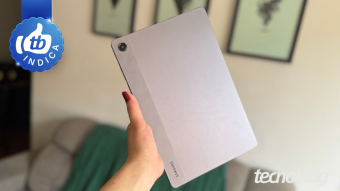
Tecnoblog reviews 8 tablets with good cost-benefit for 2026, including models from Samsung, Xiaomi, Lenovo, and Apple
Read more
Tecnoblog
tecnoblog.net

Tecnoblog reviews 8 tablets with good cost-benefit for 2026, including models from Samsung, Xiaomi, Lenovo, and Apple

A tablet with a good cost-benefit ratio should present a satisfactory balance between its technical specifications, offered features, and its final price. When deciding which one to purchase, it is essential to consider the user's own needs, which may involve looking for higher resolution screens, a faster processor, or a long-lasting battery.

In this article, Tecnoblog presents a selection of eight devices that stand out for their excellent cost-benefit and deserve to be considered purchases for the year 2026. The pros and cons of models manufactured by Samsung, Xiaomi, Lenovo, Vaio, and Apple will be analyzed.

Galaxy Tab S10 FE

This model offers premium-level features while maintaining an accessible price. It is equipped with the Exynos 1580 (4 nm) chipset and has 8 GB of RAM, ensuring balanced performance for activities such as web browsing, streaming, and less demanding games.

The 10.9-inch LCD screen, with WUXGA+ resolution and a 90 Hz refresh rate, provides smooth scrolling and reaches a peak brightness of 800 nits, the highest on the list. Regarding cameras, it features a 13 MP rear lens (f/2.0) and a 12 MP ultrawide front camera (f/2.4), both capable of recording in 4K at 30 frames per second. The 8,000 mAh battery guarantees up to 20 hours of video playback and supports charging up to 45 W. To complete the experience, the product box includes a protective case and the S Pen.

Galaxy Tab S10 Lite

Representing a more modest option compared to the FE model, the Galaxy Tab S10 Lite uses the Exynos 1380 (5 nm) processor and comes with 6 GB or 8 GB of RAM. This tablet is better suited for basic daily tasks, and the version with more memory is recommended to prevent interruptions.

Its 10.9-inch LCD screen has WUXGA+ resolution, a 90 Hz refresh rate, and a peak brightness of 600 nits, giving it better performance in indoor environments. The device is equipped with an 8 MP rear camera and a 5 MP front camera, both recording up to 1080p at 30 fps. The 8,000 mAh battery supports charging up to 25 W and can last 16 hours watching videos. The S Pen and protective case are also supplied with the tablet.

Galaxy Tab A11+ 5G

Considered one of the best in terms of cost-benefit in the market, the Galaxy Tab A11+ 5G combines the Mediatek Dimensity 7300 (4 nm) chip with 6 GB of RAM, allowing for good performance in browsing, streaming, and productivity. In tests conducted, the device demonstrated the ability to run games like Call of Duty: Mobile without lagging.

The 11-inch FHD+ LCD screen displays vibrant colors, but its maximum brightness of 480 nits may make viewing difficult under direct sunlight. The camera system is simple, consisting of an 8 MP rear lens (f/2.0) and a 5 MP front lens (f/2.2), both recording in Full HD at 30 fps. The 7,040 mAh battery offers autonomy for a full day of use and accepts charges up to 25 W. Additionally, it supports 5G for internet connection via a physical SIM card.

The iPad (2025) serves as an entry point for Apple's tablets. Despite being a more basic model, it combines the A16 Bionic SoC with 6 GB of RAM, providing stable performance in simple tasks and some games. Its 11-inch Liquid Retina display operates at 60 Hz and reaches a peak brightness of 500 nits. Conversely, this device has one of the most advanced lens sets on the list, including a 12 MP rear camera (f/1.8) that records in 4K at 60 fps, and a 12 MP front camera (f/2.4) that films in 1080p at 60 fps. The Li-Po battery has a capacity of 28.93 Wh and supports charging up to 45 W, although the charger included in the box is only 20 W.

Redmi Pad 2

The Redmi Pad 2 is available with 4 GB to 8 GB of RAM and uses the MediaTek Helio G100-Ultra (6 nm) chipset, making it more recommended for basic activities such as reading, browsing social media, and casual gaming. Although the version with more memory costs a bit more, it maintains an excellent cost-benefit ratio and optimizes performance in multitasking situations.

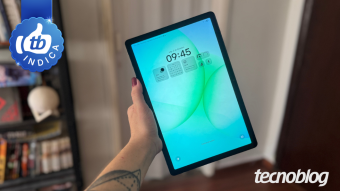
The 11-inch LCD screen with 2.5K resolution offers a maximum brightness of 900 nits and a 90 Hz refresh rate, ensuring fluidity in animations. Both the 5 MP front camera (f/2.2) and the 8 MP rear camera (f/2.0) record in 1080p at 30 fps. However, the great differential of this model is its 9,000 mAh battery, which can last up to 234 consecutive hours playing music. It is important to note that the charging power is more limited, restricted to 18 W.

Lenovo Idea Tab

Another tablet analyzed by Tecnoblog, the Lenovo Idea Tab incorporates the MediaTek Dimensity 6300 (6 nm) processor and can be found with 4 GB or 8 GB of RAM. The version with more memory improves performance in multitasking and split-screen mode, although it is not ideal for gaming. The rear (8 MP) and front (5 MP) cameras are considered basic, recording up to Full HD at 30 fps.

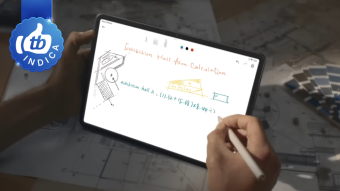
The 11-inch LCD screen with 2.5K resolution provides smooth scrolling thanks to the 90 Hz refresh rate, but its visibility is limited when exposed to direct sunlight. The 7,040 mAh battery is a strong point, offering enough autonomy for a full day of daily use. Furthermore, the device comes with a case, pen, and keyboard in the box.
Similar stories

Six Recommended Xiaomi Tablet Models to Buy in 2026
Read more
tecnoblog.net

Six Recommended Xiaomi Tablet Models to Buy in 2026

The definition of the best Xiaomi tablet depends on the available budget and the required hardware and features to meet the consumer's usage profile. There are premium models, which are powerful but more expensive; mid-range tablets, which offer a good balance between cost and benefit; and entry-level devices, ideal for simple activities like studying and streaming, suitable for tighter budgets.

To aid in the purchasing decision in 2026, Tecnoblog compiled a list with six Xiaomi tablet models, detailing the pros and cons of each.

Xiaomi Pad 8

The Xiaomi Pad 8 is classified as a premium and robust tablet. It integrates the Snapdragon 8s Gen 4 (4 nm) processor with options for 8 GB or 12 GB of RAM, providing high performance for complex video editing and gaming. Its 11.2-inch LCD screen has a 3.2K resolution (344 PPI) and offers excellent scrolling smoothness thanks to the up to 144 Hz refresh rate. In terms of cameras, the 8 MP (f/2.28) front camera records in Full HD at 30 fps, while the 13 MP (f/2.2) rear lens supports 4K recording at 30 fps.

A feature of the Xiaomi Pad 8 is its large 9,200 mAh battery, which guarantees about 18 hours of continuous video playback. Furthermore, it supports fast charging up to 45 W.

Xiaomi Pad 7

The Xiaomi Pad 7 represents a top-tier option with a more accessible cost. This model is equipped with the Snapdragon 7+ Gen 3 (4 nm) SoC and can be found with 8 GB or 12 GB of RAM. Although its processing power is slightly less than the latest model, it is capable of handling multitasking and gaming without major difficulties.

The screen and camera specifications of the Xiaomi Pad 7 are identical to those of the Xiaomi Pad 8. This includes an 11-inch screen with a 144 Hz refresh rate and a maximum brightness of 800 nits, in addition to a 13 MP (f/2.2) rear camera and an 8 MP (f/2.28) front camera. The device's battery has 8,850 mAh and can last up to 20.4 hours watching videos, with a maximum charging power also set at 45 W.

Poco Pad M1

The Poco Pad M1 is a mid-range tablet suggested for those who need a device for productivity, multitasking, or less demanding gaming. It uses the Snapdragon 7s Gen 4 (4 nm) processor and has a single memory configuration, offering 8 GB of RAM and 256 GB of storage. The camera setup is considered basic, featuring a front lens (8 MP, f/2.3) and a rear lens (8 MP, f/2.0), both recording in 1080p at 30 frames per second.

Its 12.1-inch LCD screen with 2.5K resolution and 120 Hz refresh rate provides good fluidity, but the maximum brightness of 600 nits limits its visibility in direct sunlight. Conversely, the Poco Pad M1 boasts the largest battery ever seen in a brand tablet, with 12,000 mAh, and supports 33 W fast charging, in addition to reverse charging limited to 27 W.

Redmi Pad 2 Pro

The Redmi Pad 2 Pro shares the same Snapdragon 7s Gen 4 (4 nm) processor as the Poco Pad M1 and is recommended for intermediate tasks and not very intensive gaming. The main distinction lies in the memory configurations: the Redmi Pad 2 Pro is available in versions with 6 GB of RAM and 128 GB of storage, or 8 GB of RAM with 256 GB of internal memory.

This tablet has a 12.1-inch 2.5K LCD screen with a 120 Hz refresh rate and a peak brightness of 600 nits, including an 8 MP (f/2.28) selfie front camera. The rear camera consists of a single 8 MP (f/2.0) lens, and both record up to 1080p at 30 fps. The 12,000 mAh battery offers autonomy for up to 14.2 hours of continuous video playback and supports 33 W fast charging. Additionally, there is a 5G variant that allows internet access via mobile data.

Redmi Pad 2

The Redmi Pad 2 is powered by the MediaTek Helio G100-Ultra (6 nm) chip and features 8 GB of RAM. Its specifications make it ideal for web browsing, streaming, and studying. The 11-inch display with 2.5K resolution offers good fluidity, although its 90 Hz refresh rate is lower than the other listed models. Both the rear camera (8 MP, f/2.0) and the front camera (5 MP, f/2.2) record in Full HD at 30 frames per second.

This model's battery has a capacity of 9,000 mAh and promises up to 17 hours of video playback. The 4G variant allows the use of a SIM chip for internet connection without relying on Wi-Fi networks.

Redmi Pad SE

Considered the most basic Xiaomi tablet in the selection, the Redmi Pad SE uses the Snapdragon 680 (6 nm) processor and offers options of 4 GB, 6 GB, or 8 GB of RAM. It is designed for simple daily tasks, and it is advisable to opt for the version with more memory to prevent crashes. The rear (8 MP, f/2.0) and front (5 MP, f/2.2) lenses are modest but manage to record in Full HD at 30 fps. The 11-inch FHD+ LCD screen offers good fluidity, despite having reduced visibility in sunlight due to a maximum brightness of only 400 nits.

The 8,000 mAh battery offers good duration, reaching up to 14 hours of video, but charging is slower, limited to 10 W.

When choosing the best Xiaomi tablet, it is essential to weigh the available budget against the necessary specifications to meet your own demands. The Redmi Pad 2 is pointed out as an economical option for limited budgets, with a fluid screen (90 Hz) and a battery that lasts all day, in addition to 4G functionality. Meanwhile, the Xiaomi Pad 8 stands out for offering the best specifications for gaming, driven by the Snapdragon 8s Gen 4 chip and 144 Hz screen, complemented by a 9,200 mAh battery for long sessions.

It is important to note that none of the Xiaomi tablets presented in the list include a stylus in the box. For those looking for a tablet with an included stylus, alternative models such as Galaxy Tab S10 FE, Lenovo Idea Tab, and Vaio TL 12 are suggested.

Tecnoblog reviews 10 affordable tablet models for those seeking savings in 2026
Read more
tecnoblog.net

Tecnoblog reviews 10 affordable tablet models for those seeking savings in 2026

An economical tablet is the perfect solution for simple daily activities, such as watching videos, taking notes, reading PDF documents, browsing the internet, and using social media. These devices are also often suggested for children's use, as they support light games and parental control applications.

When making a purchase, it is essential to analyze technical characteristics such as the processor, battery life, and screen quality, allowing you to select the device best suited to the consumer's usage profile.

Tecnoblog compiled a list of ten affordable tablet options for purchase in 2026, detailing the pros and cons of models manufactured by Samsung, Xiaomi, Vaio, Lenovo, and Positivo.

Galaxy Tab A11 + 5G

This model is considered the most complete in the selection and has been previously analyzed by Tecnoblog. It integrates 6 GB of RAM with the Mediatek Dimensity 7300 (4 nm) processor, providing balanced performance for browsing, streaming, and low-complexity gaming.

It features an 11-inch LCD screen with a 90 Hz refresh rate, aiming for greater content fluidity, and comes equipped with a 5 MP front camera (f/2.2) and an 8 MP rear camera (f/2.0) with autofocus. Both cameras record in Full HD at 30 frames per second.

Additionally, the tablet has a 7,040 mAh battery, which guarantees up to 15 hours of video playback. Other notable features include 5G support (via physical SIM) and IP52 protection certification.

Redmi Pad 2

The Redmi Pad 2 uses the MediaTek Helio G100-Ultra (6 nm) chipset, accompanied by 4 GB of RAM and storage options of 128 GB or 256 GB. Although it may experience slowness in heavy tasks like video editing or gaming, it is a viable alternative for checking emails, accessing social networks, and streaming.

Its 11-inch LCD display operates at a 90 Hz refresh rate and has TÜV Rheinland certifications, designed to reduce eye strain. Both the 5 MP front camera (f/2.2) and the 8 MP rear camera (f/2.0) record in Full HD at 30 fps.

One of the great attractions of this tablet is its robust 9,000 mAh battery, capable of sustaining up to 19 hours of continuous video. There is also a version available with 4G support (Nano SIM) for users who require greater mobility while browsing.

Galaxy Tab A11

This version of the Galaxy Tab A11 is more simplified compared to the Plus variant, featuring the Mediatek Helio G99 (6 nm) SoC, 4 GB of RAM, and only 64 GB of storage. Consequently, this tablet is better suited for more elementary daily tasks.

A distinction lies in the 8.7-inch LCD screen, which, despite being smaller, maintains a 90 Hz refresh rate. The rear (8 MP) and front (5 MP) cameras also record in 1080p at 30 fps.

The specifications are complemented by a 5,100 mAh battery and stereo audio with Dolby Atmos technology.

Redmi Pad SE

The Redmi Pad SE is equipped with the Snapdragon 680 (6 nm) processor and is more recommended for study and streaming activities. The basic configuration comes with 4 GB of RAM, but it is recommended to opt for the 6 GB or 8 GB versions to prevent interruptions during simultaneous use of multiple applications.

The 11-inch FHD+ LCD display has a refresh rate of up to 90 Hz and incorporates a blue light filter. The tablet also features an 8 MP rear camera (f/2.0) and a 5 MP front lens (f/2.0), both capable of recording in Full HD at 30 fps.

Similar to the Redmi Pad 2, the Redmi Pad SE stands out for its large 8,000 mAh battery capacity, with autonomy of up to 43 days in standby mode. The four speakers located on the sides are compatible with Dolby Atmos, providing a more immersive sound experience.

Vaio TL 10

The Vaio TL 10 represents another basic tablet alternative, ideal for simple tasks such as watching videos and browsing social media. For processing, it combines 8 GB of RAM with the Unisoc T616 (12 nm) chip, reaching speeds of up to 2 GHz.

The 10.4-inch LCD screen offers 2K resolution, but its fluidity is limited by the 60 Hz refresh rate. The front (5 MP) and rear (8 MP) cameras can record up to 1080p at 30 fps.

A strong point of this tablet is its 7,000 mAh battery, which promises to meet the needs of a full day of use. Furthermore, the Vaio TL 10 supports 4G (nano SIM) and includes a keyboard cover in the product packaging.

Lenovo Tab

The Lenovo Tab is an entry-level tablet equipped with the MediaTek Helio G85 (12 nm) chipset and 4 GB of RAM. This device is not advisable for intensive gaming or multitasking, but it can manage less demanding routine activities.

Although the 11-inch LCD screen has Full HD resolution, its refresh rate is only 60 Hz. For image and video capture, the tablet has an 8 MP rear camera and a 5 MP front camera.

The device also includes a 5,100 mAh battery (with 15 W fast charging support), stereo speakers with Dolby Atmos, and a 4G version that allows mobile data usage.

Lenovo Tab K11

The Lenovo Tab K11 is supplied with the MediaTek G88 (12 nm) processor and 4 GB of RAM. Its performance is quite similar to the Lenovo Tab, making it suitable for web browsing, streaming, and email exchange.

However, the superior chip increases the refresh rate of the 10.9-inch LCD screen to 90 Hz, which provides greater visual smoothness. Additionally, the front (f/2.0) and rear (f/2.0) cameras have the same 8 MP resolution, and both record in Full HD at 30 fps.

The Lenovo Tab K11 battery is larger, with 7,040 mAh, and supports fast charging up to 20 W. This model also has IP52 protection, and its LTE variant is compatible with a Nano SIM chip to activate the 4G mobile network.

Popular