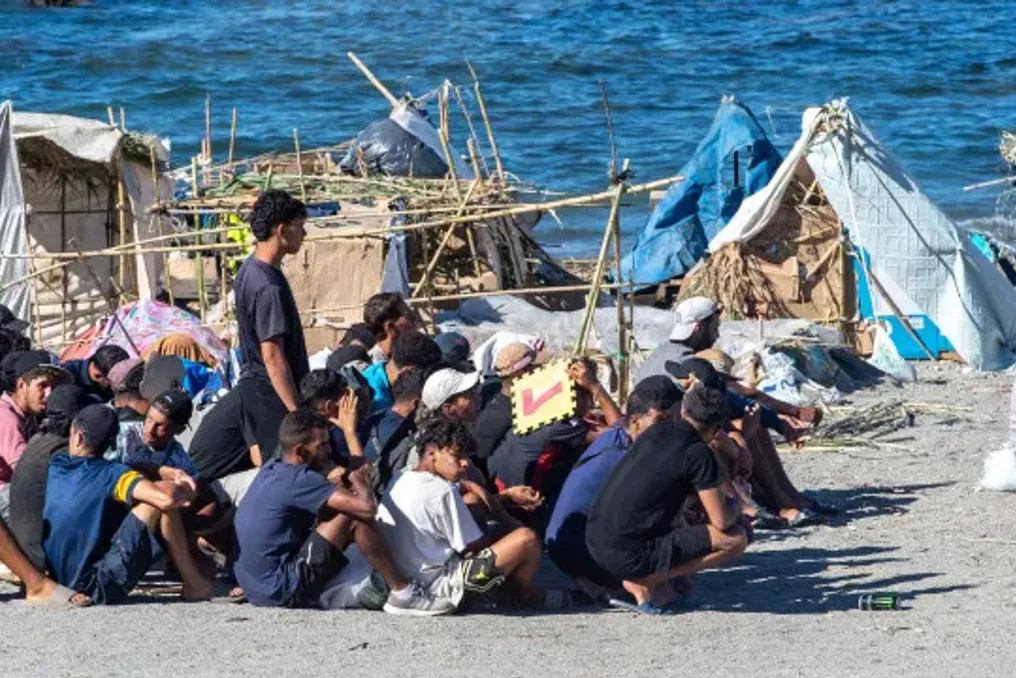
The Spanish Minister of the Interior, Fernando Grande-Marlaska, sent a letter to the Director-General of the Commission for Migration and Internal Affairs, Beat Gümindjer. This letter was a response to the latter's proposal addressed to the Spanish ambassador to the European Union (EU) regarding assistance from various European agencies concerning the migration crisis.
The crisis began after the mass arrival of migrants from Morocco into the Spanish enclave in North Africa in the last days of July (July 30 and 31). Marlaska requested reinforcement from Frontex, Europol (the European agency for police cooperation), and the EU Agency for Asylum (EUAA) to support the system created to manage the sorting and processing of cases of migrants who are still in Ceuta illegally.
Furthermore, the Spanish Ministry of the Interior asked Frontex to extend the 'Minerva' border operation 'as long as possible.' This operation currently covers the ports of Algeciras, Tarifa, and Ceuta under the 'Gibraltar Crossing' operation until September 2.
Spain requested 10 additional Frontex agents to conduct sorting to speed up the collection of information from migrants who have not yet undergone this procedure. The central government in Madrid also found assistance with conducting interviews and providing translators extremely useful, although the work of these specialists can be carried out remotely.
After the sorting and, if necessary, the asylum application process at the border is completed, the Spanish Ministry of the Interior will provide the necessary assistance to Frontex for certain returns through mediation mechanisms and agreements that the agency maintains with various countries of origin.
On August 24, Spain requested emergency assistance totaling over 32 million euros, which should be covered by the Funds for Asylum, Migration and Integration (FAMI) and the Border and Visa Management Instrument (BVMI).
In conclusion, the letter asked to maintain the system called 'EUROSUR Fusion Services,' managed by Frontex. This system provides satellite imagery of the border with Morocco to monitor maritime zones, ports, coastlines, or relevant border areas.
These requests come amid protests in Ceuta against the presence of migrants. Hundreds of people took to the streets of Ceuta again today to hold a new march protesting the arrival of migrants. This residents' march was organized by the platform 'Ceuta Unida' via social networks and WhatsApp groups, which facilitated mobilization to condemn dissatisfaction with the management of the migration crisis.
Protesters chanted slogans such as 'Invaders, expulsion' and held Spanish flags. According to international agencies, around 7:30 PM local time (6:30 PM in Lisbon), the peaceful demonstration by residents started towards the Trampolín and Benítez beach areas, where migrant camps arriving at the end of July are still located. The march proceeded along the main arteries of Ceuta, passing through various districts of the autonomous city so that neighbors could join in to create a unified civic mobilization.
On Thursday, a similar demonstration led to the blocking of Red Cross truck access for more than two hours, carrying food supplies for humanitarian aid to migrants. Despite describing the demonstration on Thursday as peaceful, some protesters set tents and makeshift camps on fire.
hel