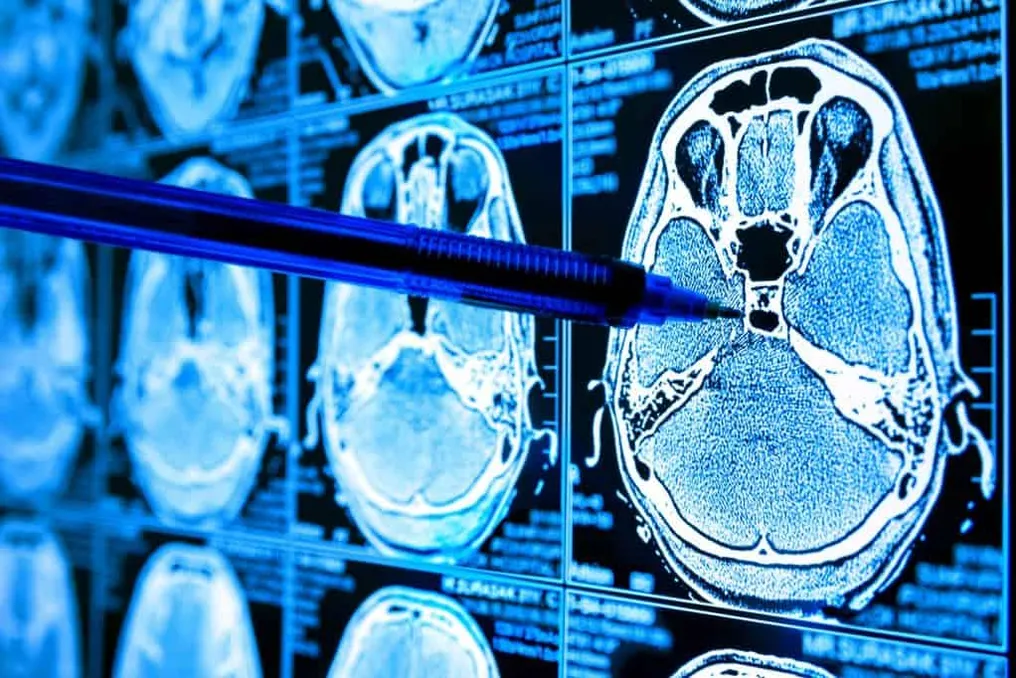
A 48-year-old man became the world's first patient to undergo brain surgery assisted by artificial intelligence (AI) in real time. During the surgical procedure, doctors successfully removed a tumor located in the pituitary gland, a sensitive area of the brain.
Rhys Hibbert, a resident of Bedfordshire, UK, and father of two, risked losing his sight if he had not been operated on, according to surgeons from University College London Hospital. The AI tool instantly analyzed the procedure's images, providing guidance to the doctors to avoid crucial blood vessels and nerves in the brain that were not directly visible.
Thanks to the technological support, the surgeons safely removed as much of the tumor as possible. Hibbert told the BBC about the benefits for patient safety, stating that 'there are no warning signs inside our heads.'
Although he did not require immediate surgery, Hibbert began experiencing stumbling, extreme fatigue, and dizziness. He expressed his desire not to let the tumor prevent him from fulfilling daily routines, such as making coffee for his wife after 18 years of marriage. According to him, the impacts of the illness were primarily emotional and psychological, and he mentioned his reluctance to be a burden to others despite offers of help.
When invited to be the first patient in such an AI-assisted procedure, Hibbert accepted without hesitation, questioning how medicine could advance if patients did not participate in research.
The procedure was performed by inserting an endoscope, a thin camera attached to a rod, introduced through the nose to the base of the skull. Upon reaching the tumor area, the doctors faced a difficulty: the lesion was close but obscured by bone layers and a resistant membrane. Determining the safest location to begin removal was not simple, given the complexity of the region and anatomical variation between individuals.
Complication rates were significant, with a 25% to 50% chance that the tumor would not be completely removed and a risk of 0.5% to 2% of vital blood vessel injury. This is where the AI intervened. On a second screen, the system monitored the images in real time, tracked the instruments used by the doctors, and pointed out areas most likely to contain vessels and nerves, while also highlighting the safest points for tumor removal.
The operating mechanism is comparable to smartphone facial recognition systems, but unlike them, the AI was trained to identify important anatomical structures that often remain hidden during surgery.
In the UK, one surgeon performs an average of ten to twenty of these operations annually. For each case, doctors use pre-operative exams to map the specific anatomy of the patient. Researchers prepared and validated the AI system using hundreds of videos of pituitary tumor removal surgeries. In each recording, the vessels and nerves were meticulously outlined to feed the system and teach it to recognize the most critical structures.
Professor Hani Marcus, who collaborated on the procedure, explained that the system was trained on more surgeries than most surgeons see or perform in their entire careers, potentially serving as a 'specialized second pair of eyes.' An important distinction from other experimental AI tools is this system's ability to operate in real time.
Despite the technological advancement, the responsible team emphasizes that the AI does not make autonomous decisions; it serves as assistance to the doctors, keeping the surgeons in total control of the operation. However, the researchers' goal is to expand the scope, aiming to create something like a 'ChatGPT for surgeons,' a tool that would act as 'another specialist in the room' and provide on-demand guidance.
Marcus stressed that doctors could consult the system for assistance during the procedure or choose to ignore its suggestions if they disagreed. The development of this technology was funded by the National Institute for Health and Care Research and Google, and was created by researchers from University College London (UCL).
After years of laboratory testing and refinement, and following initial results in a real surgery, researchers initiated a larger study. The surgery took place eight weeks ago, and since then, Hibbert reports a progressive improvement in vision. He described feeling as if he had regained 360-degree vision upon opening his eyes post-surgery, contrasting with the lack of clarity a year earlier. He also noted the recovery of his energy and the disappearance of all side effects, which restored his quality of life.
James Frith, UK Minister for Health Innovation, expressed satisfaction with Hibbert's experience, classifying it as a 'life-changing surgery' within government-funded research. Frith assured that safety must be prioritized, but also that the opportunities offered by AI should be utilized.