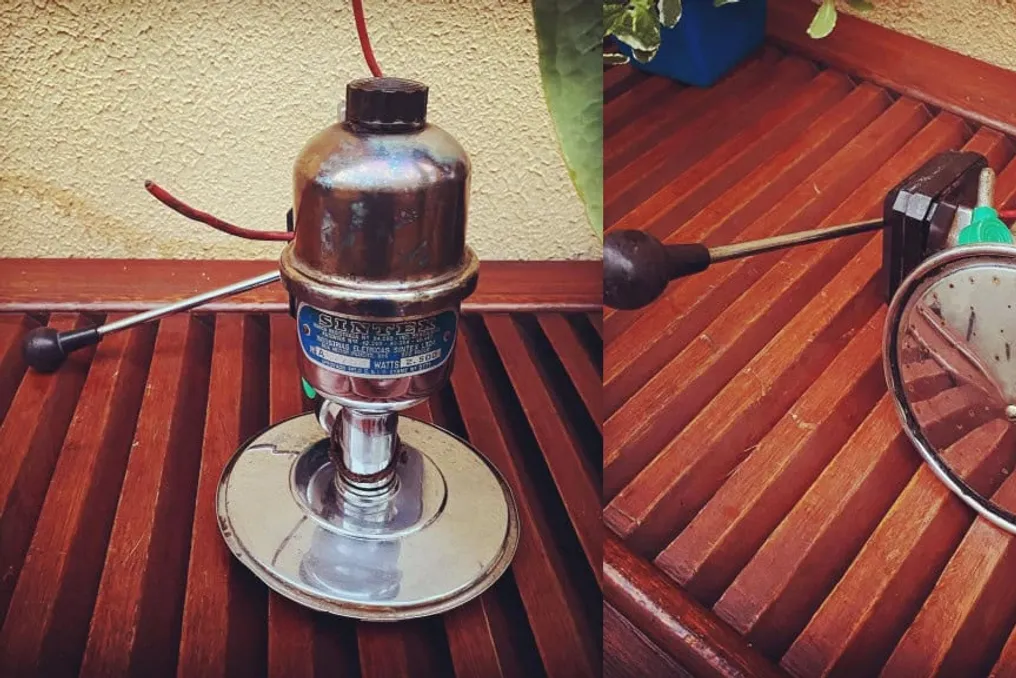
The electric shower, an item common in daily life, is an invention originating from Brazil. Its creator was Francisco Canho, who developed the appliance in Jaú, a city located in the interior of the state of São Paulo, in January 1927.
Canho dismantled an electric iron and identified the component known as 'resistance'—a metal piece that generates heat when passed through electric current. His idea was simple: by inserting this resistance into a tube through which water flowed, it would be possible to heat the water. Initially, the concept worked.
The motivation for the creation was not a mere technical whim; Canho developed the device to help care for his father, who suffered from rheumatism and could not tolerate cold baths. Before this, anyone who wanted hot water had to heat the water using a wood-burning stove, and Canho's invention aimed to optimize this process.
After going through several testing phases, Canho managed to stabilize the model and began commercializing it in Jaú. Subsequently, he founded his own company, F. Canhos, expanding the sale of the product throughout the national territory.
The electric shower received its patent registration in 1943. However, other companies, such as Lorenzetti, were already producing similar versions. In the 1950s, Lorenzetti assumed ownership of Canho's original patent.
Over time, the appliance has undergone numerous evolutions. A significant change occurred in the manufacturing material: while initial models were metallic, starting in the 1960s, plastic became predominant, resulting in a considerable reduction in production costs, boosting the product's acceptance among the Brazilian public.
With the price issue resolved, improvements focused on increasing user comfort, introducing higher power ratings and summer and winter mode options. Edval Delbone, a mechanical engineering professor at the Mauá Institute of Technology, comments on this evolution. He points out that the first models were basic, but today there are appliances with up to two or three mode settings, and the power has increased drastically, from 3,500 W in the early days to 7,800 W currently.
The practice of heating water directly in the shower is characteristic of Brazil. In contrast, the systems used in the United States and Europe are different. According to Delbone, in these locations, it is common to use central heaters, whether gas or electric, known as 'boilers,' which heat large volumes of water and direct it to the showers, without the need for a direct electrical connection to the shower.
Regarding safety, Delbone clarifies that although mixing water and electricity seems dangerous, the risk is nonexistent if the shower is installed following all recommendations. He details that the appliance must be connected to 110 V or 220 V (phase and phase or phase and neutral), but the presence of a third wire, the ground wire, which must be connected to the residence's grounding system to eliminate any danger, is crucial.
Another peculiarity of the Brazilian shower is its high energy consumption. Official data and surveys of the electrical sector conducted between 2025 and 2026 indicate that it can consume between 25% and 35% of the total electricity used in a Brazilian home. The specialist justifies this high consumption by the high power, which ranges from 4,500 W to 7,800 W, exceeding the consumption of air conditioning, refrigerator, washing machine, and electric iron.
To promote energy saving, Delbone offers a practical tip: energy expenditure is directly linked to usage time. Therefore, taking a shower with a maximum duration of ten minutes contributes significantly to savings.