Owner Company Raises $240 Million to Provide Small Businesses with AI Tools
Read more
Ventureburn
ventureburn.com

Owner Company Raises $240 Million to Provide Small Businesses with AI Tools

The owner of the company Owner has raised $240 million in a Series D funding round led by Goldman Sachs. Other participants in the round included existing investors Redpoint, Meritech, Jack Altman, and Headline.

This significant influx of capital allows Owner to provide small businesses with artificial intelligence tools that were previously only accessible to large corporations. The goal is to level the playing field for independent shops and local restaurants that lack the resources to hire full technology teams.

Local businesses, such as small cafes or barbershops, often have to handle all tasks themselves—from managing websites and running advertising to processing orders and responding to customers. Unlike large chains that have entire teams of specialists, the owner of a local business often has only themselves and perhaps a few employees.

The startup asserts that small businesses are the backbone of America, and to support these enterprises, it is developing AI capable of performing work they could not afford. The company positions itself as the 'AI CMO and CTO for local businesses,' meaning it takes on marketing and technology functions.

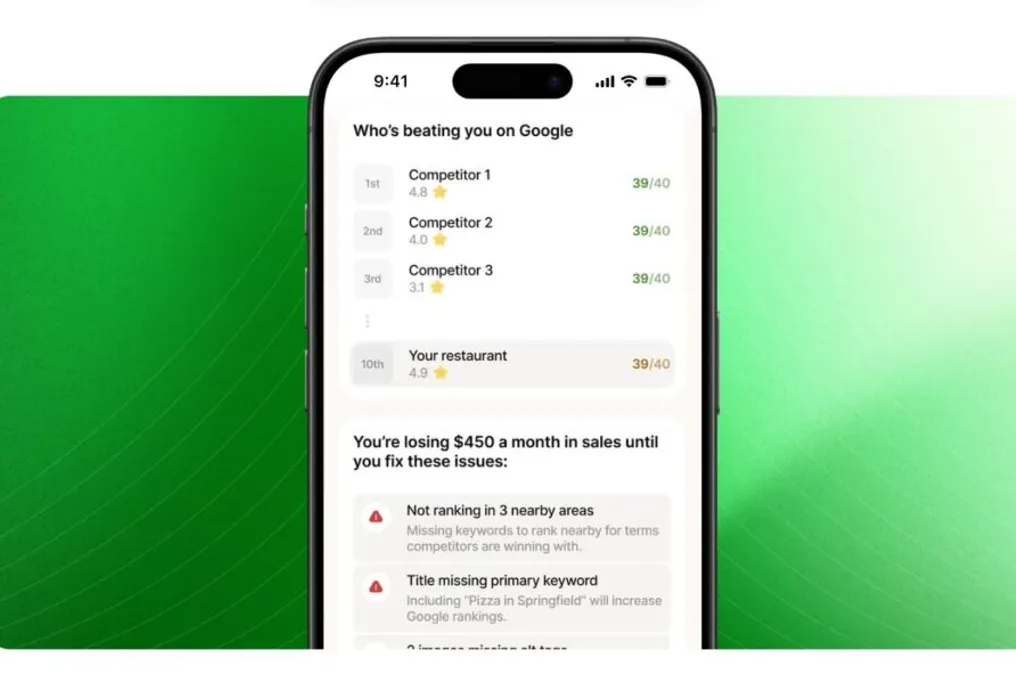
Owner's functionality includes creating websites and applications, launching advertising campaigns, processing online orders, answering calls, reviews, and emails. If the system receives a task to promote a specific product, its AI automatically creates advertisements, updates the website, and publishes information. Furthermore, the platform manages payments, customer data, and loyalty programs, allowing businesses to view Owner as an in-house employee.

These AI agents work around the clock and improve through training on data from thousands of other companies. Initially, the company started working with restaurants during the COVID-19 pandemic, helping them take direct orders, and today its functionality is available in many US restaurants.

Although Owner began with the restaurant sector, its ambitions are much broader. The $240 million raised will help transform restaurant tools into an 'AI operating system' for all types of local businesses. The idea originated from personal experience: Adam Guild's mother owned a dog grooming salon, and he helped her go online.

Owner bets that AI can perform the work of entire technology and marketing teams for a significantly lower cost. Given that 100 million Americans already use services from businesses operating on the Owner platform, it is clear that small businesses do not need to hire ten people; one AI platform that performs all necessary work is sufficient.


Similar stories

Socure raises $156 million at $5.2 billion valuation to expand AI-powered trust platform
Read more
ventureburn.com

Socure raises $156 million at $5.2 billion valuation to expand AI-powered trust platform

Socure announced the raising of $156 million in strategic growth funding, which raised its valuation to $5.2 billion following continued expansion. The funding round included the issuance of new company capital as well as a secondary offering for existing employees.

Socure provides AI-based trust infrastructure to prevent fraud and verify identities for corporate companies and government agencies. The company serves clients in banking, government sectors, gaming, telemedicine, telecommunications, and e-commerce, boasting over 3000 clients in more than 190 countries.

Among Socure's clients are 19 out of the 20 largest US banks, over 600 FinTech companies, and 160 organizations in the public sector. Other major clients include companies such as Capital One, Citi, Robinhood, Chime, Revolut, as well as major sports betting and prediction market operators.

The acquisition of Fravity provided Socure with the technological capability to automate investigations that traditionally required significant human effort. Fravity uses AI agents to manage anti-fraud, risk, and compliance operations. The company reported an annual recurring revenue of $364 million for the second quarter of 2026.

Fravity's capabilities will be integrated into Socure's RiskOS orchestration and decision-making platform. The combined technology will be offered as RiskOS_Agents, initially focused on watchlist screening, monitoring, and 'know-your-business' processes.

Socure and Fravity already have common enterprise clients who use both platforms in operation. Socure stated that Fravity's technology reduced the cost per case by 80% in existing deployments. Annual Recurring Revenue (ARR) grew by 63% year-over-year, and net dollar retention reached 133%.

The system has also reportedly reduced case resolution time by five times and lowered false positives by 70%. These improvements can help financial institutions manage the growing investigation workload more efficiently.

Socure's latest funding comes as artificial intelligence creates new challenges for fraud prevention and identification. Last year, the company's network recorded an 8000% increase in AI-driven fraud. Generative AI is capable of making synthetic identities more convincing and allows malicious actors to automate fraudulent activities on a larger scale, increasing pressure on financial institutions and other enterprises to strengthen identity assurance.

Socure believes that AI can also help manage the investigation load created by automated fraud detection systems. Human teams often have to review a large number of alerts before determining if the activity poses a real risk. The company positions AI agents as a way to automate much of this investigative process, expanding Socure's scope beyond identity verification into the broader area of financial crime prevention and regulatory compliance operations.

The new funding will be directed towards Socure's international expansion and the integration of Fravity technologies into RiskOS. Since its founding in 2012, the company has raised over $742 million in disclosed financing. Socure's previous valuation was $4.5 billion during the Series E funding round in 2021. Its latest valuation reflects the ongoing growth in the corporate identity and fraud prevention markets. The company has also expanded its government business.

Keenable raises $26 million to build search engine for AI agents
Read more
ventureburn.com

Keenable raises $26 million to build search engine for AI agents

Keenable, a San Francisco startup, has raised $26 million in a seed funding round to develop a search engine specifically designed for artificial intelligence. Unlike traditional search engines like Google, which were built for humans where entering a few words and clicking the first result is sufficient, an AI agent may require analyzing thousands of pages to answer a single question.

Accel led this round, with participation from Conviction Partners and investors from Amazon, Google, and Databricks. The company was founded by Andrey Styskin and Matthias Petri in 2025.

Both founders spent twenty years working at major search engines before observing how AI is transforming the field. As early as 2024, at the USC-Amazon symposium, Styskin warned that scanning the entire internet for large language models (LLMs) would become too expensive without a new index design. Petri's research focused on low-latency retrieval and compression—problems currently faced by AI agents.

After leaving Amazon, they decided to 'separate' search from large tech companies and offer it as infrastructure accessible to any AI company. Keenable has already amassed a massive library of internet data for AI use, boasting a web index of over one hundred billion documents. AI laboratories are already using their API for both training and live searching. Furthermore, the company has partnered with the voice AI company Gradium.

Keenable is developing a 'Web Query Language' that will allow AI to synthesize answers from multiple websites. They also provide a 'point-in-time retrieval' feature, enabling AI to view the appearance of a webpage on a specific date. Service costs start at $1 per 1000 API queries.

Keenable's technology allows for rapid narrowing of searches based on AI prompts, which, according to the founders, makes web search approximately 10 times cheaper for AI workloads. This is becoming relevant as Google and Microsoft restrict access to their search APIs, leaving AI companies searching for new solutions. Keenable is not aimed at standard Google searches but at AI agents performing tasks such as market mapping, price monitoring, and lead research—any work requiring fast reading and summarization of large volumes of web pages.

With the new capital, Keenable plans to double its staff by the end of the year, growing its current team of about fifteen people to thirty by the end of 2026. The main product goal is the 'Web Query Language,' and the ultimate goal is to make full-scale web search significantly more accessible so that every AI application can afford to stay up-to-date.

Popular